
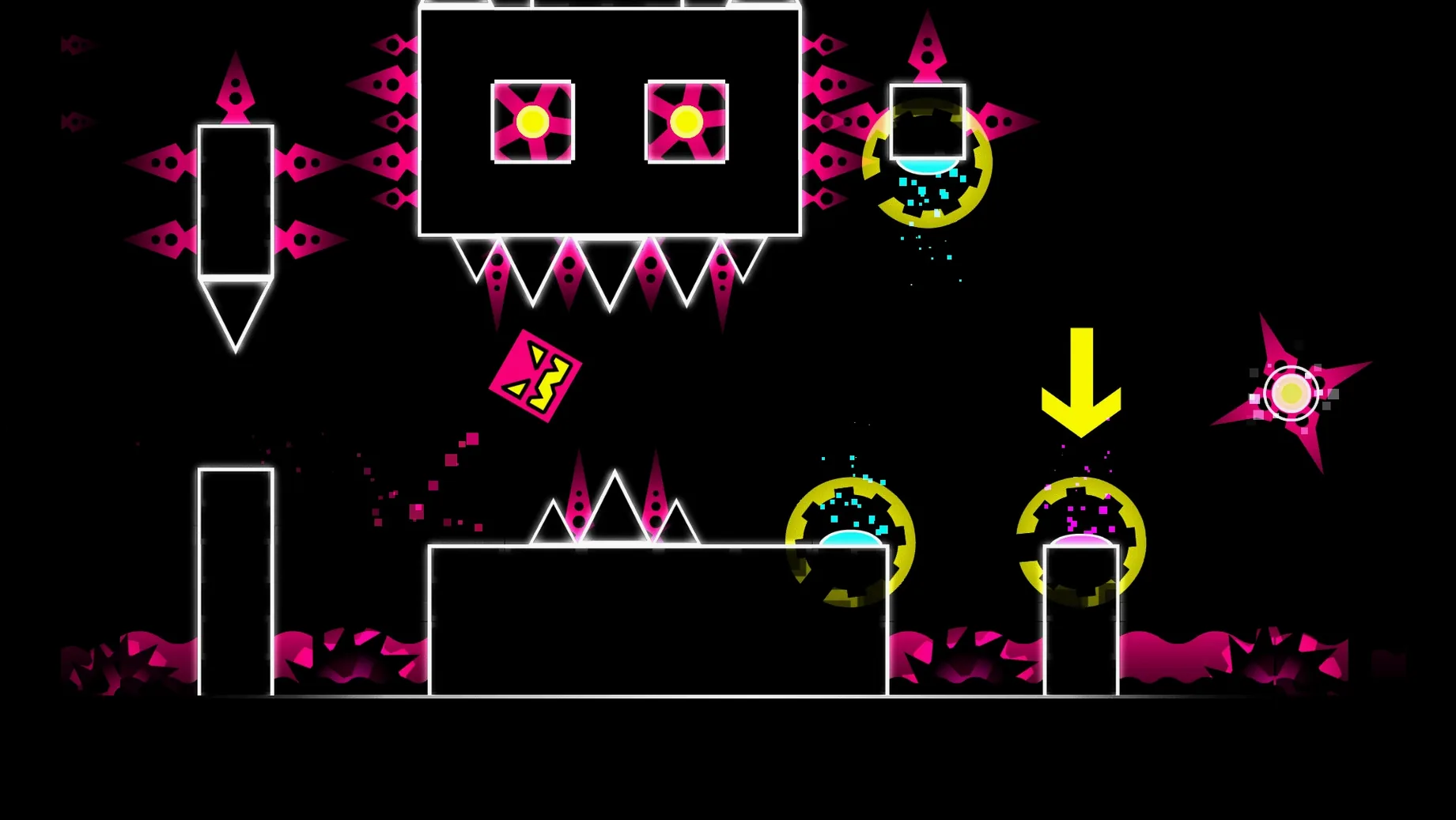
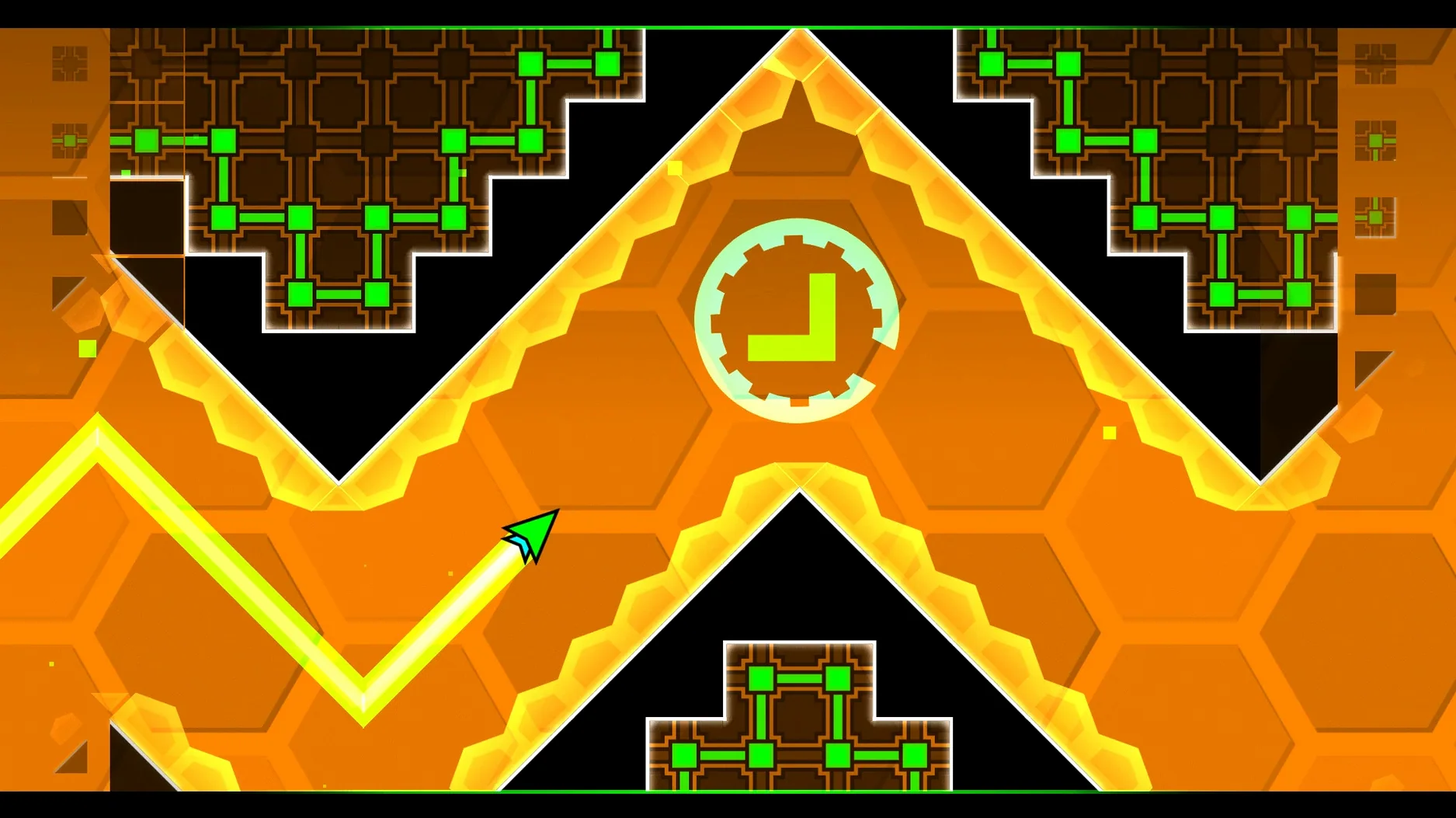
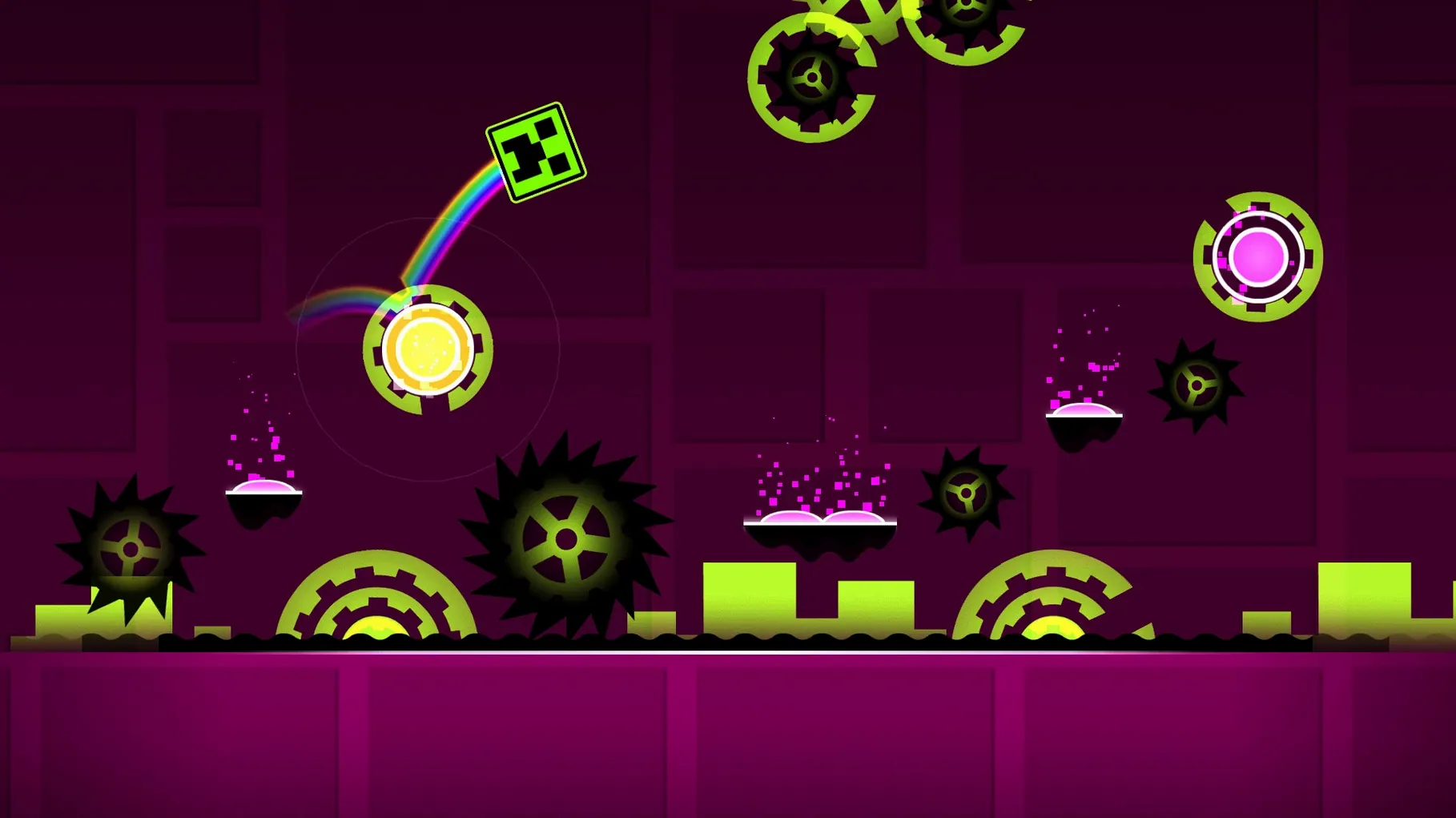
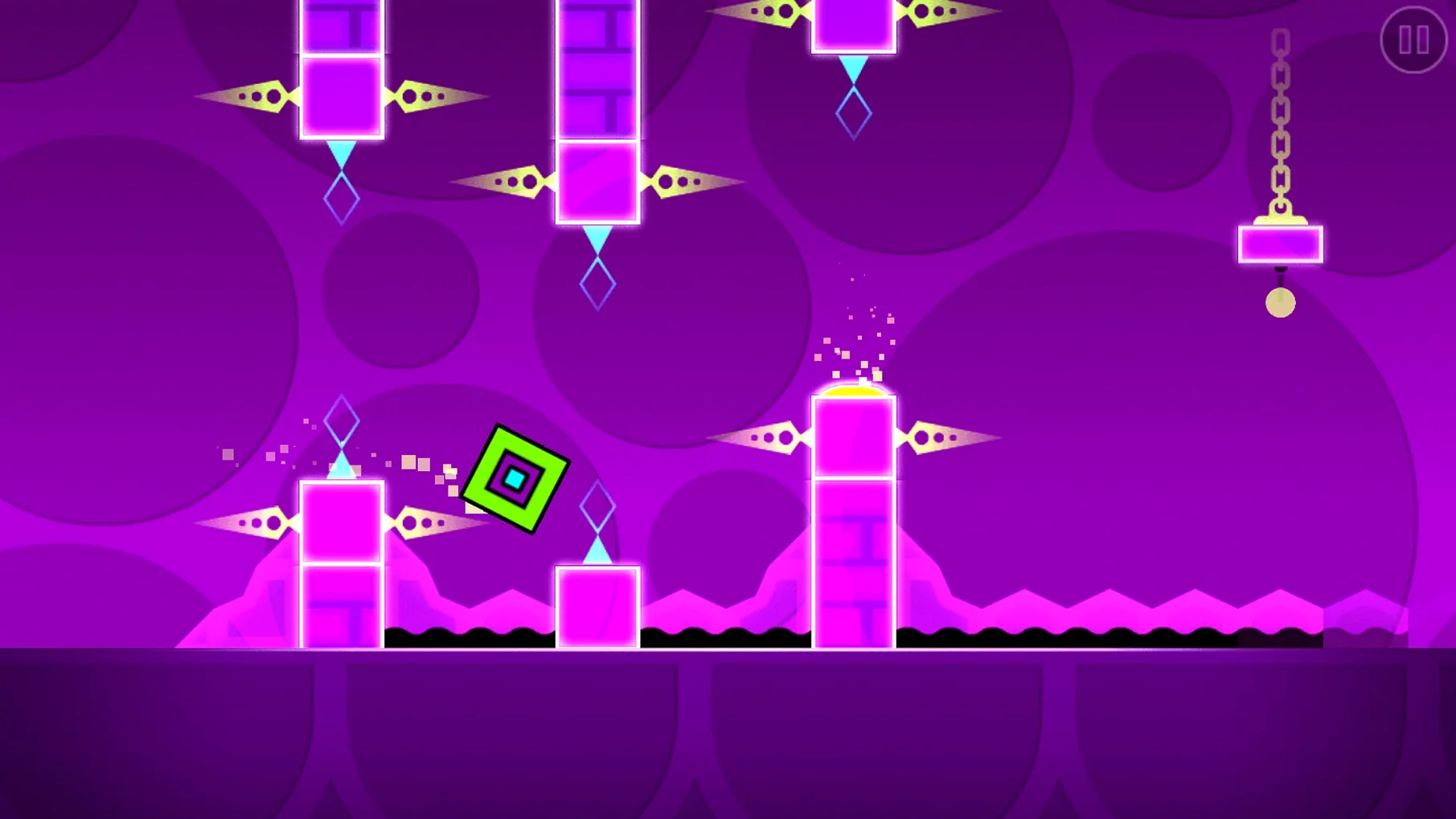
Version 2.2081 lands with no fanfare — just a tighter build for Apple Silicon and Intel Macs. The game itself remains a test of nerve and rhythm.
React
The music is not background noise. Each beat cues a tap, a jump, a near miss. You build muscle memory or you fail.
Persist
This is for players who enjoy retrying a single sequence until it becomes instinct. One mistimed press sends you back to the start.
Step away
Take a level from the Demon difficulty list — something with tight corridors and a BPM that asks for quick, shallow taps. You start in practice mode to place checkpoints at the three trickiest transitions. The first two are fine; the third, a triple-spike into a gravity flip, eats twenty attempts before the rhythm settles. An hour passes. You run the full level in normal mode, miss the final jump by half a tile, and shut the game for the night. The next morning, you clear it on the second try. The checkpoint work made the difference.
Speedrunner
A player chasing a top-100 leaderboard spot treats each run like a practiced instrument. They disable decoration effects to reduce visual noise, remap the jump key to a mechanical switch, and count beats aloud during the ship sections. They are not reacting — they are reciting. A Geometry Dash Mac torrent sits in their bookmarks, a stable version they can set up when a new build breaks something they rely on. They will not risk an update right before a tournament weekend.
If losing progress to a single pixel stings more than it challenges, the loop will frustrate. Some minds need a gentler learning curve.