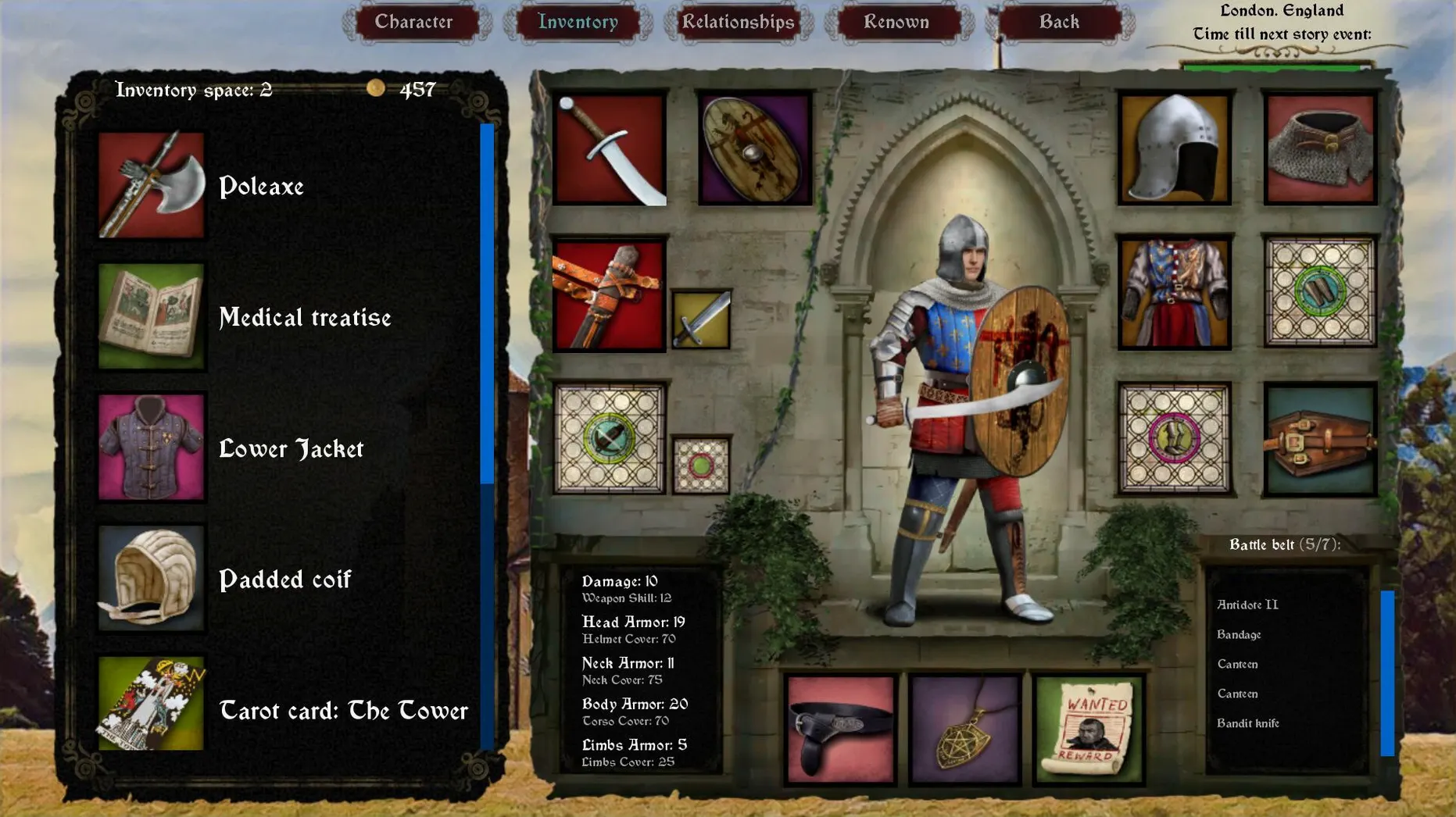
Gorget. Armet. Cuirass. The inventory names are your first warning. This is not a game about becoming a hero. It is a game about surviving long enough to afford a better helmet.
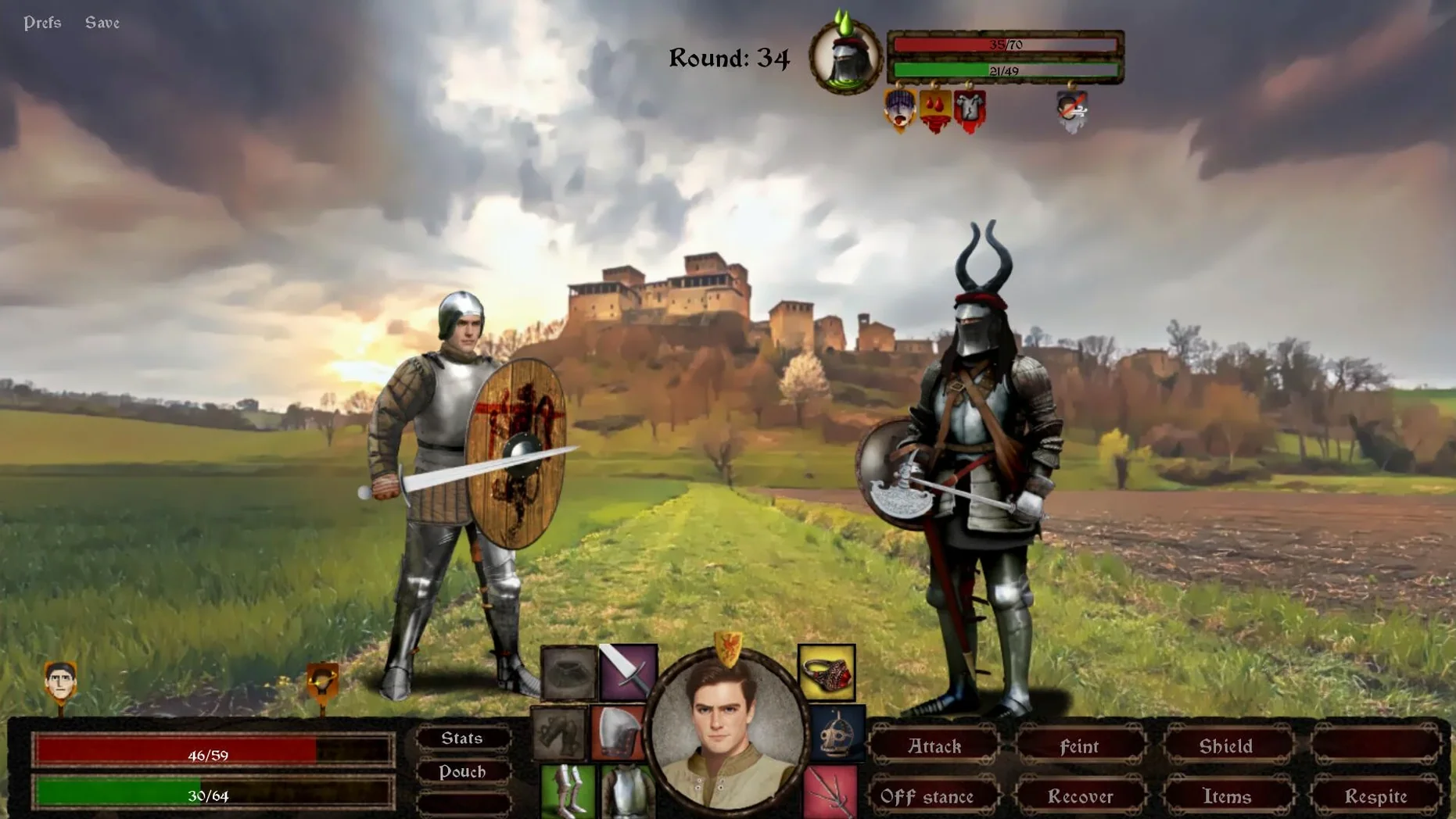
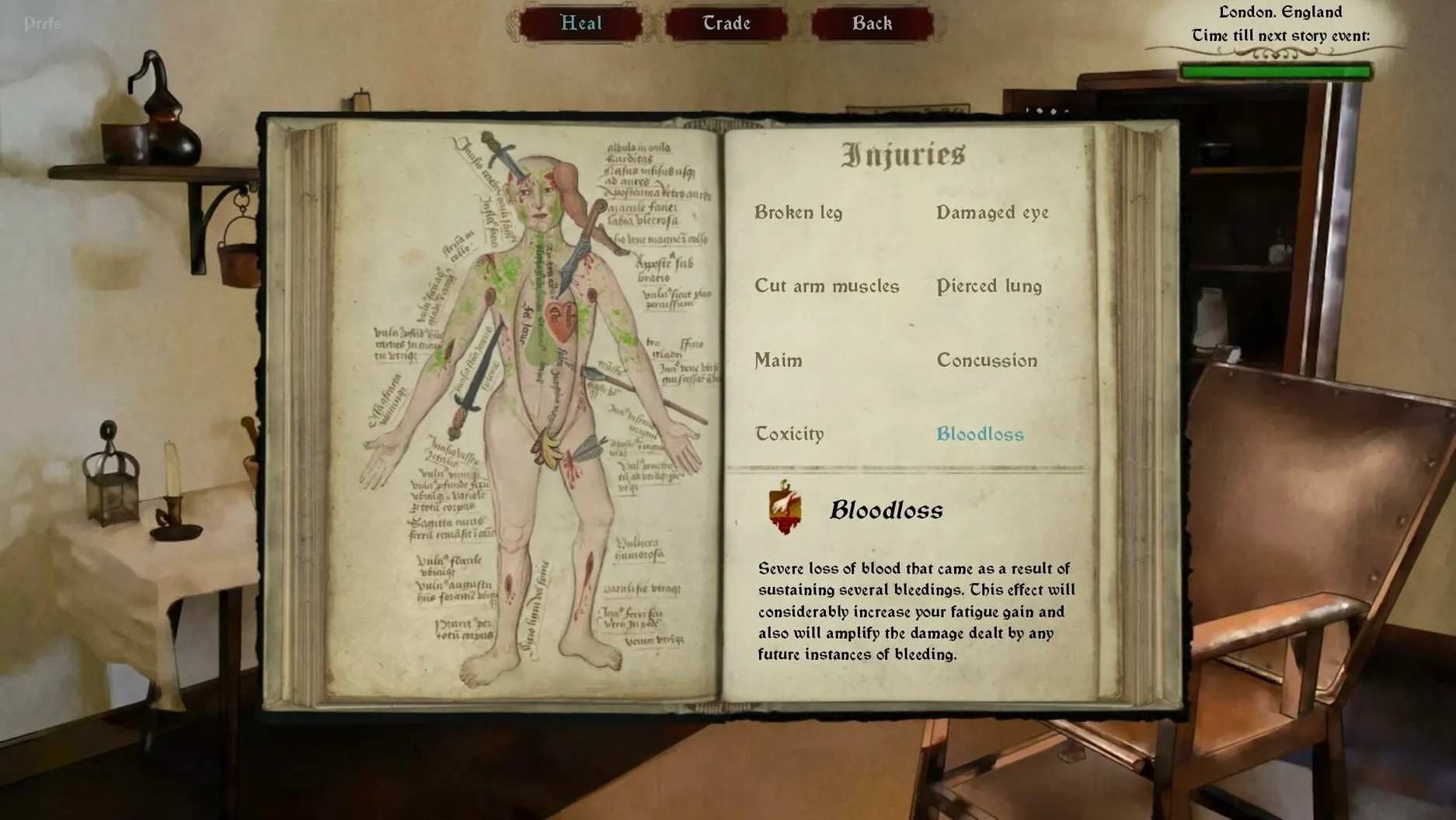
Combat is turn-based, built around weapon reach and body-part targeting. You choose a swing, the game calculates damage to limbs and armor. A bad decision with a mace means a cracked skull. Crafting lets you stitch together bandages, poisons, and crossbow bolts between fights. The roguelike mode removes the safety net entirely.
The Hundred Years' War setting is grim. You are a common soldier with common equipment. Swords, axes, throwing knives — dozens of types exist, but finding one that suits your style takes time. Survival mechanics press on you constantly. Hunger, wounds, and morale all degrade.
This is for the player who enjoys losing, learning, and trying again with less. If you want a power curve that bends upward fast, look elsewhere. If you want a game that treats a gorget as a genuine achievement, you will understand it immediately.
Players who enjoy the friction of Battle Brothers or the inventory pessimism of Darkest Dungeon will settle in fastest here. The game rewards caution over aggression, and item knowledge over reflexes. Anyone who genuinely likes reading item descriptions before equipping will get more from each run. The roguelike mode suits people who treat each death as a lesson; the story mode with quick save suits those who want to study cause and effect in this particular war without starting from zero every time.
Tutorial off
Disable the tutorial tooltips after your first death. They break the rhythm of later runs. Increase the text speed for combat feedback — the default pauses a beat too long between limb damage reports. If you plan to craft crossbow ammunition regularly, bind the crafting menu to a key closer to your movement hand.