
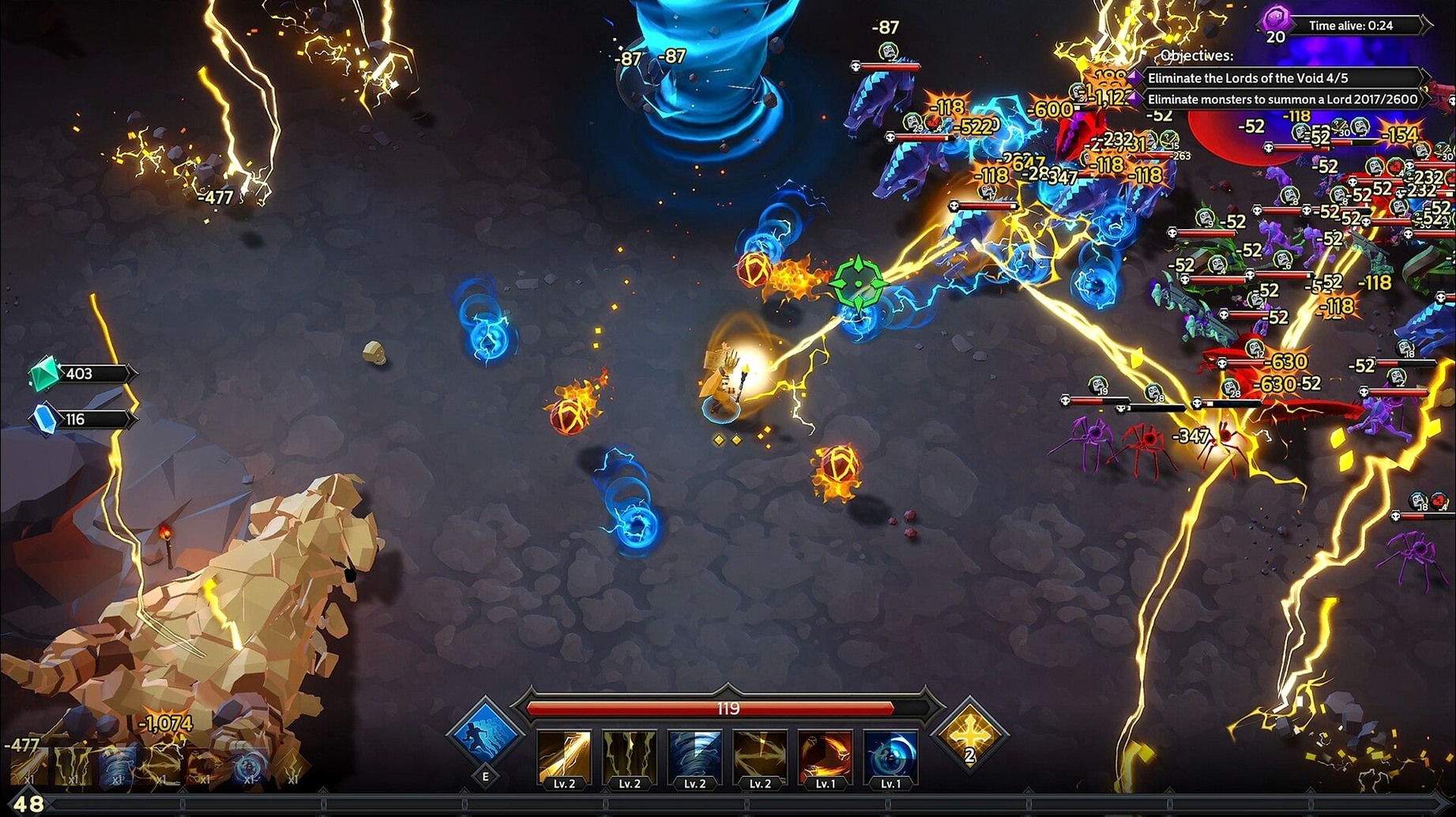
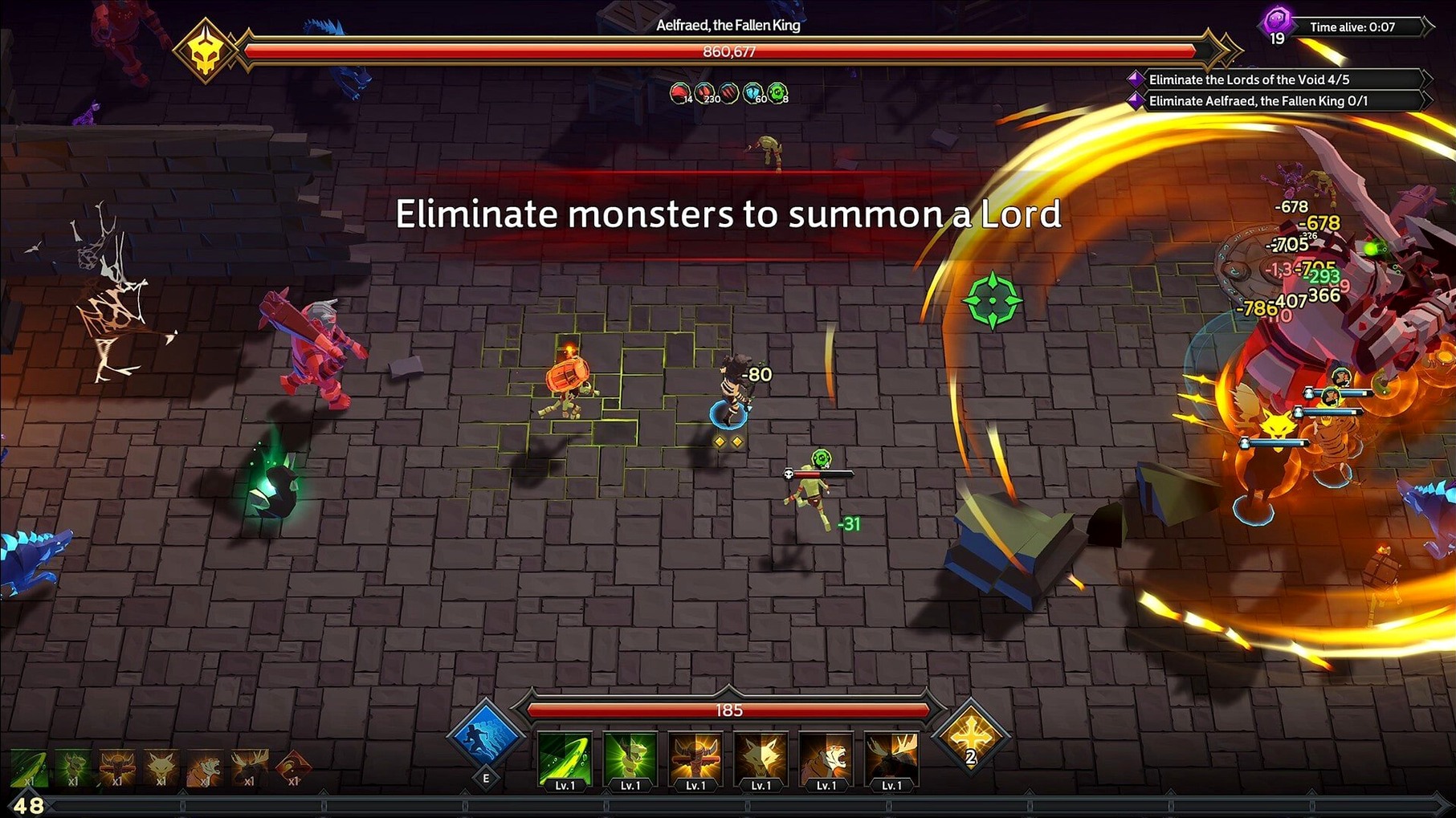
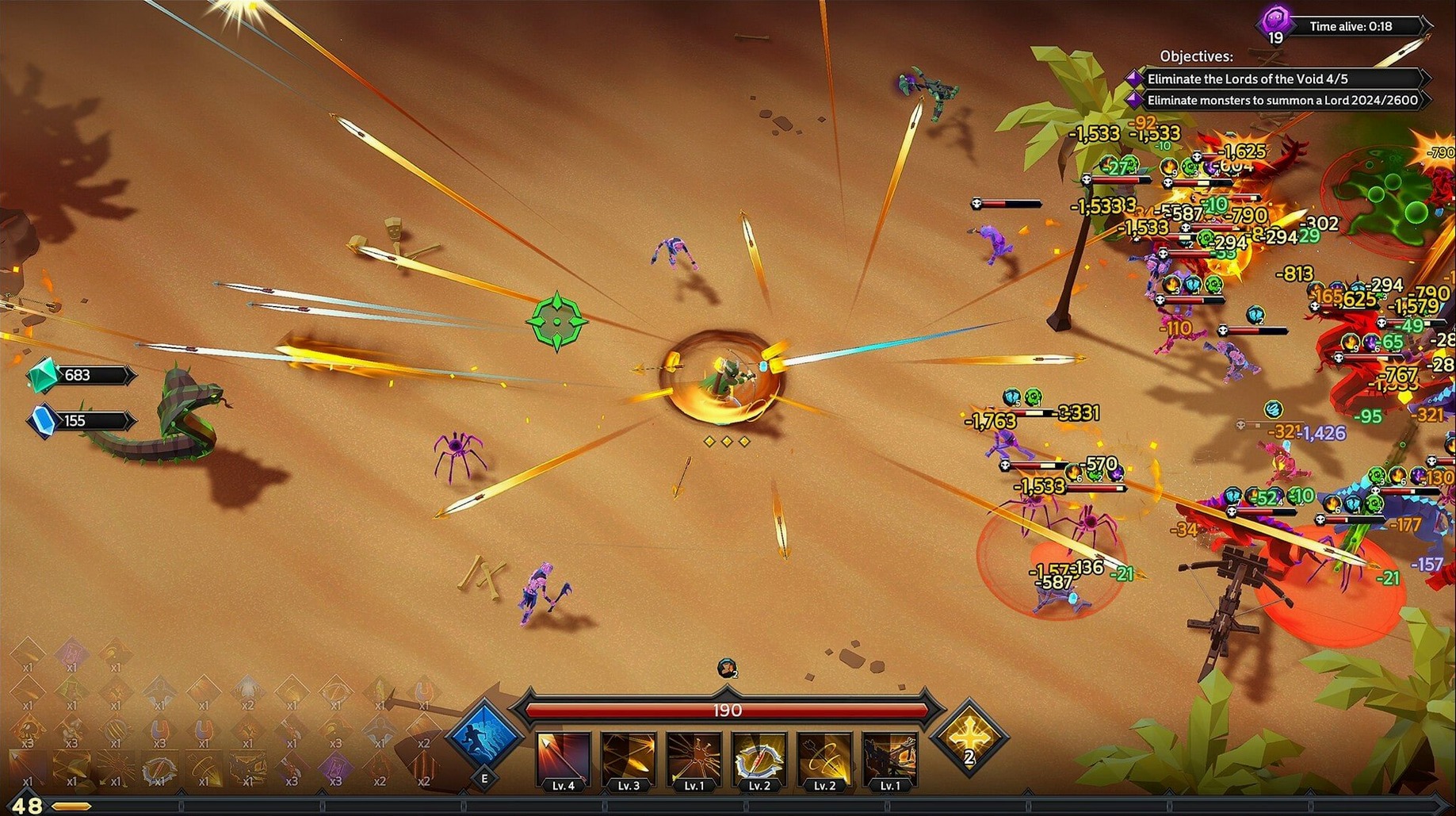
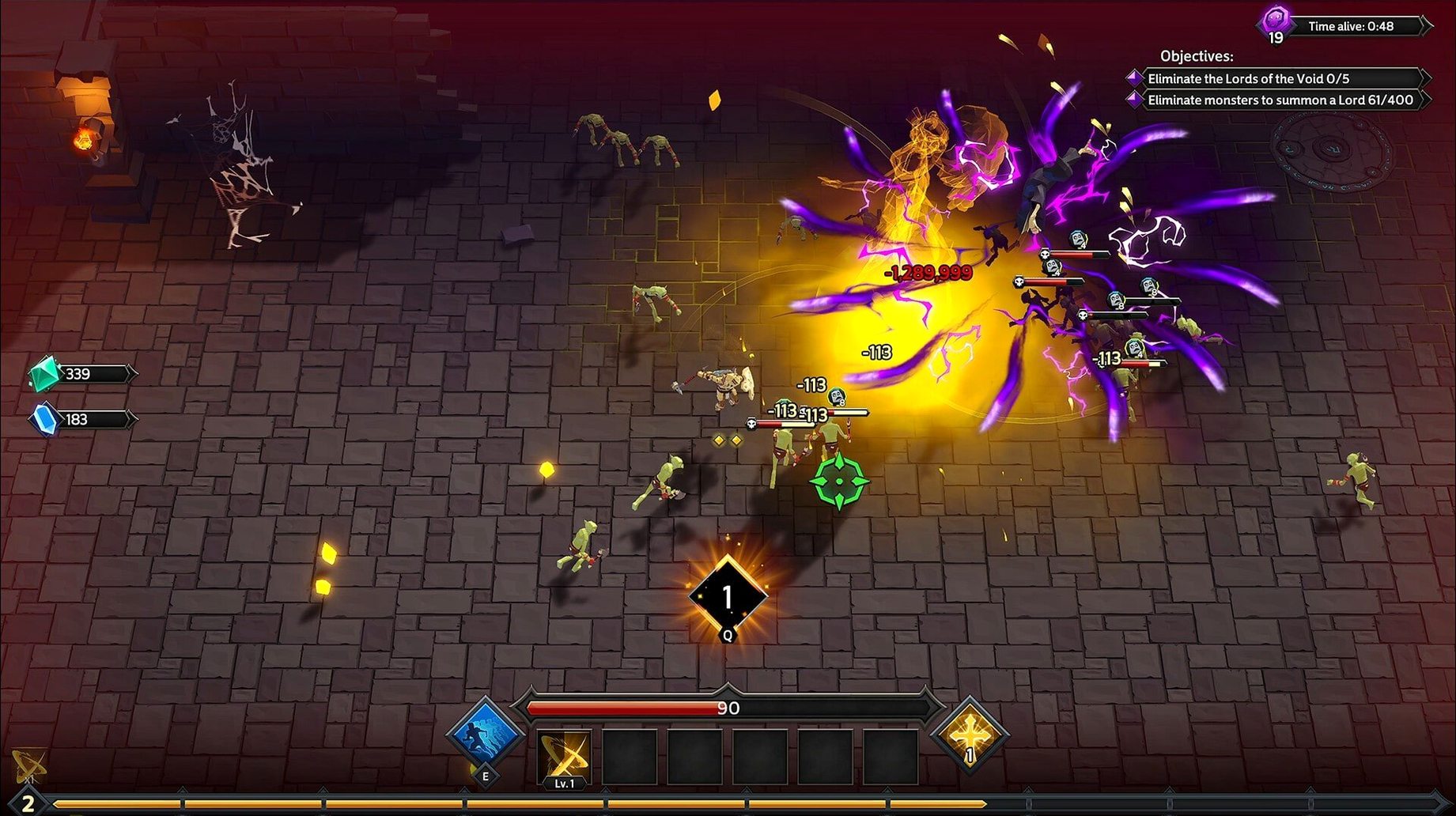
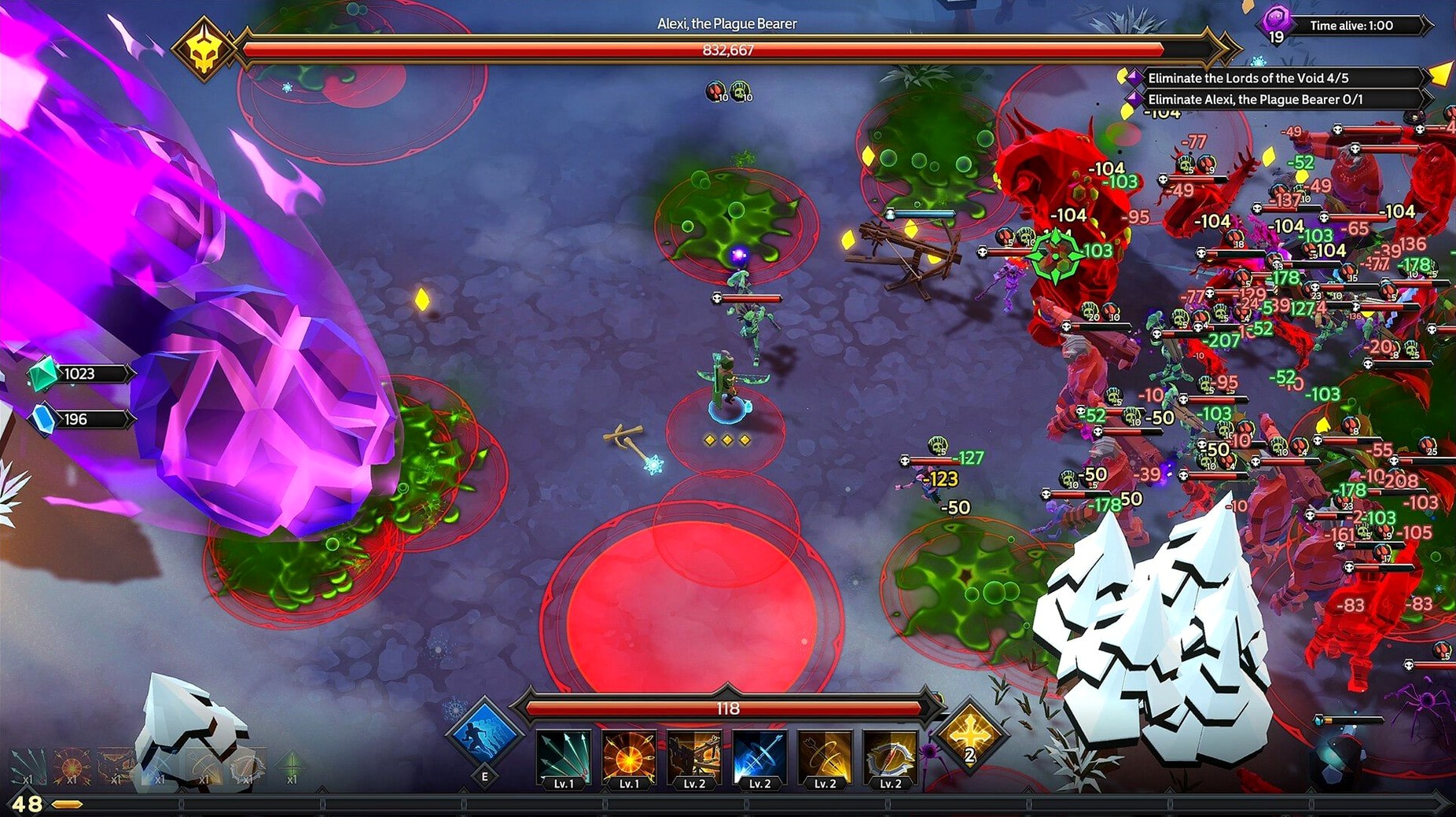
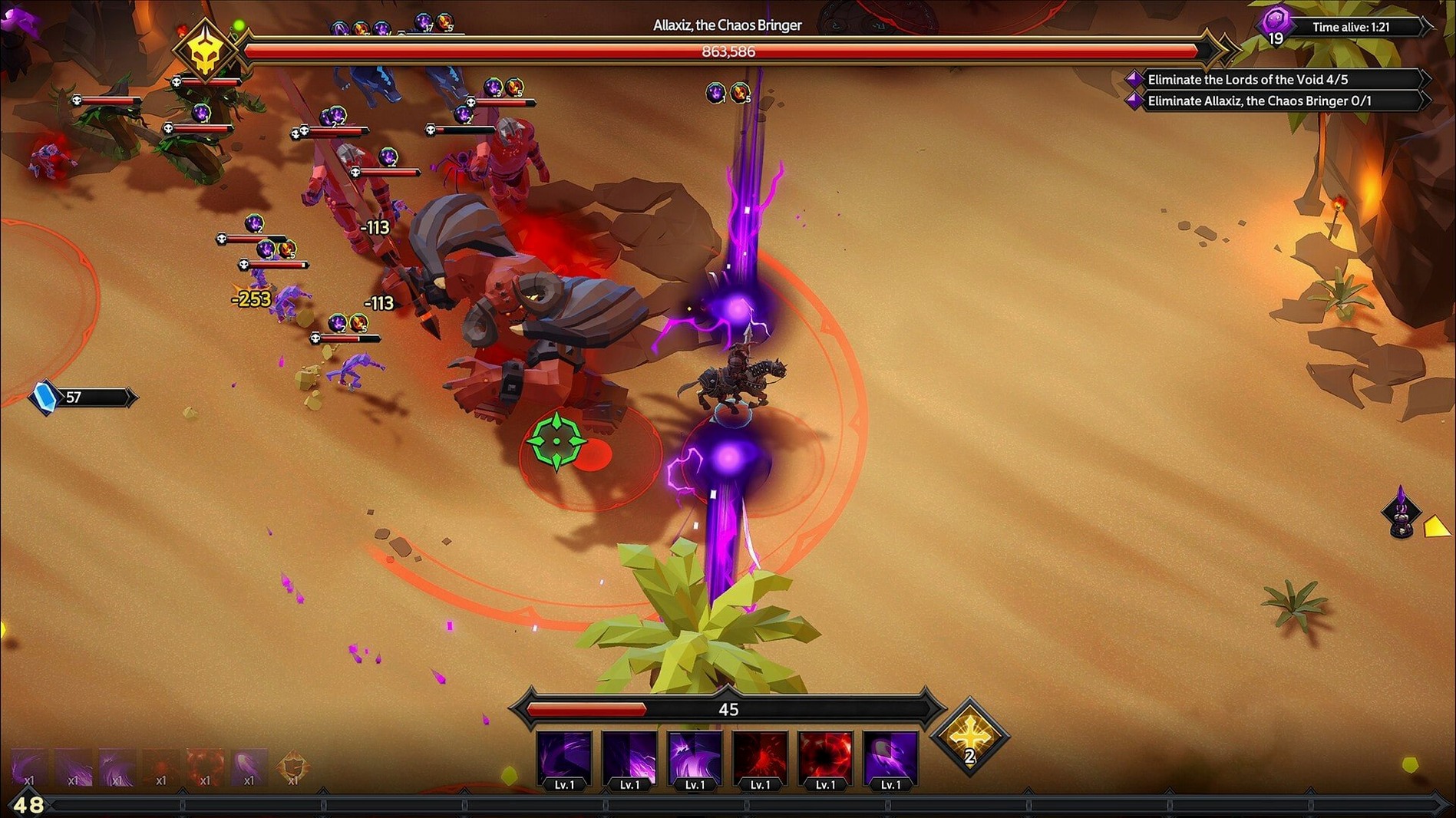
You click to move. The screen fills with minions. You pick a skill, then another, until the battlefield is yours.
Curses — voluntary handicaps that twist each run.
Lords of the Void — the bosses waiting at the end.
Legendary weapons — forged by clearing hard challenges.
Active skills — nearly 150 to combine.
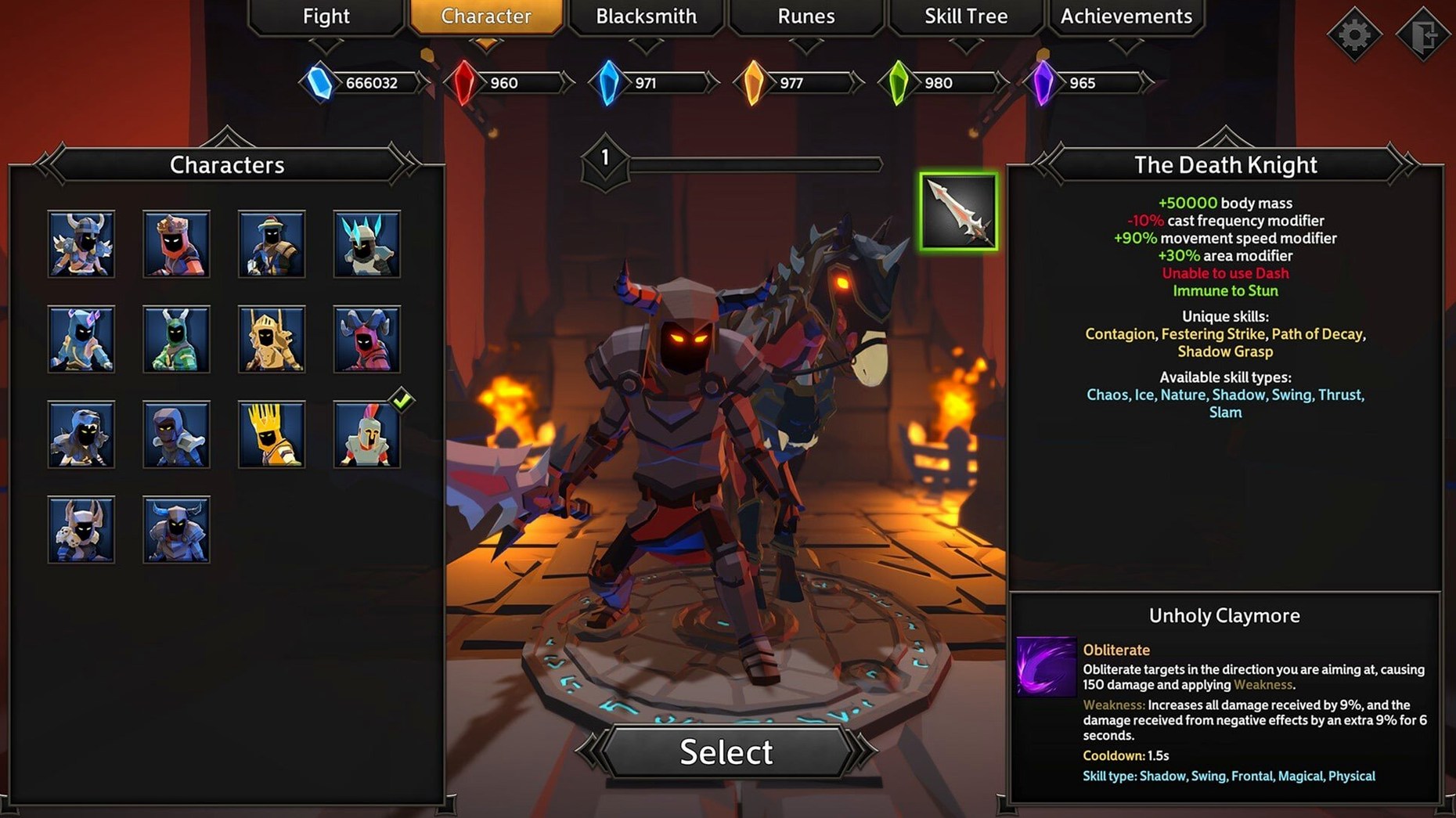
RPG mechanics — levels, stats, and build choices layered onto fast combat.
Achievements — dozens, for those who want a reason beyond survival.
Keyboard shortcuts stay out of sight. The H key toggles a compact info panel during combat — useful for checking what a debuff actually does without pausing. Hold Shift to see detailed skill tooltips, including hidden scaling numbers the basic tooltip hides.
Dash cancels most attack animations. A small thing. It shaves off frames that matter when three elite enemies telegraph at once. The same dash clips through some boss hitboxes if you time it late. Few players notice.
Rune slot order matters. The game resolves effects from top to bottom, so placing a percentage multiplier before a flat bonus can change the math. Swapping two runes sometimes adds a surprising spike in damage with no other change.
Beginners often hoard Soulstones. The skill tree rewards breadth early — spreading points across multiple branches unlocks synergy bonuses faster than maxing one path. You can respec freely between runs. Nothing is permanent.
Another trap: ignoring curses until late. One curse at difficulty five teaches you more than ten clean runs. A curse that spawns extra projectiles sounds punishing, but it drills pattern recognition faster than any tutorial could.
The six-character party system confuses new players who think it is co-op. It is not. You control one character at a time; the others follow AI routines. Positioning them before a boss arena matters more than their gear.
A game that asks how much chaos you can handle.