

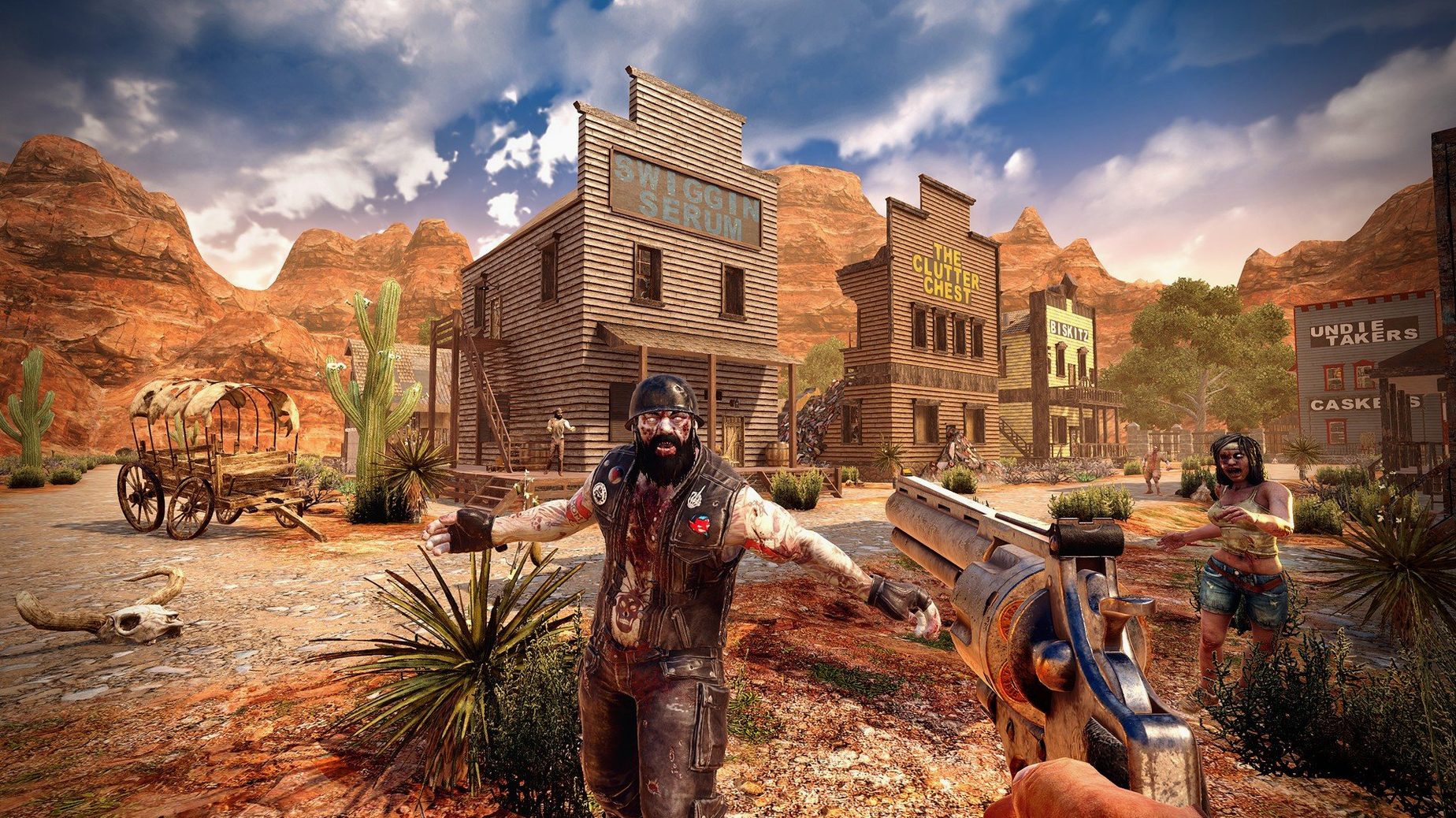

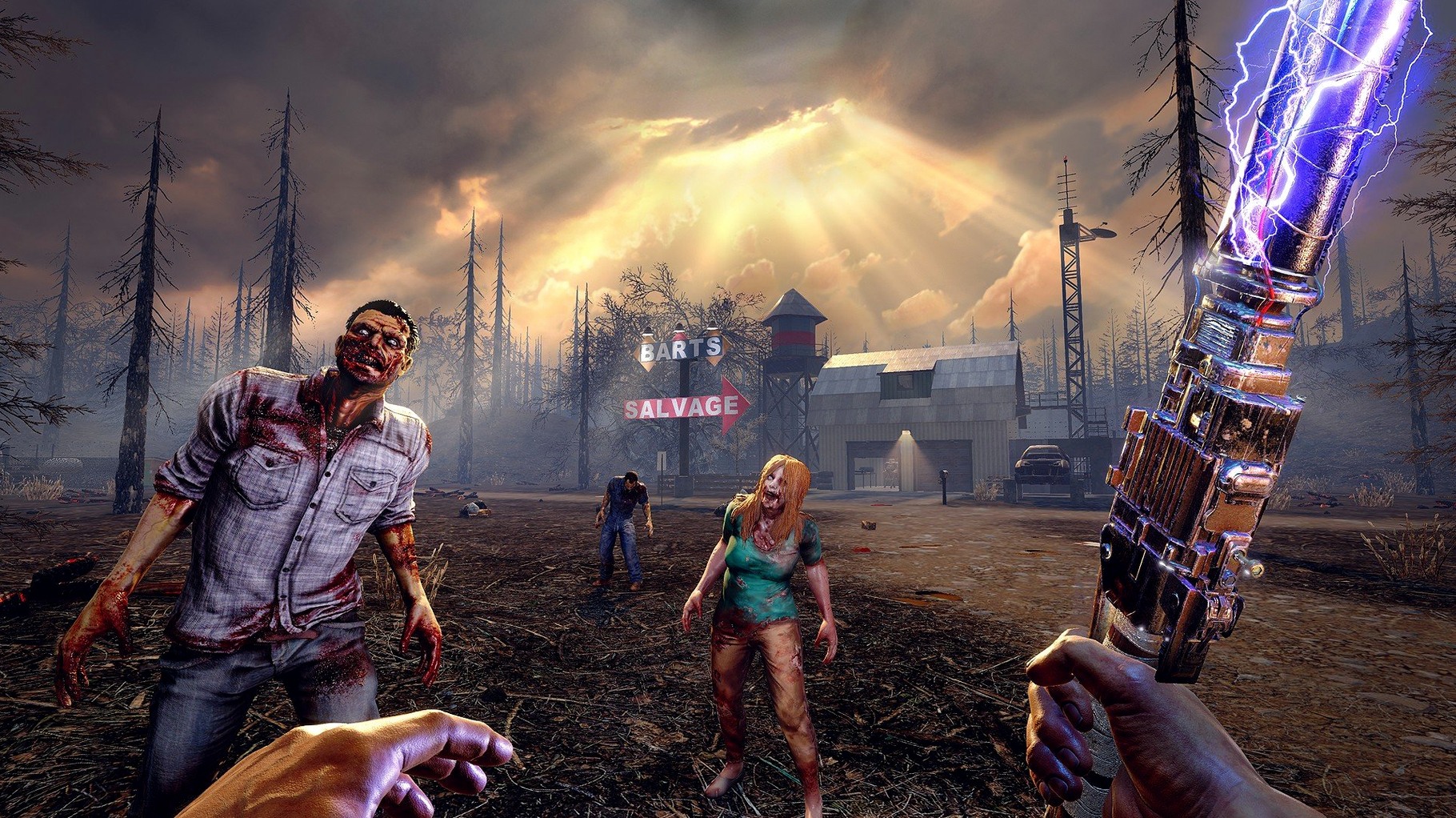
Runs on any Mac with macOS 10.13 or later, 8 GB of RAM, and 2 GB of dedicated graphics. Apple Silicon and Intel are both supported.
Scavenging runs
- Long, unscripted sessions where you set the pace
- Scavenging through cities, caves, and over 550 handcrafted locations
- Building bases that can actually collapse if you misjudge the supports
- Cooperative play where one person farms while another reinforces the perimeter
Sound limits
- Sound is limited to music accompaniment
- Special infected have unique, often punishing behavior
- Nearly 50 buffs and illnesses can turn a good run sideways
You wake up with nothing. The next hour is a quiet scramble for water, a stone axe, and somewhere flat enough to place a bedroll. Nights belong to the dead — over 60 types, each with its own rhythm — so you learn to listen before you loot. Progression comes from doing: reading one of the 100-plus skill books, cooking a better meal, reinforcing a wall that held. The world is random or hand-picked, and nothing in it is truly safe.
I open a random world and spawn near a forest edge. The first thing I do is crouch — not out of fear, but because the tutorial tips are gone and footsteps carry. I punch grass for plant fiber, craft a stone axe, and chop down a small pine. The sound of wood falling is the only music.
By midday I have a wooden club, a bedroll hidden inside a half-collapsed house, and four jars of murky water boiling over a campfire. The combine station UI in 3.2.0 feels cleaner now; I queue up scrap iron without hunting through nested menus. A trader settlement sits two hundred meters east. I approach on foot, and from the road I tap the vehicle horn on a bicycle I found earlier. The trader door opens. That small change makes entering a fortified outpost feel less like a menu click and more like a guarded ritual.
Night falls fast. I crouch in the dark, listening to a cop zombie wheeze somewhere beyond the wooden spikes I placed. Frame rate stays smooth — even with shadows on medium, the M4 mini holds steady while the world simulates structural integrity, zombie pathfinding, and weather. I notice none of the texture memory bloat the patch notes mention. Switching between biomes — from pine forest to burnt ground — loads in under four seconds. RAM usage sits around 6 GB with background apps open. The game never beachballs.
Another session: I join a friend's world. She has built a concrete bunker with electric fences and blade traps. I bring the gyrocopter parts and a stack of repair kits. One person flies above the wasteland scouting for airdrops while the other harvests corn and aloe. The 7 days to die zombie types you meet at higher levels feel genuinely different — a feral wight sprints through a minefield and nearly guts me before the turret spins up. The server doesn't stutter. We play for three hours without a crash.
The game loads quickly from the internal SSD. I leave it running in the background once while I answer messages; it idles at a quiet fraction of CPU. When I return, the world clock has moved. Two zombies have wandered into a spike pit. The base held. That is the core loop: fragile things, tested.