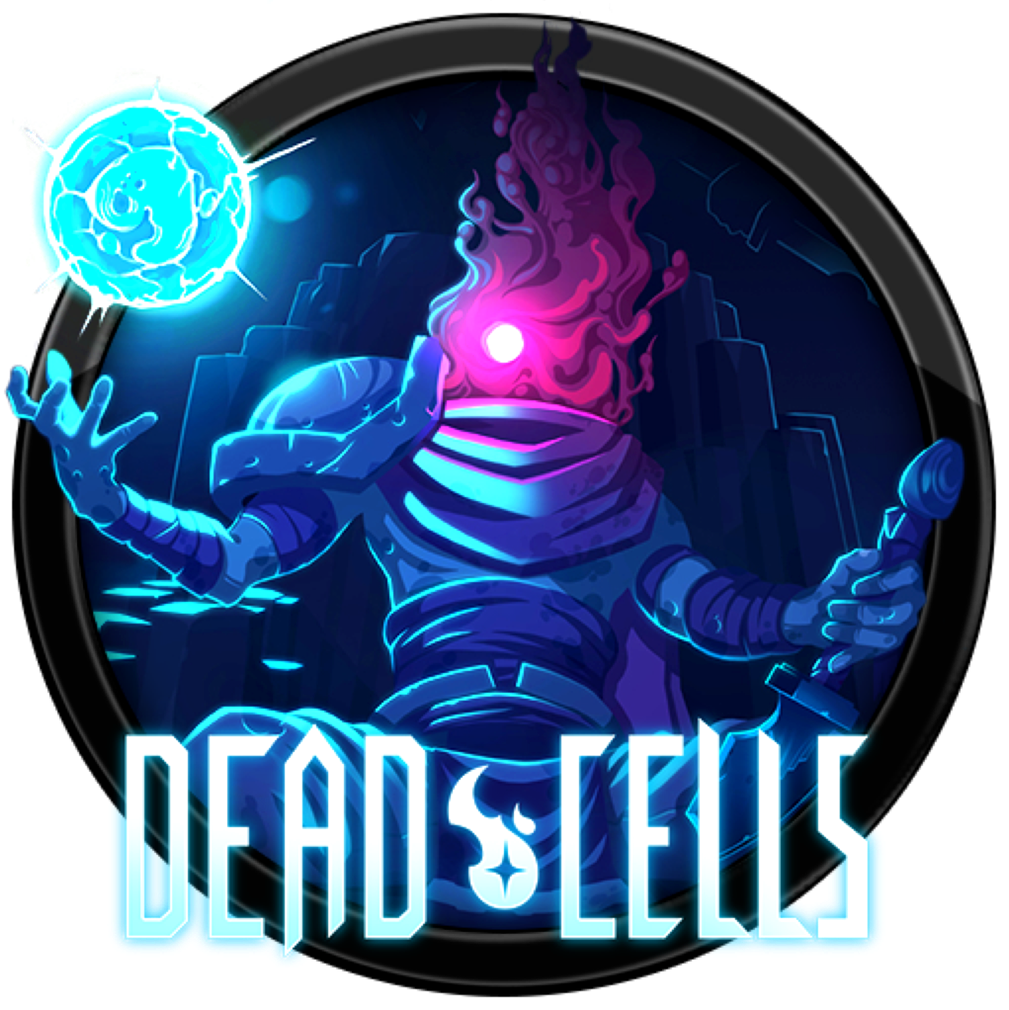
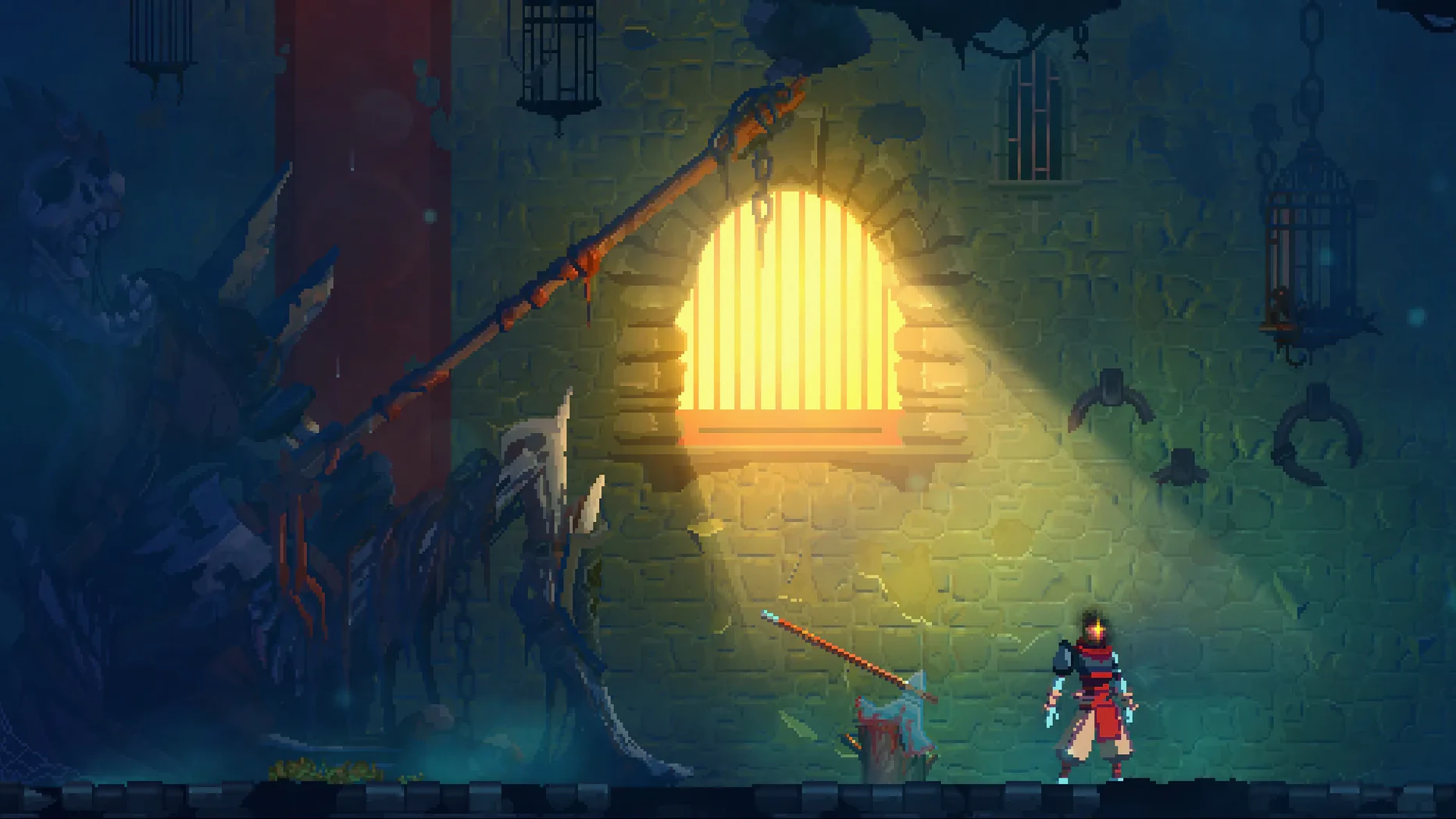
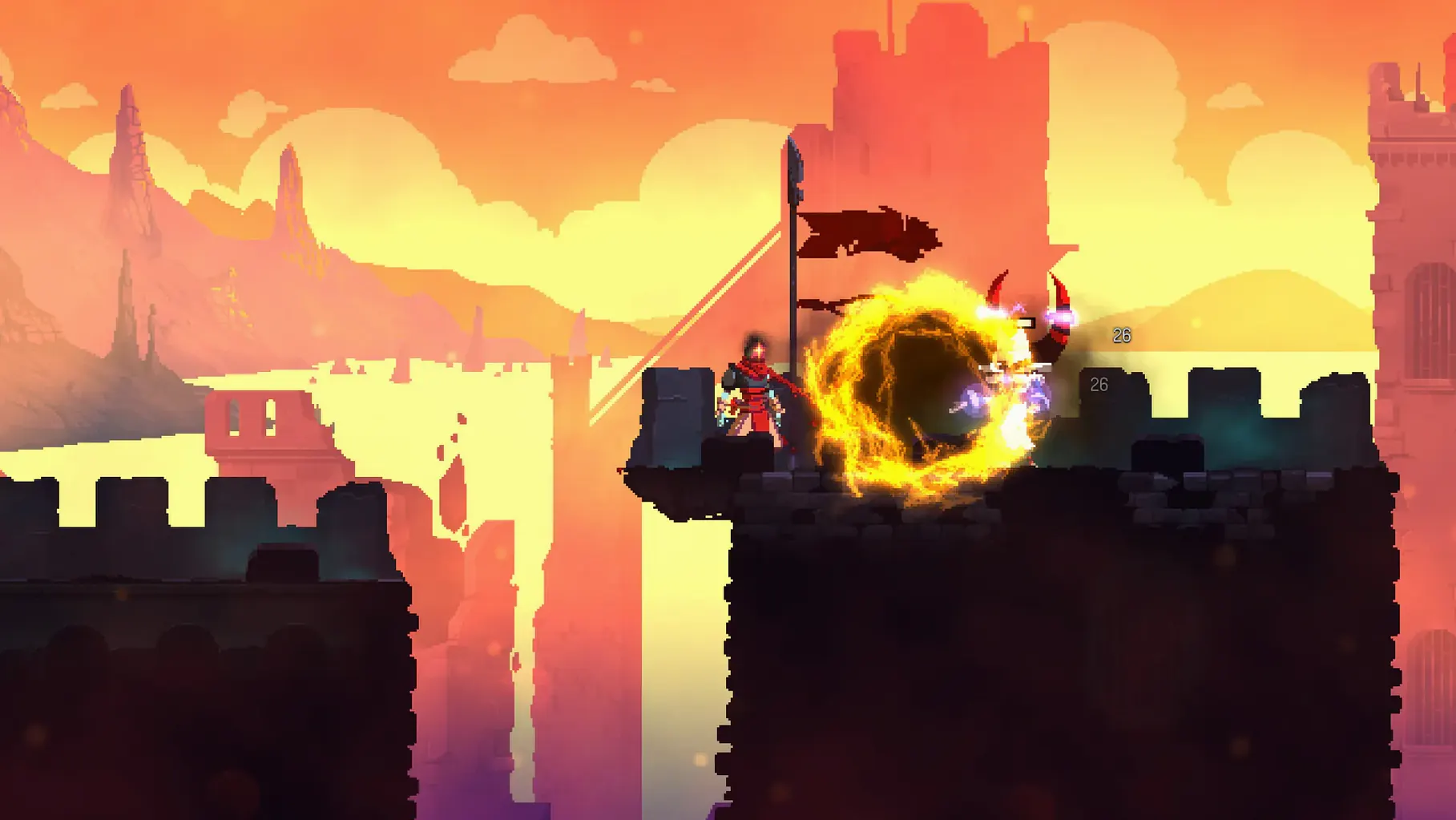
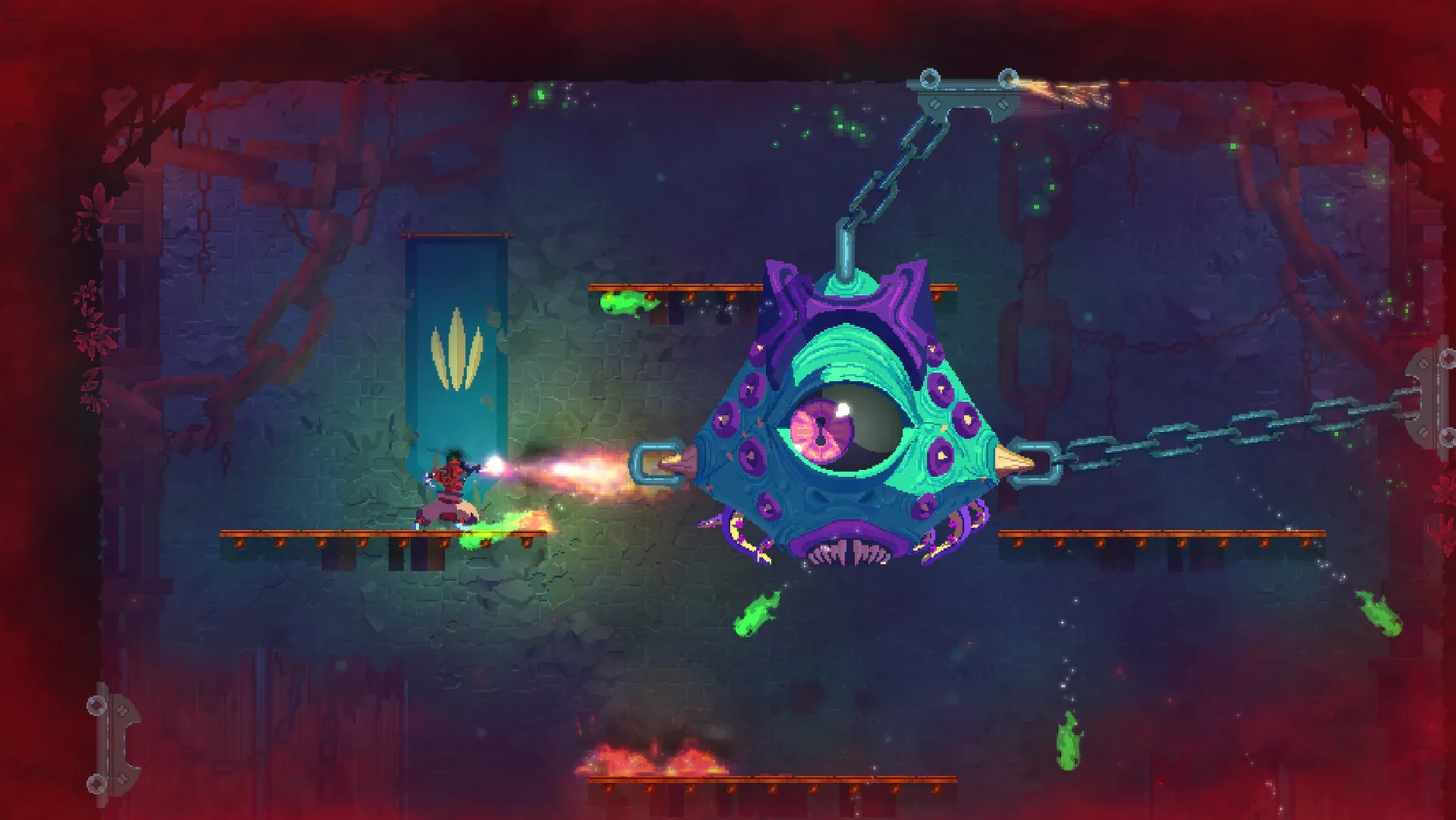
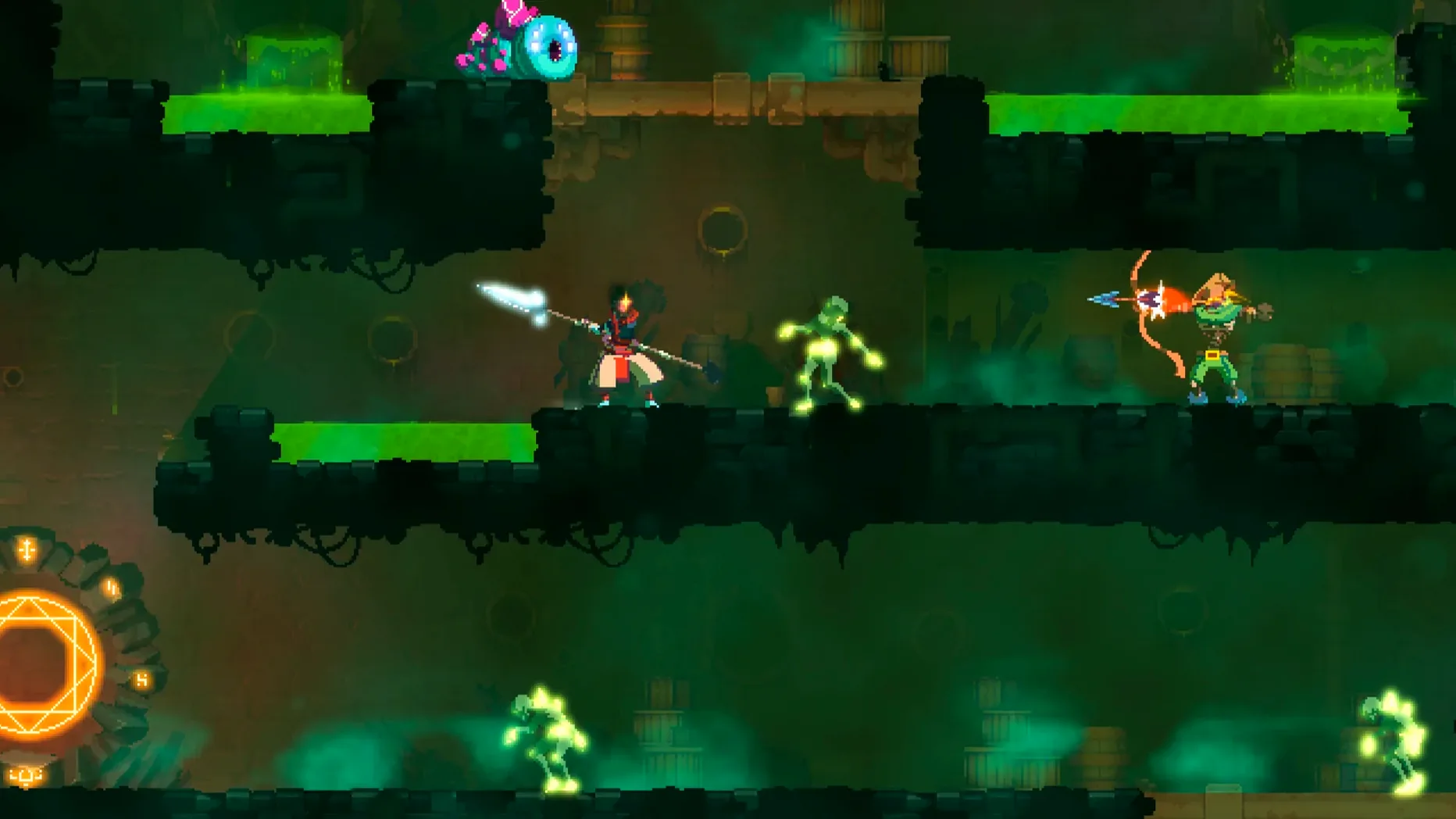
If you've spent time with Hades, you know the rhythm: enter, die, learn, return. Dead Cells strips that loop to its bones. No save. No checkpoint generosity. Just a changing castle and what you carry from the last run.
- Pick up a weapon and commit to its timing.
- Read enemy tells. One mistake cascades.
- Unlock a permanent upgrade and map a new route.
- Die. The layout shifts. Start again, sharper.
This is for someone who treats each death as a lesson. The Castlevania-inspired 2D combat asks for precision; the metroidvania structure rewards exploration. If you need a narrative safety net or a gentle curve, pass. If you want a game that respects your ability to adapt, this is it.
Slide speed
The game hides a few things that only surface after hours. Sliding under a low passage is faster than rolling, and it keeps your momentum. The roll itself has invincibility frames, but the timing is tighter than it looks. Learning the difference changes how you approach traps.
Doors that glow blue can be broken with any weapon. Doors that glow red need a slam from above. It sounds obvious once you know it, but plenty of first runs stop at a locked-looking passage for no reason.
Holding down while pressing jump drops you through one-way platforms. The game never says this. It expects you to try it.
An often missed trick: the homunculus rune lets you detach your head and scout ahead. It feels like a toy at first. Later it becomes a safe way to pull single enemies out of a group or to grab items behind walls.
Narrow arsenal
New players spread cells too thin. Unlocking many blueprints at once dilutes the item pool, so runs become less consistent. Better to pick a few weapons and pour cells into them. A narrow arsenal beats a wide one here.
Another classic error is hoarding healing potions. The game punishes caution. If you save every flask for the boss, you arrive injured and lose anyway. Drink when you are at half health, then earn back the charge by moving faster.
Ignoring cursed chests out of fear is understandable. It also slows progression badly. The curse is temporary; the reward is permanent scrolls. Take the chest early in a level, when weak enemies are easier to kill without being hit.
And stop button-mashing rolls. Enemies read panic. A single roll through an attack, followed by two hits, works better than three rolls into a wall.
Rosetta holds
On a MacBook Air M1 running macOS Sonoma, the x86 build holds steady. Loads are quick, and the locked 60 frames make the combat feel immediate. Rosetta does not get in the way.
Memory use stays modest. The game does not strain the machine during long sessions, even when the screen fills with particles. Deaths reload fast, which matters because deaths are frequent.
One small quirk: the launcher sometimes ignores a double-click. Launching the game directly from the deadcells file inside the folder avoids that. No crashes to report across several hours of back-to-back runs.
If you are looking for a dead cells mac download, the original Motion Twin build is DRM-free. It installs once, runs locally, and stays out of your way.