


Chase mode changes everything. The board stops being a puzzle and becomes a retreat. Enemies pour in from all sides, and every shell you spend is a decision about what to let close in.
Tension in doses
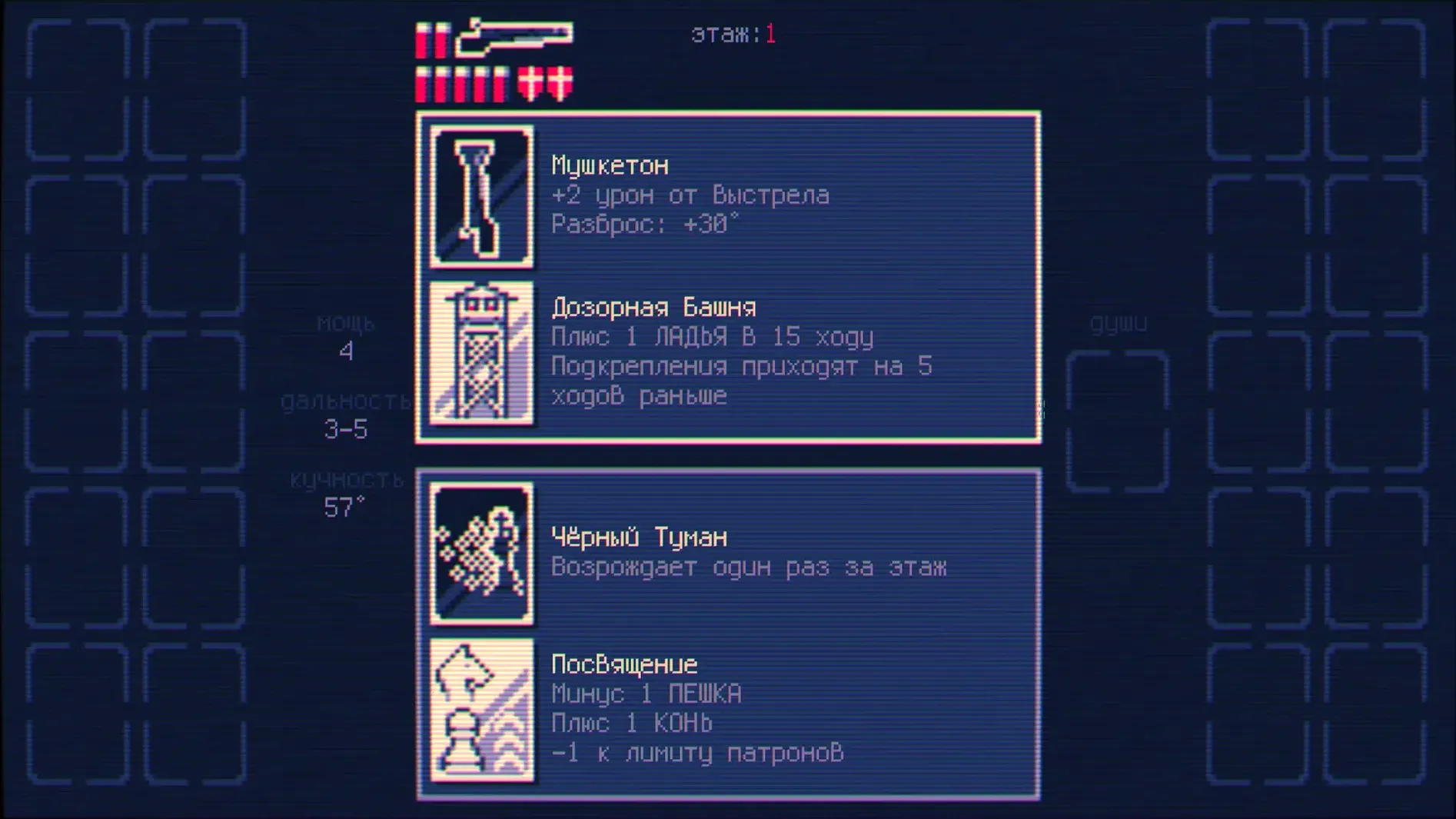
This is a game for players who like tension in small, readable doses. One card in each pair improves the king. The other card improves the enemy side. After each floor, two random pairs are offered. That structure keeps every run short and sharp. You are always choosing between getting stronger and making the board worse. The shotgun is not a gimmick; it is the entire tempo of the game. Each shot moves the board forward, and reloading is a position you have to survive.
Who might not enjoy it
People looking for a power fantasy may bounce off. The game is built around trade-offs, not momentum. If you want a strategy game that rewards patience above all, this one punishes hesitation. If you want a shooter, the turn-based grid will feel too quiet. It sits between genres and asks you to accept both speeds at once.
First move question
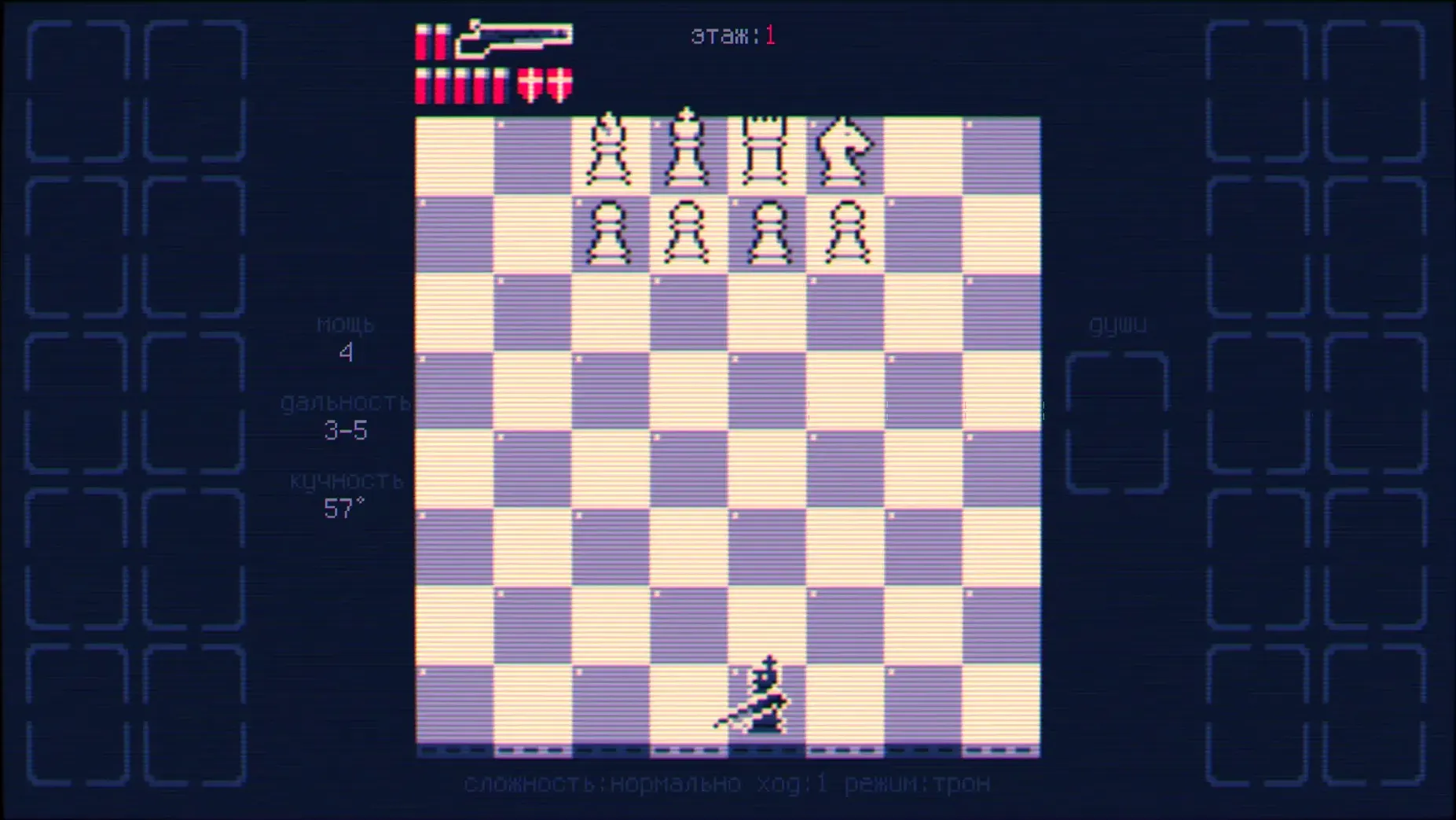
You open on a small board. A few pawns, a rook, the enemy king. First move is always a question: advance or clear a line.
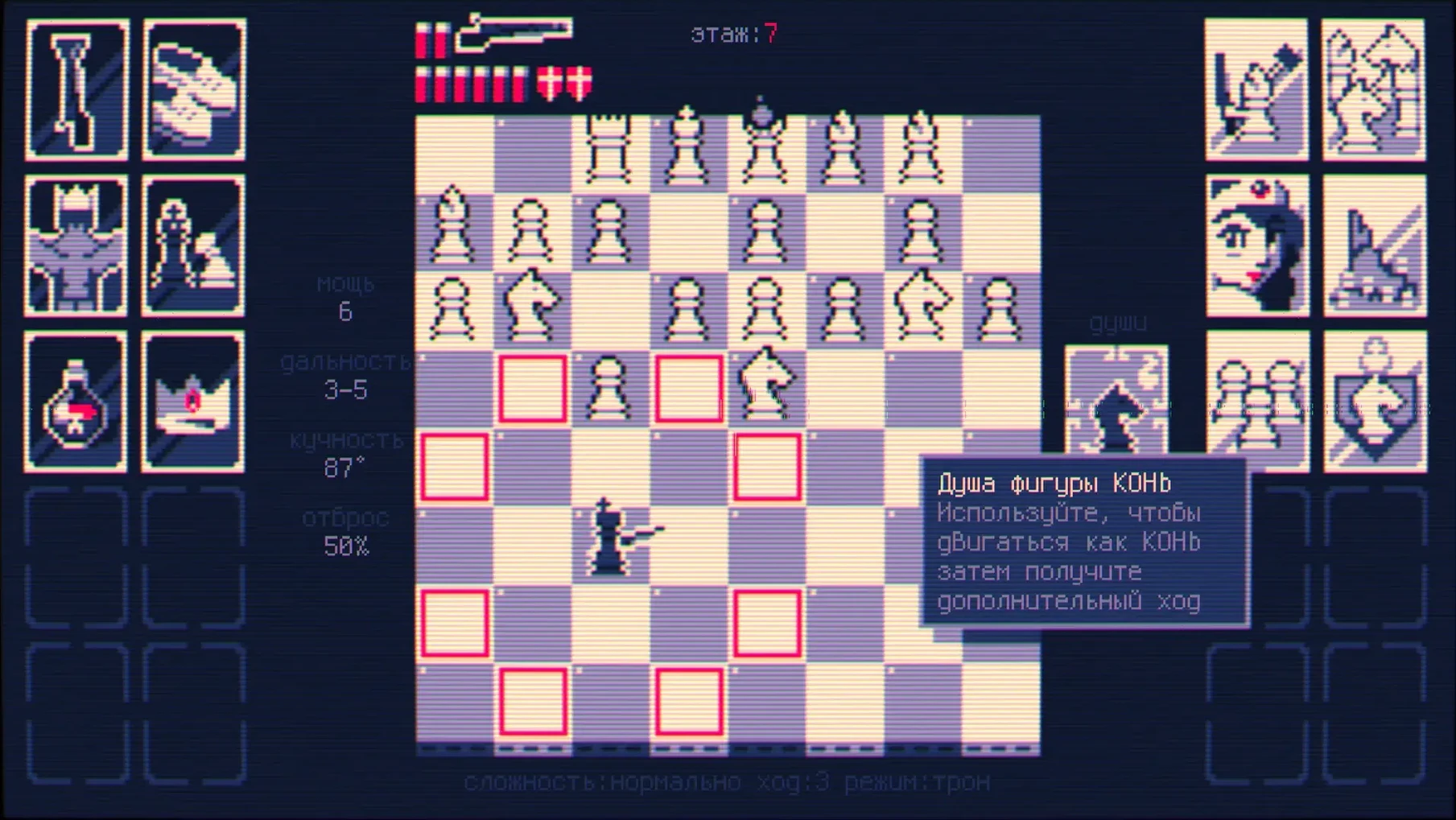
You fire. A pawn disappears. Now the board reacts. Pieces shift toward you. You spend the reload turn stepping sideways, putting distance between yourself and a knight. The shot after that takes the knight and a bishop because they lined up. That feels good.
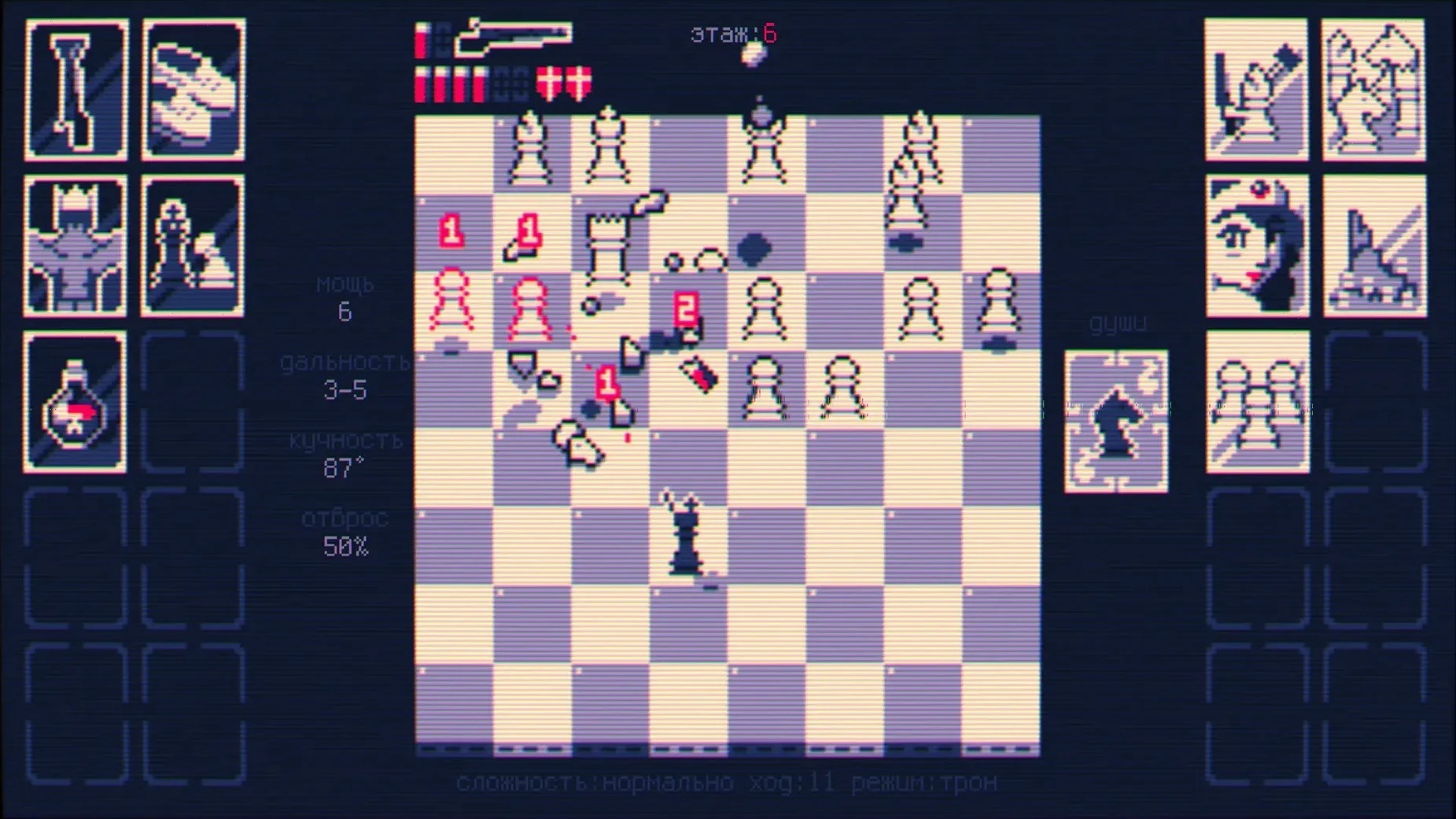
Floor ends when the white king takes a shell at close range. The card pair appears. You take +1 damage and give the enemy an extra queen. Already the next board looks worse. You cope. A session runs about twenty minutes. By floor six, the board is crowded with pieces you chose to add. Every turn is a small evacuation. The run ends not from a single mistake but from a stack of compromises you accepted three floors earlier.
Chase mode tightens this further. There is no safe corner. The session becomes a story of routes closing.
Loss teaches more
Players who enjoy roguelikes where loss teaches more than victory. The game fits people with short, interrupted windows for play — a floor takes minutes, and quitting mid-run costs nothing.
It also suits anyone who played chess as a kid and drifted away. The grid is familiar. The logic is not. What remains is pattern recognition applied to a set of rules that change every floor. That shift — from memorized openings to improvised survival — is where the game finds its audience.