One hundred years. That is the span you work with. Each tick of the clock moves you through a century of transformation, from the early smoke of the industrial revolution to the rumble of the first tanks.
Minute to minute, you are not commanding armies on a battlefield. You are watching a population. You check what they believe, what they can afford, and what they might burn down if you ignore them. You adjust a tariff on grain. You start a diplomatic play to pressure a neighbor for a treaty port, knowing it could spiral into a war you cannot fund.
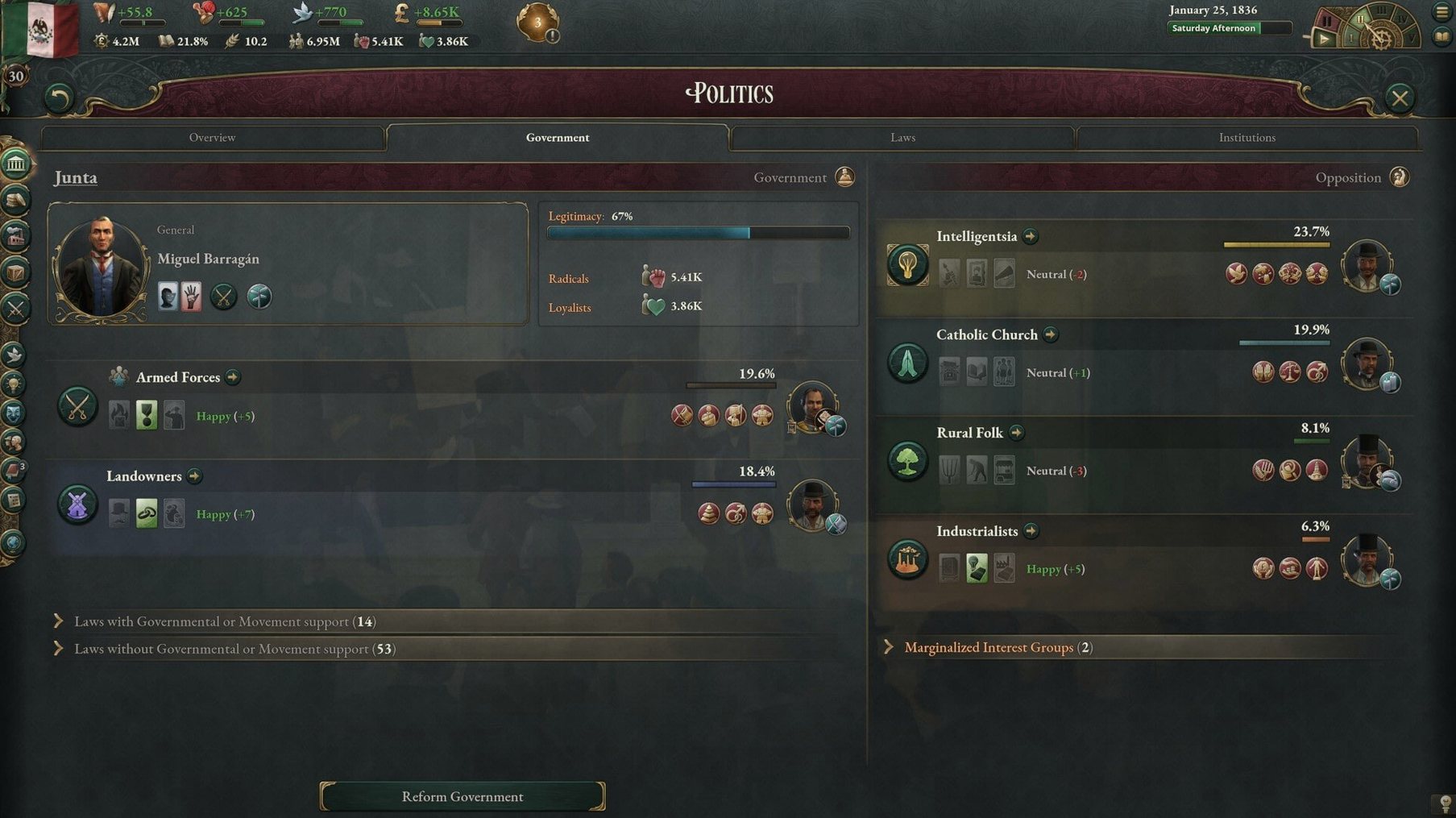
Politics is a machine you tune. You might reform the government to include the industrialists, then pass a law for public schools. That decision ripples through the literacy rate for the next decade, which in turn changes who works in your factories and who demands the vote.
You manage reputation as a resource, not a score. A quick territorial grab in a neglected colony can turn a friendly power into a long-term enemy and stall your trade routes.
Start in Sweden
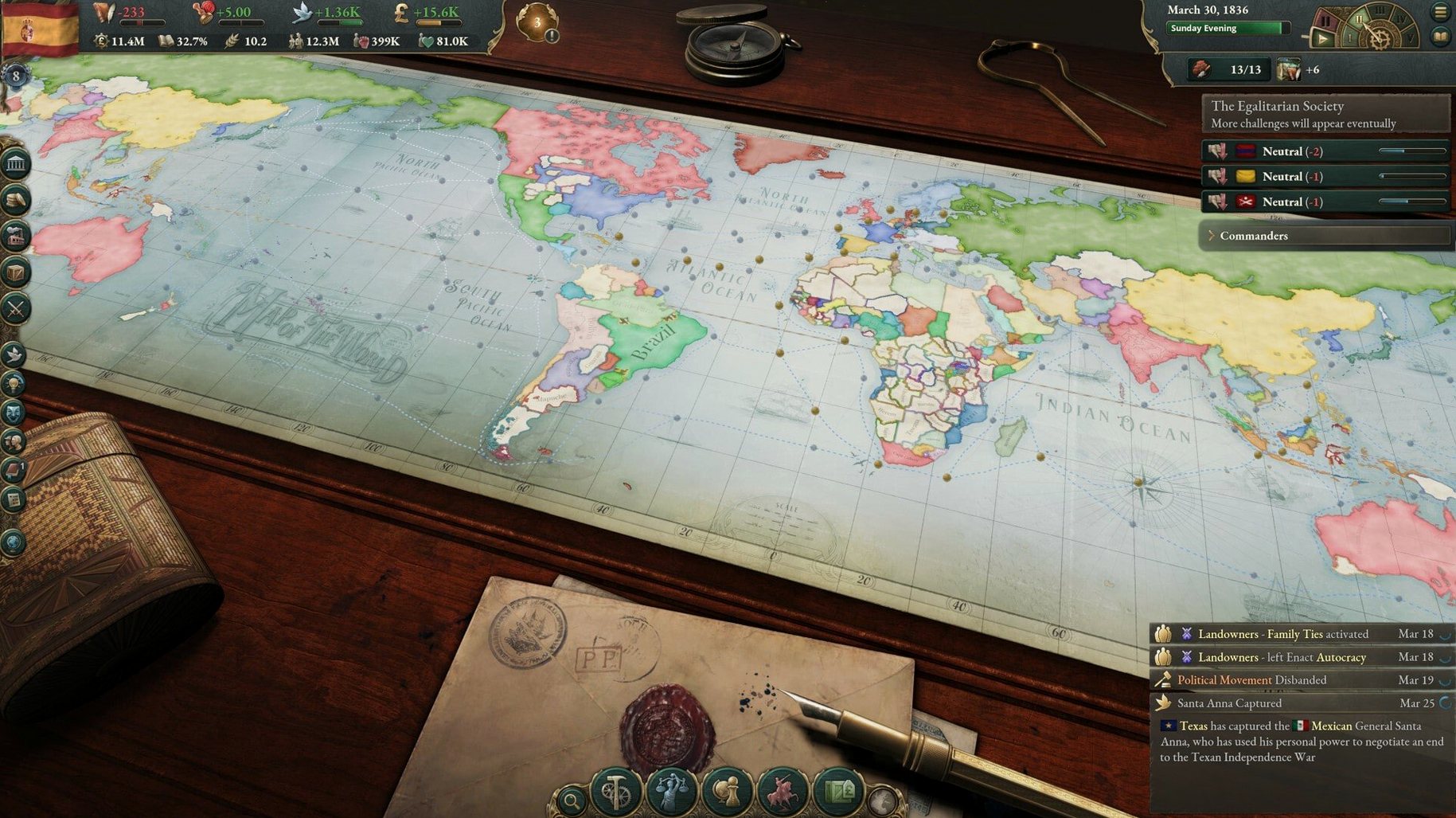
Start with Sweden. It sits outside the great power struggles, has a literate population, and gives you room to learn the economic loop without a neighbor deciding to annex you. Switch the map to the goods view and watch where iron and tools are expensive. That heatmap teaches you more about the simulation than any tutorial.
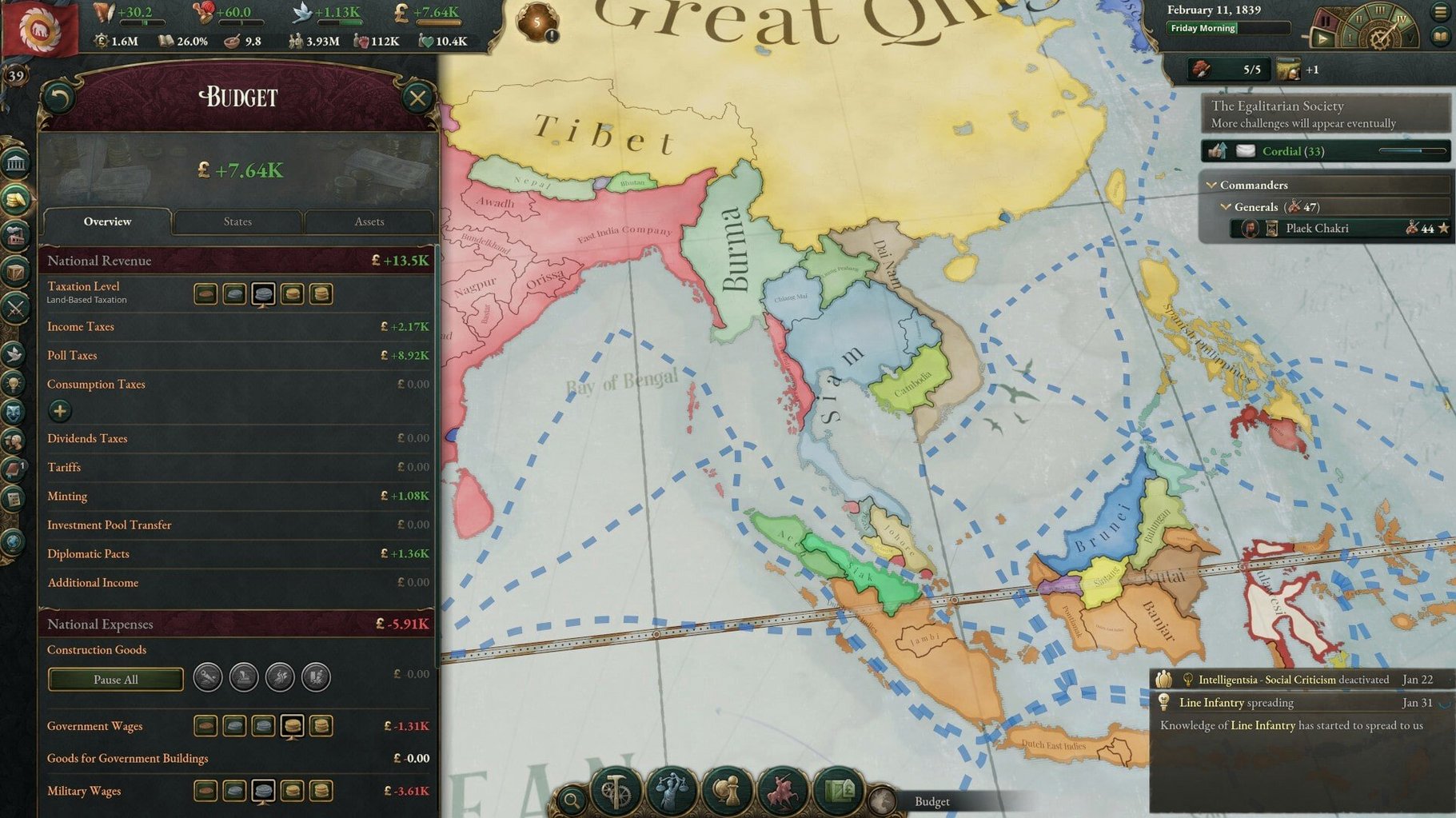
Ignore the military tab entirely for your first run. Instead, open the budget screen each year and note which pops are gaining income and which are falling into poverty. Radicals grow silently until they don't.
Use the construction queue as a slow instrument. Three buildings at a time is plenty. More than that and you will drain your treasury before the first factory opens.
Shift-click method
Hold Shift when clicking a production method to switch every building of that type at once. The game never mentions this.
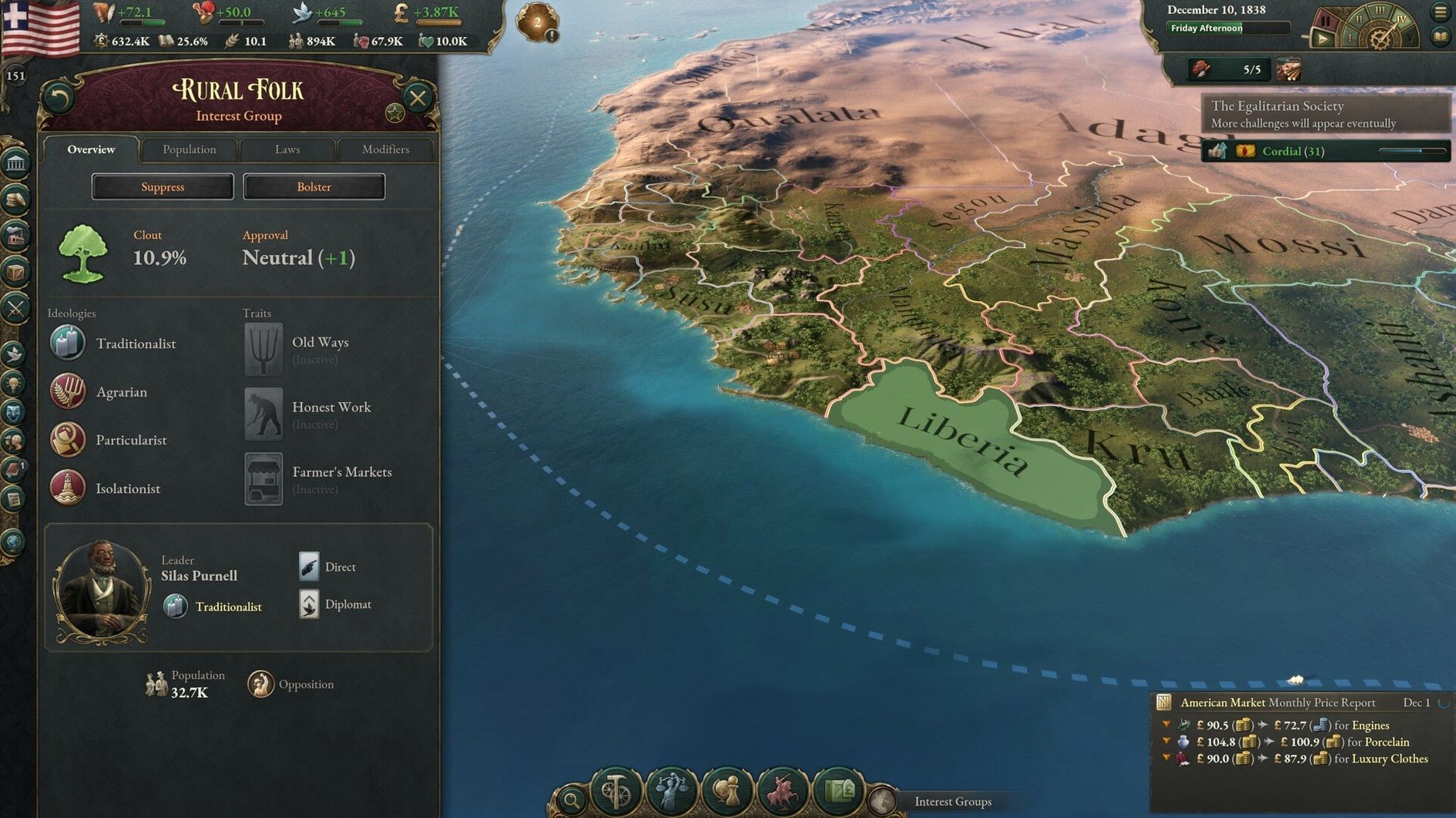
The outliner on the right side is customizable. Drag interest groups there that matter to your current reforms. You can then watch their clout shift week by week without opening a single menu.
In the diplomacy lens, a small green checkmark on a nation's portrait means they would accept an alliance today. It saves you from clicking through every power just to get rejected.
Right-click any good in the market tab to pin its price chart to your screen. Keep grain and iron pinned during the first decade. When the line bends sharply, pause and find out why before it becomes a shortage.