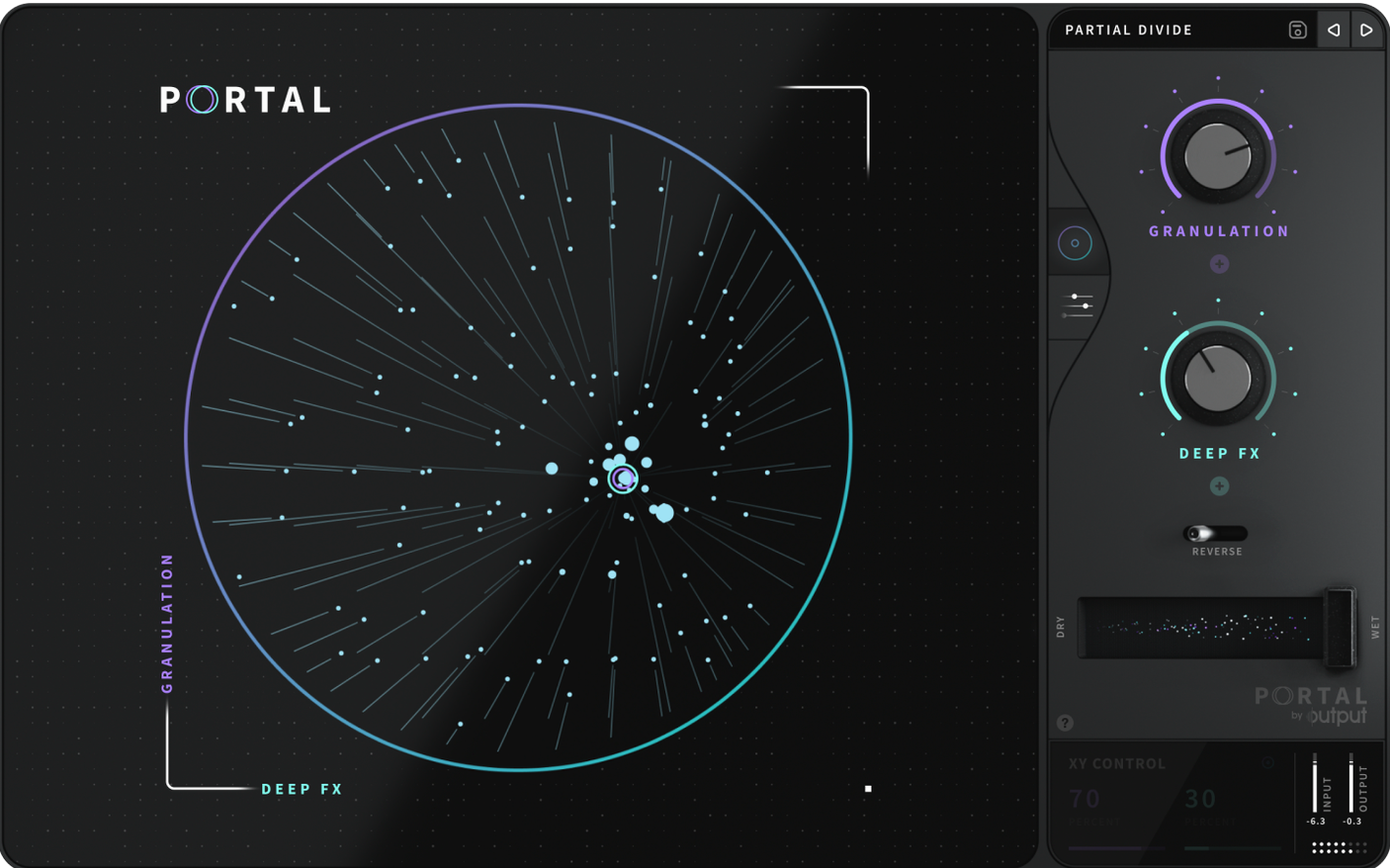
If you know Output's Thermal, you know the approach: effects built for motion. Portal does it with grains, pulling audio apart in time.
VST, AU and AAX, Intel and Apple silicon. Feed it a soft synth, a drum loop or a live vocal; grains run synced to tempo or free.
A common early mistake is feeding Portal a full mix and expecting magic. Grains multiply fast. A dense input turns to noise before you can shape it. Start with a single voice, a clean drum hit or a short phrase. You can always add complexity later.
Beginners also set the grain density too high right away. Portal defaults to a modest count for a reason. Crank it up only after you dial in the envelope and size. Otherwise you lose the source entirely.
Latency surprise
Latency catches people off guard. The plugin runs real-time processing on live inputs, but granular analysis takes a moment. If you monitor through the DAW while tracking vocals, set the buffer as low as your machine allows. On Intel Macs, freeze other tracks first.
A silent output usually means the wet/dry mix is fully dry or the grain envelope is clamped shut. Check the envelope depth knob. It is easy to nudge it to zero by accident and hear nothing.
Some hosts lose the tempo sync after a session reload. Toggle the sync button off and on again. That re-locks the engine to the transport. A minor quirk, fixed in the current build for most DAWs.
If Portal gets grabby with CPU, resample the processed section and disable the plugin. This is standard practice for intensive effects. You keep the sound and free up the machine.
missed shortcuts
The scale lock is more than a safety net. Set it to a pentatonic scale, crank the pitch randomization, and every grain stays musical. You can play wild parameter sweeps without hitting a sour note.
Right-click any knob to assign a MIDI controller in seconds. Output does not advertise this heavily, but Portal’s MIDI learn is fast. Map grain size to a mod wheel and you perform the texture instead of programming it.
Unsynchronized mode has a hidden strength: automate the grain rate in free time, then switch back to tempo sync for the drop. The contrast between drift and lock becomes a structural tool, not just a setting.
Hold Option while dragging a parameter returns it to its default value. Small thing. Saves you from hunting for a reset button that is not there.
If you found this page through a portal mac torrent search, you already know the plugin travels light. The installation is a single PKG; no authorization hurdles. Drop it in your components folder and it appears in every host.
One last detail people overlook: the envelope variation control. Set it subtle — five to ten percent. That tiny random spread makes sustained grains breathe. You stop hearing the engine and start hearing the sound.
A transient can stretch into a long tail. A static pad picks up small, organic shifts. Envelope variation keeps it from sounding looped.