
Ads break your focus. Trackers follow you across the web. Most browsers clean up the pages you visit, but leave the rest of your Mac exposed.
System-wide blocking
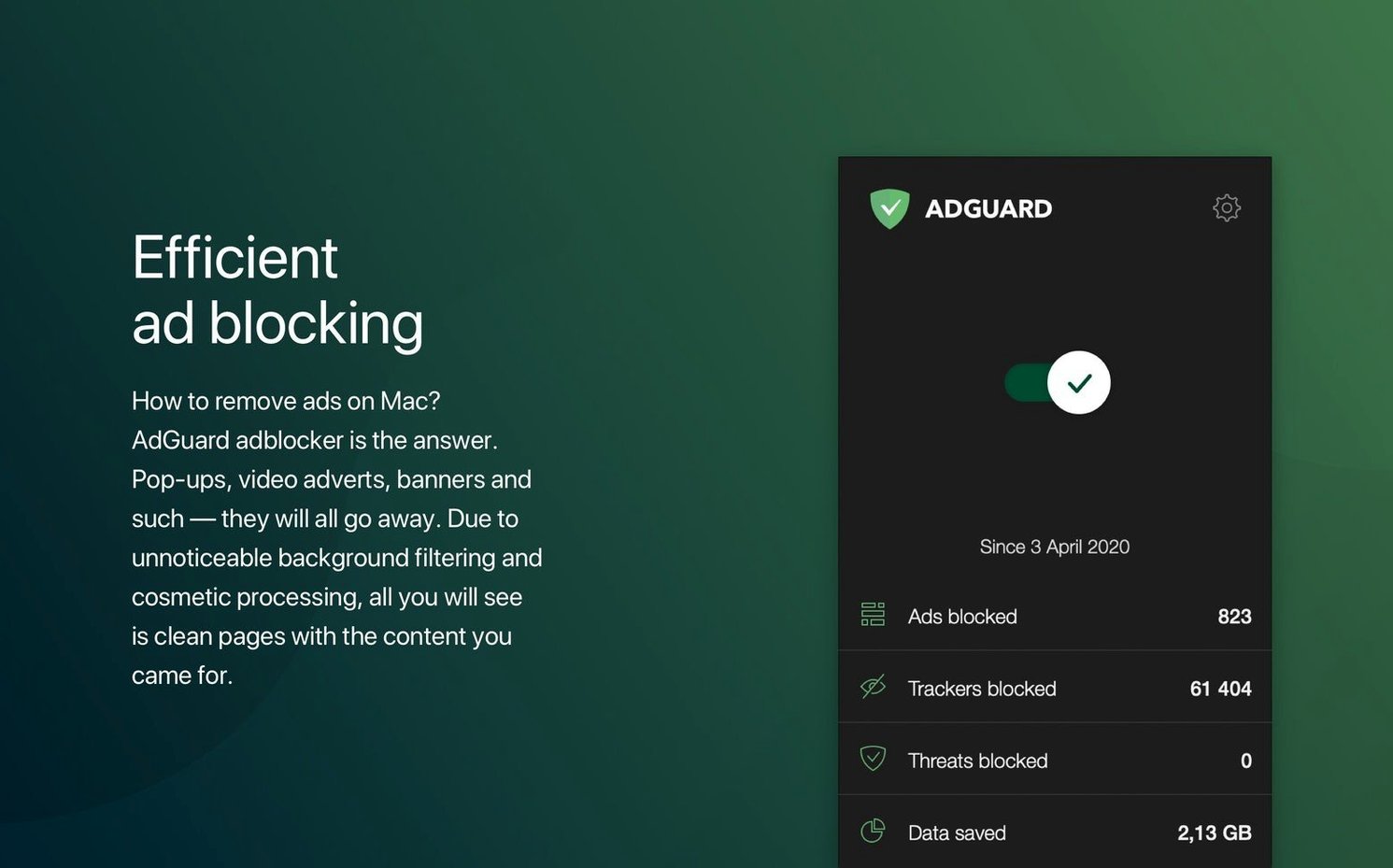
Adguard blocks ads and trackers everywhere on your Mac. Browsers, apps, system-wide.
Beyond ads
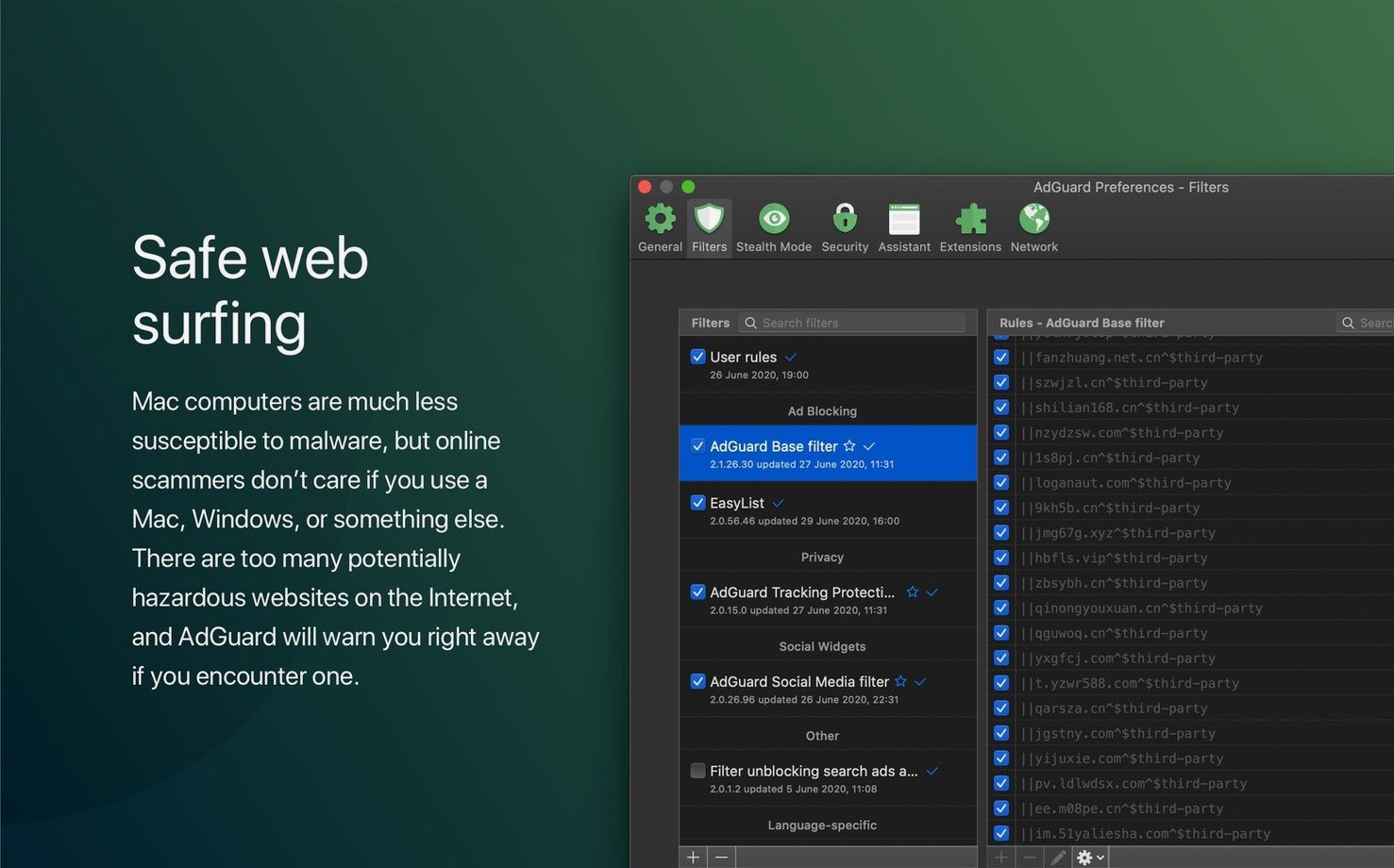
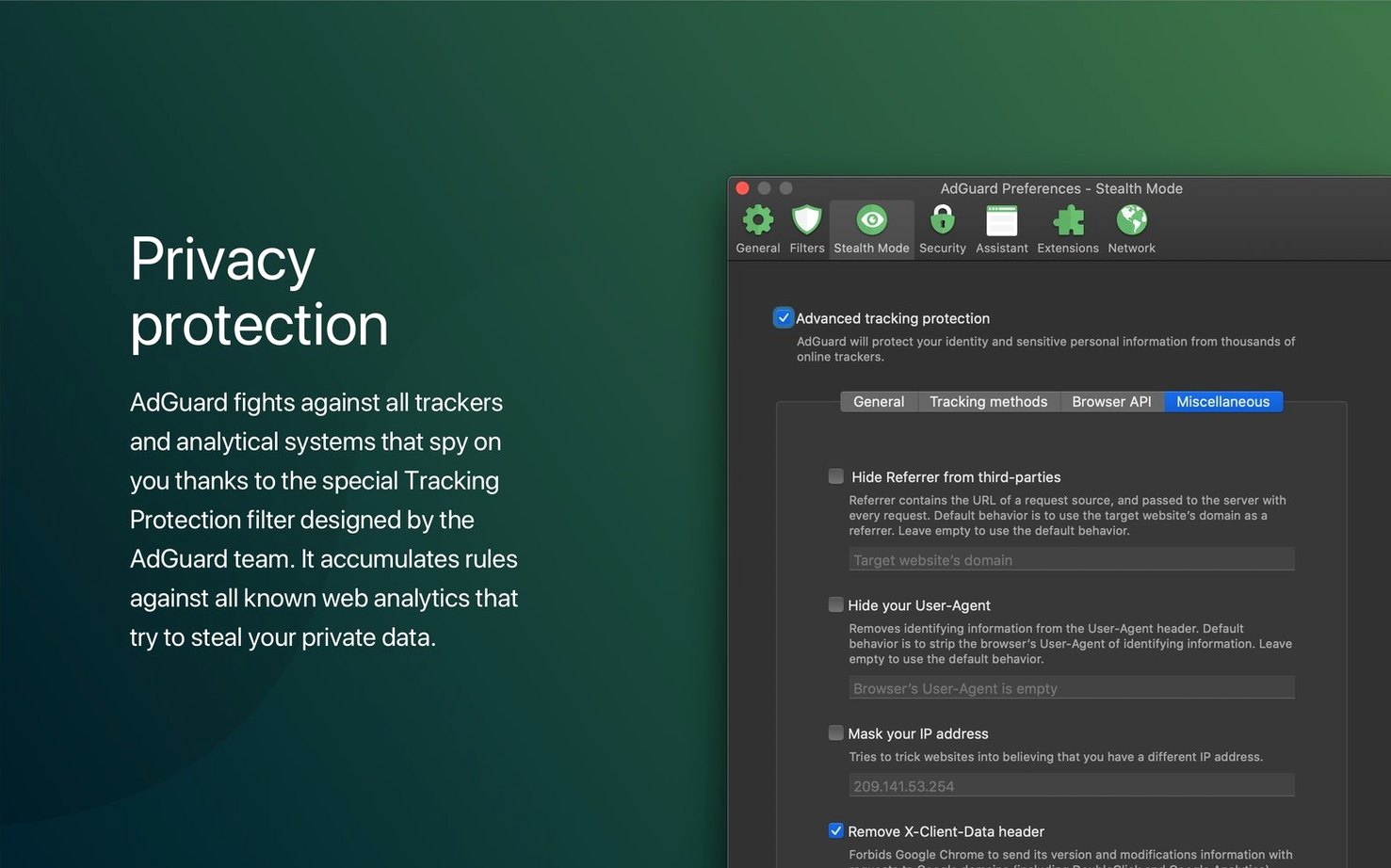
It hides personal data from analytics systems and scans for dangerous sites. Phishing and fraud get caught before they reach you.
Hidden tray tools
Adguard works at the network layer, so most of the time you just install and forget. A few conveniences sit right under the menu bar icon and are easy to miss.
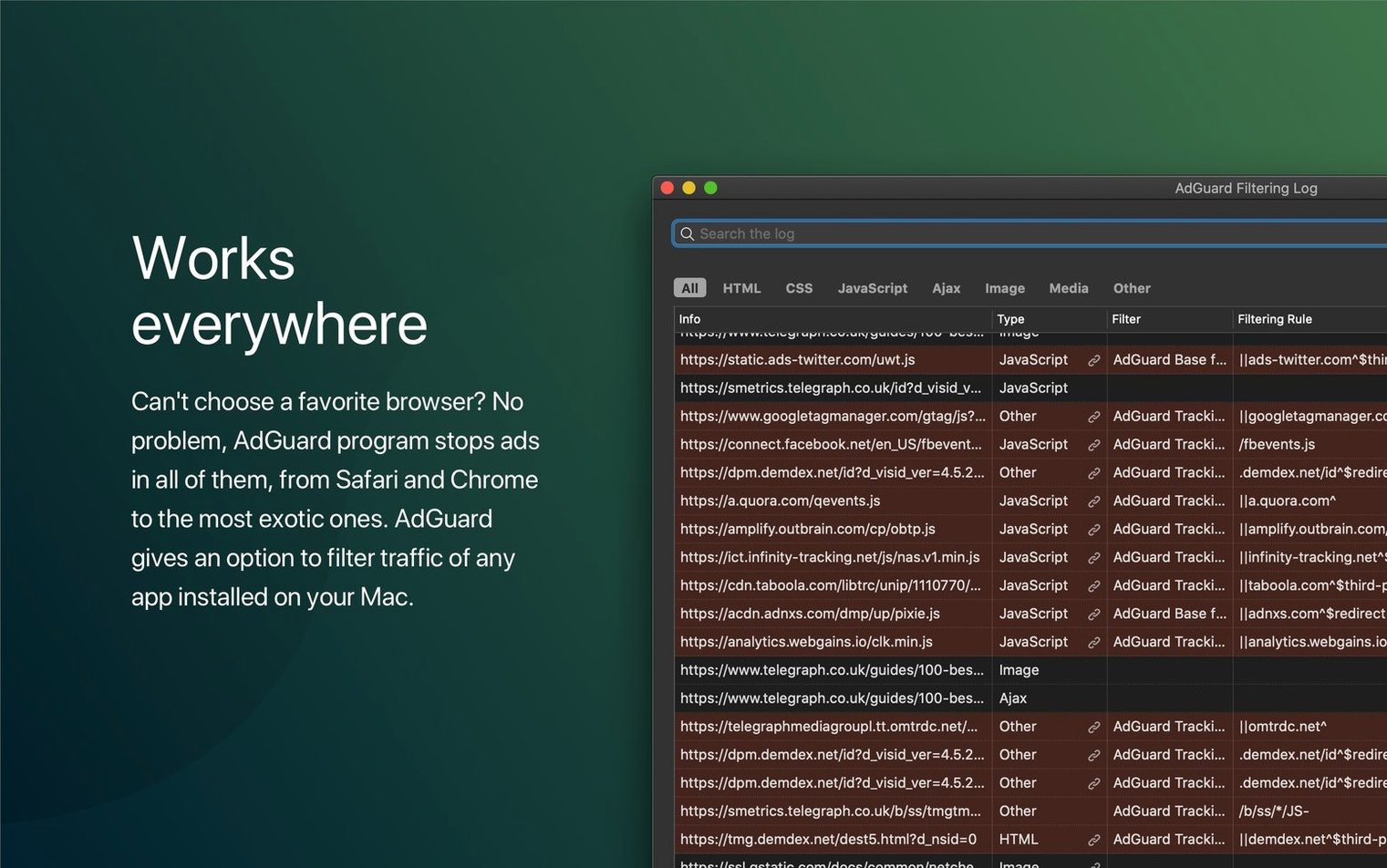
Click the tray icon. Below the big protection toggle you will find Filtering log. This is not just a diagnostic tool. It shows every request in real time, color-coded by type. You can click any blocked item and whitelist it with one button. No digging through preferences.
Hold Option while clicking a blocked element in the log. The assistant opens a trimmed-down rule builder right there. You can adjust the path pattern, limit the rule to a single domain, or block similar resources across all sites. Most users never discover this shortcut because it is not advertised in the main window.
The Compose button in the filtering rules pane also deserves more attention. You can write raw filtering rules using Adguard's syntax, test them against a live URL, and see immediately whether they match. There is a small syntax reference built into the editor. It stays out of your way until you need it.
A day of browsing with the filtering log open shows how little the app asks of your Mac. On an Apple Silicon machine, the background process rarely climbs above 0.3% CPU. Memory use settles around 120 MB with the advanced tracking filter and the spyware filter enabled. That figure barely moves under heavy tab loads. The app does not inject JavaScript into pages — it intercepts at the socket level — so page rendering stays fast. Stability improved noticeably with version 2.18.0.2089, particularly on the three AI-powered browsers now supported. I ran it through a full workday with no beachballs, no DNS stalls, no kernel panics.
Some people look for an AdGuard Mac crack expecting lighter resource use. A cracked binary can be tuned for quiet operation if you verify that the filter lists are intact and up to date. You get a clean, silent experience when everything is in place.
Silence consent banners
Here is a common task: you have a news site you want to support, but its cookie consent banner keeps reappearing. The site uses a third-party consent platform that Adguard's base filters do not catch.
Open the site. Click the Adguard tray icon. Select Block an element on this page. The page dims and a selector tool follows your cursor. Hover over the banner until the whole overlay highlights. Click it. A preview panel shows what will be blocked. Adjust the sliders if the selection is too broad — sometimes the rule catches the page background by accident. Preview again. Click Block. The rule saves to your user filter list. Reload the page. The banner is gone forever, not just hidden, and the site still loads its content.
To verify the rule did not break anything, open Filtering log. Reload the page once more. Watch for any blocked CSS or script files from the main domain. If you see a false positive, click it and choose Unblock or adjust the rule pattern with the Option-click shortcut described above.
The same workflow applies to in-app ads in free Mac utilities. Adguard filters traffic from those apps just like a browser. The element blocker works in any WebKit view, so many Electron-based apps respond to the same point-and-block tool.
Unactivated filters
The most common error is installing the app and expecting all filters to be active. A fresh install enables only the base ad-blocking list and the spyware filter. You have to open Adguard settings > Filters and manually enable the language-specific lists, the tracking protection filter, and the social media filter. Without those, about a third of the trackers you installed the app to stop will still pass through.
Another mistake is using the DNS protection module alongside another DNS filter like NextDNS or a Pi-hole. Two filtering layers at the DNS level do not double the protection. They conflict, causing slow lookups and intermittent page timeouts. Pick one. Adguard's own DNS filtering is enough for most setups; if you already maintain a custom blocklist on a Pi-hole, disable the DNS module in Adguard and let it handle only the application-layer filtering.
Some users who go hunting for an AdGuard crack download may find an older version missing the network extension improvements in the 2.18 branch. The older extension model uses a local VPN profile that can interfere with actual VPNs. Version 2.18.0.2089 runs a network extension that coexists cleanly with most VPN clients, including WireGuard. If your VPN drops repeatedly, check whether you are running an outdated build. The difference often comes down to making sure the activation is properly applied, not a settings conflict.
The nightly channel exists for people who want filter updates ahead of the stable release. It updates the filtering engine only, not the app binary. You can switch to Adguard nightly updates from the general settings pane under Update channel. It is safe for daily use — I have not seen a broken filter list in months — but if a site suddenly breaks, switching back to the stable channel and forcing a filter refresh usually fixes it in seconds.
Anyone who wants one filter for the whole machine. You block a page element once, and it stays gone.