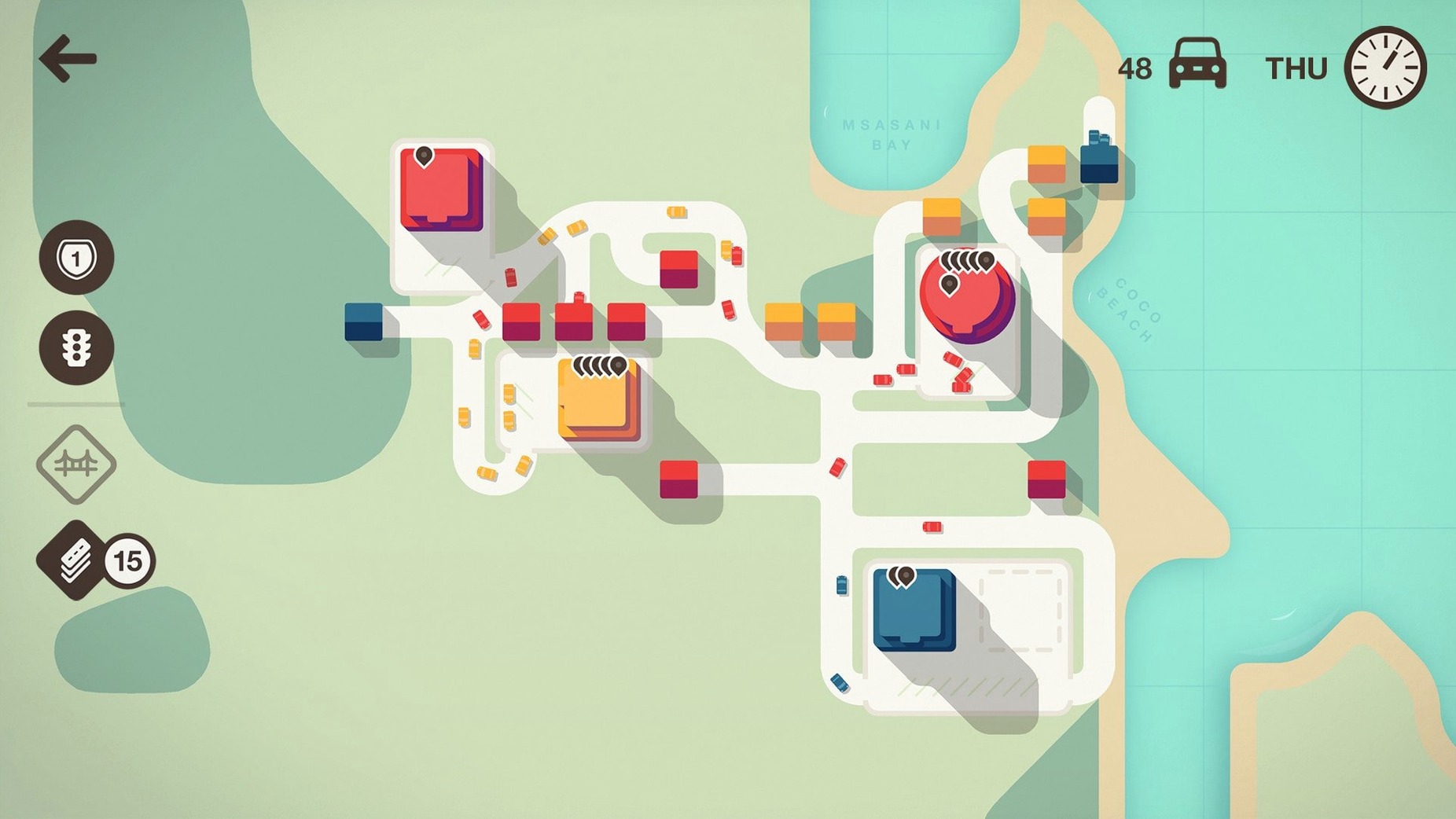
The Highway upgrade rewires everything.
Goal — Draw roads. Move cars. Keep a growing city flowing.
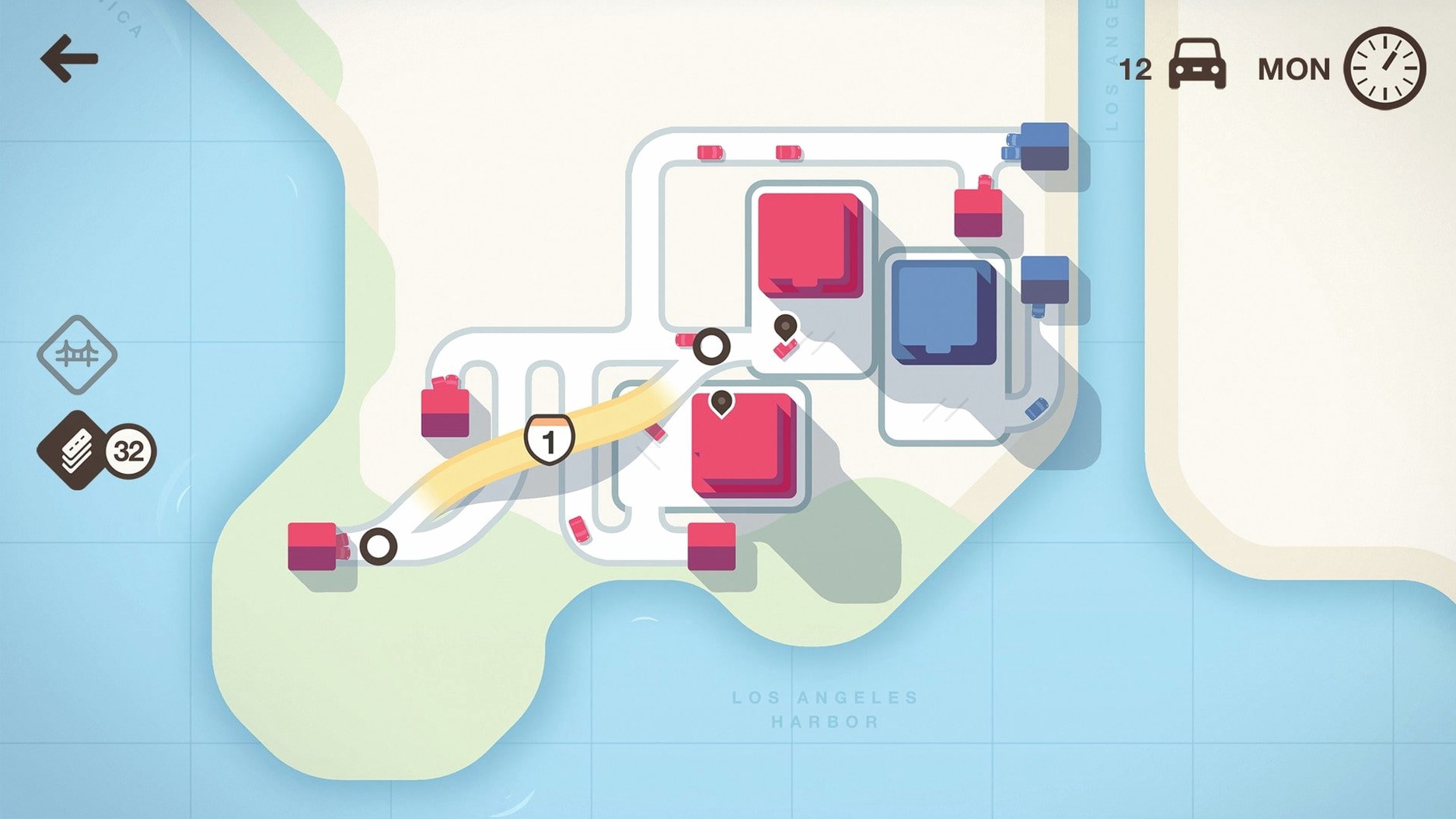
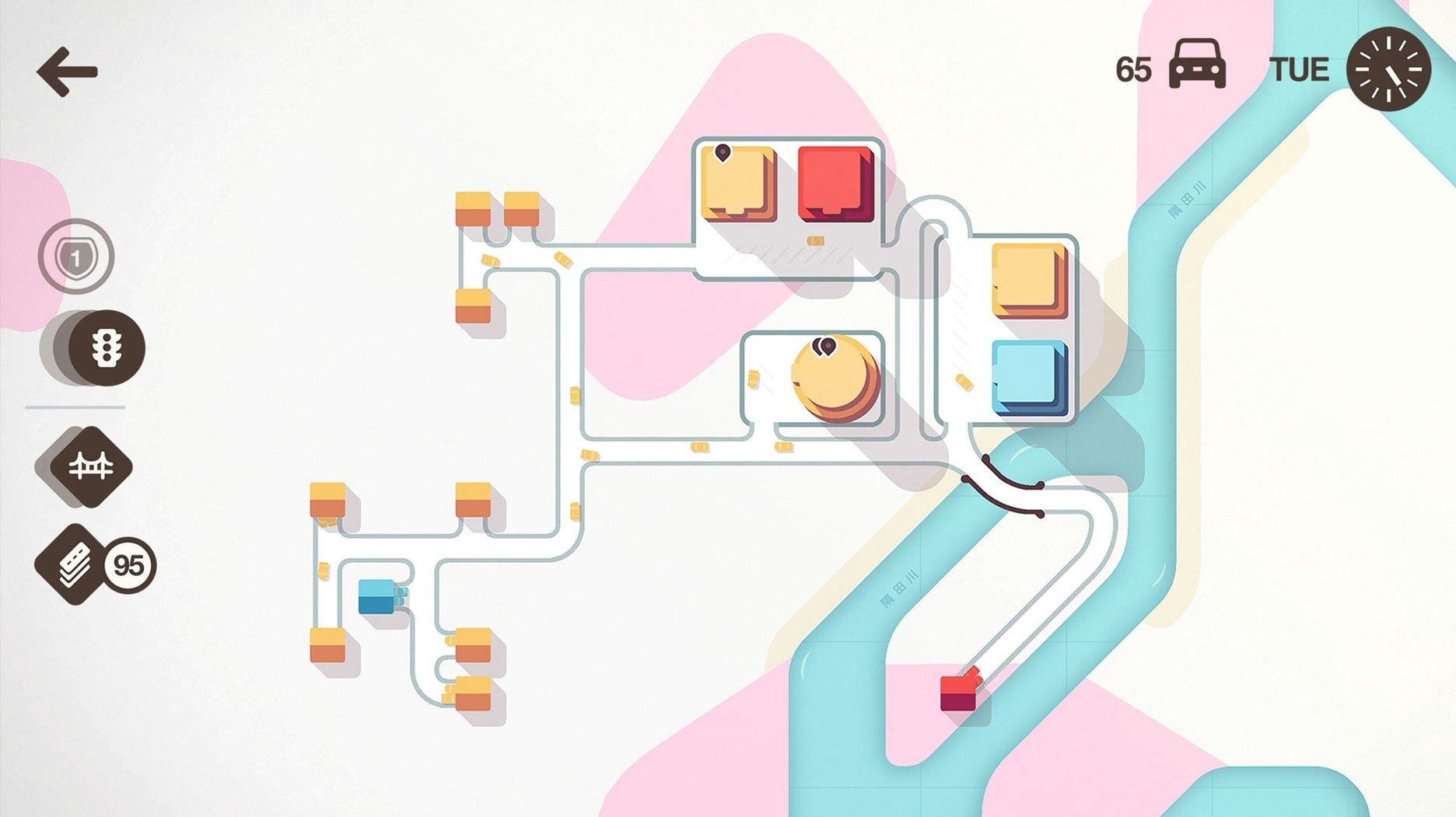
Maps — Inspired by cities around the world. Each run is unique because growth is dynamic, not scripted.
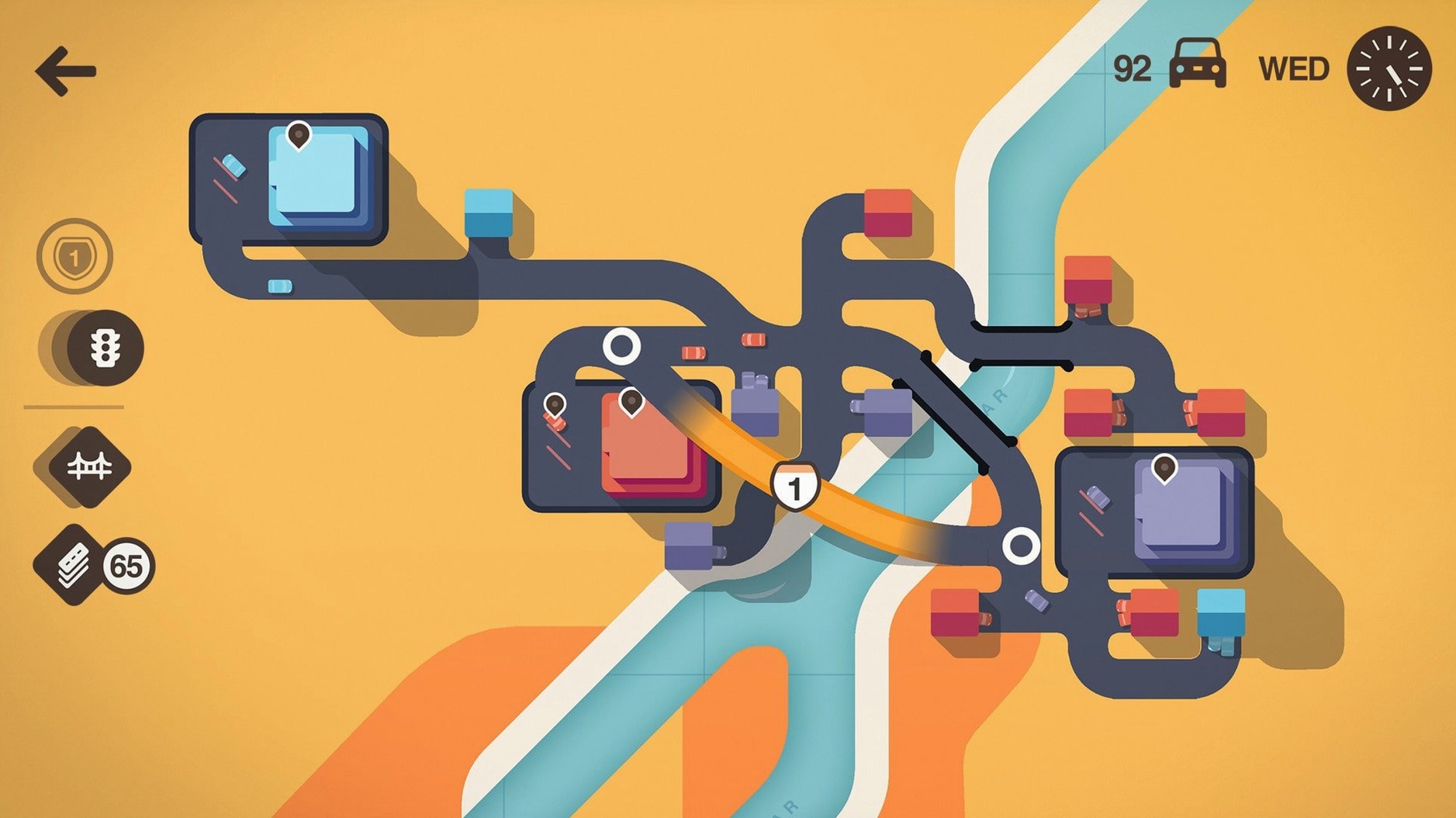
Highways — A late-game tool that reroutes traffic across long distances. One placement can save a gridlocked district.
Night mode — A color option that softens the screen. Several palettes are included.
Soundtrack — Changes as your city expands. Quiet hums become layered, driving pulses.
Nearby roads
Mini Metro — same studio, same restraint. Stations and subway lines instead of intersections and asphalt. Mini Metro feels tighter, more abstract. Mini Motorways spreads out. The pace is looser, the map feels larger. Both punish overbuilding.
Cities: Skylines — a full simulation with budgets, zoning, and public opinion. Mini Motorways trims all of that away. No taxes. No policies. Just the road and the clock. It scratches a similar itch in ten minutes instead of three hours.
Freeways — a smaller indie take on traffic routing. Interface is sparser, the map a single canvas. Mini Motorways polishes the details: color modes, the reactive soundtrack, the gentle weekly report. Freeways sketches; Mini Motorways inks.
Connected
The game sits well beside a podcast app. The Disasterpeace score is rich, but not so loud it demands full attention. Overcast in the background, roads in the foreground — a calm evening.
Drag a screenshot into Apple Notes to annotate a tricky intersection. Mark up a roundabout, trace a better highway path. The game doesn’t offer replays; your notes become the post-mortem.
Focus modes on macOS pause notifications while the city grows. One less interruption when a demand spike hits and you’re redrawing three bridges at once.
Roads can be redrawn at any time. The game runs quietly, stays responsive, and asks for very little.