Vocal producers and mix engineers reach for it when a performance needs precise, invisible correction. It handles live pitch shifting on stage and surgical editing in the studio.
Natural tuning
- Manual, note-by-note tuning in Graph Mode.
- Real-time correction during tracking or performance.
- Keeping the natural character of the voice intact.
Vocal-only tool
- Built for vocal editing only.
- Graph Mode rewards patience and a careful hand.
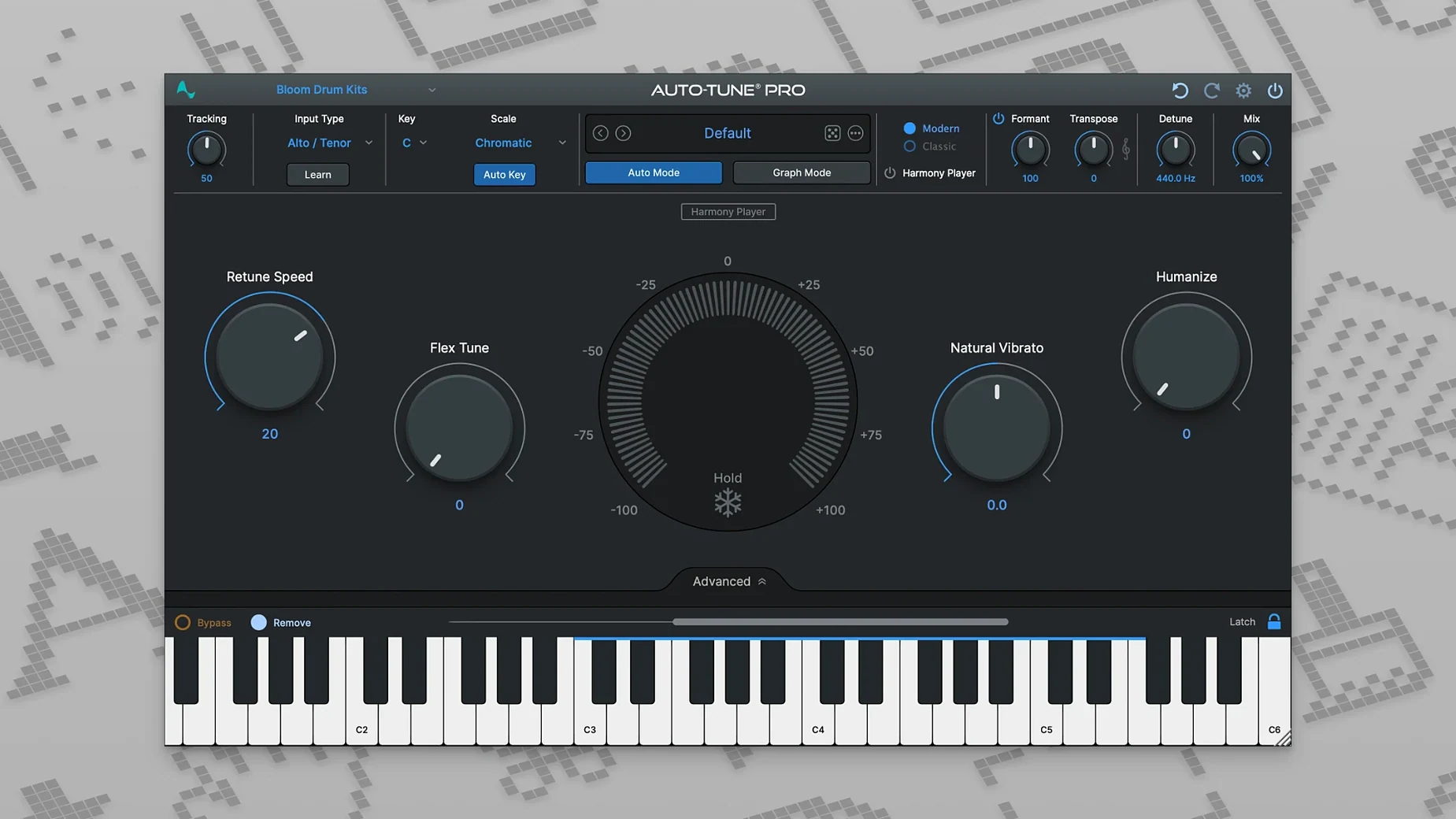
Beginners often jump straight into Auto Mode and leave the Retune Speed at zero. That hard-tuned sound has its place, but it’s rarely what a lead vocal asks for. A subtler setting, somewhere above 25, keeps pitch correction transparent.
Another common misstep is ignoring the input type. Soprano, alto, tenor, low male — the tracking behaves differently for each. Picking the wrong one makes the plugin work harder and sound worse.
In Graph Mode, new users sometimes draw pitch lines that follow every tiny wobble. Editing too tightly removes the breath and drift that make a voice human. Correct the notes that pull the ear, then leave the rest alone.
Next to others
Celemony Melodyne is the obvious comparison. Where Auto-Tune Pro excels at real-time work and quick fixes, Melodyne goes deeper into polyphonic material and formant manipulation. For a pure vocal session with ARA2 in Logic, both feel fast. Melodyne shows more of the sound’s inner structure; Auto-Tune Pro stays closer to the performance.
Waves Tune Real-Time is lighter and simpler. It handles basic live correction well, but lacks the manual Graph Mode and the fine control over vibrato and flex tuning that Pro offers. Antares’ own Auto-Tune Artist sits between them — real-time only, fewer editing tools. If you need to zoom in and redraw individual syllables, Pro is the one that opens that door.
Light footprint
On an Apple Silicon Mac, the plugin loads without hesitation. Graph Mode redraws waveforms smoothly, even in sessions with forty or fifty tracks running.
Memory use stays modest. I rarely see it climb above a few hundred megabytes, even when several instances are active. CPU spikes can appear if you stack many real-time instances, but freezing a track or two settles things immediately.
Stability under ARA2 in Logic and Studio One has been solid through long editing days. No silent dropouts, no sudden timeline desyncs. It feels built for producers who don’t have time to babysit their tools.