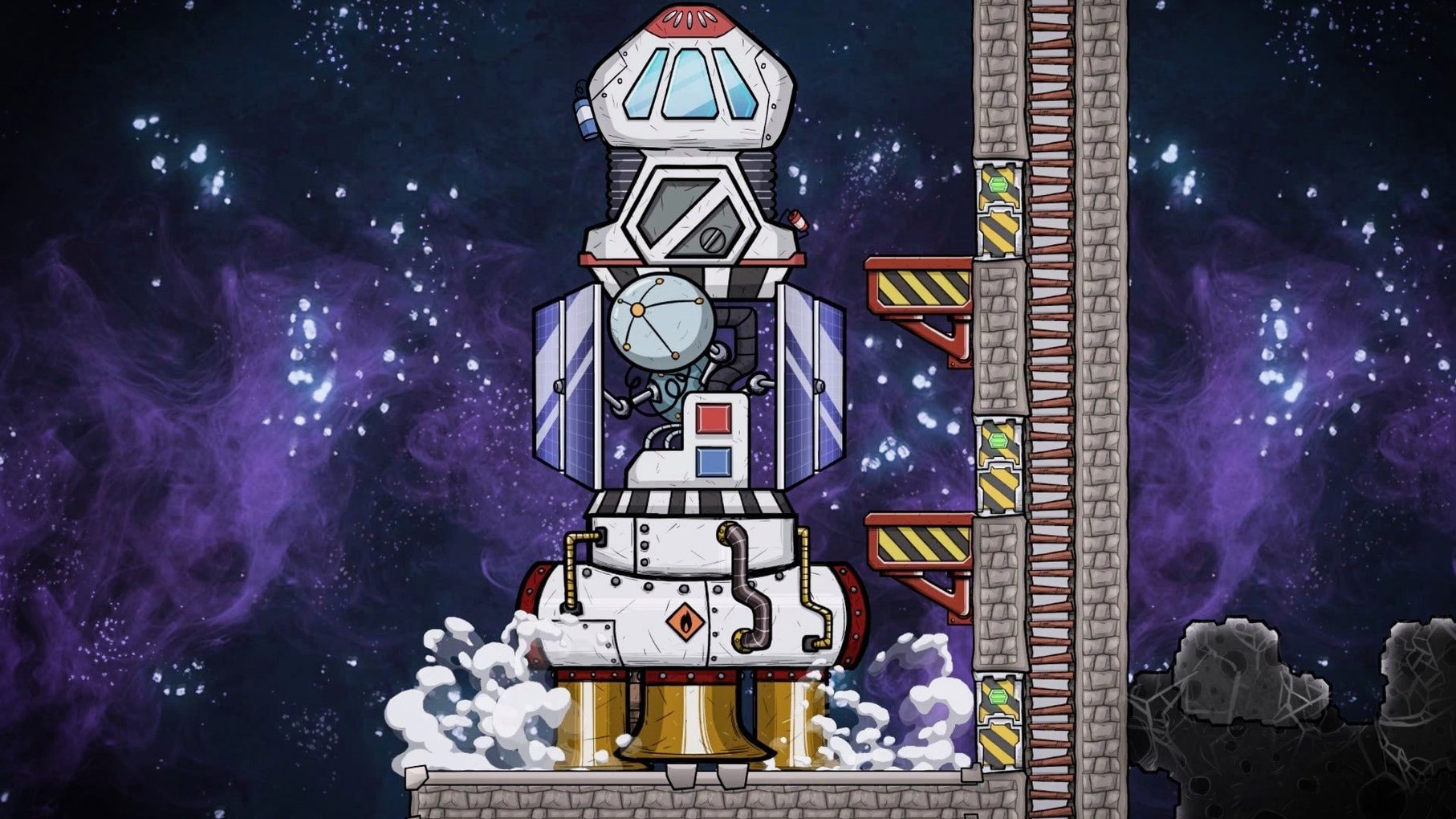
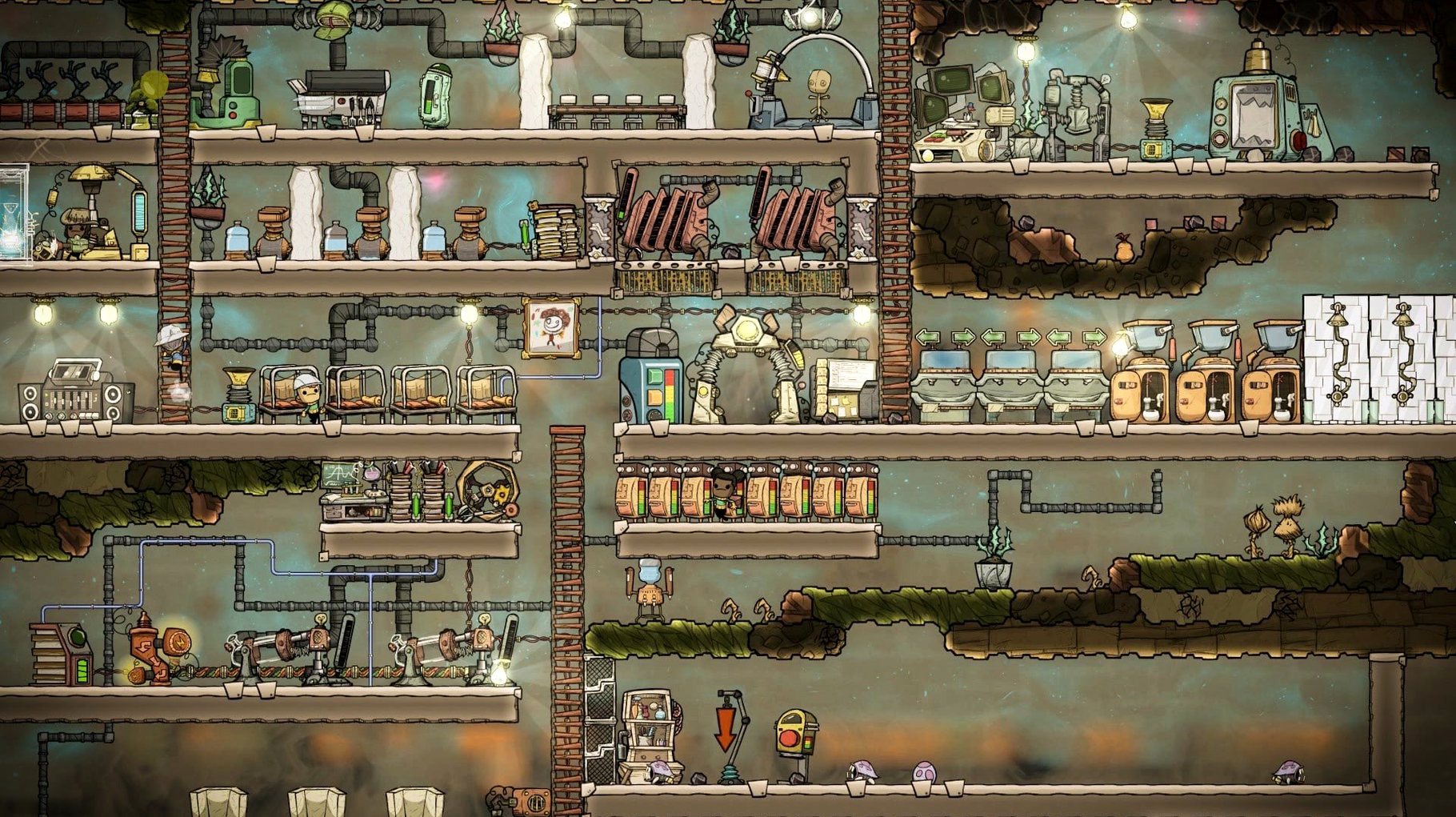
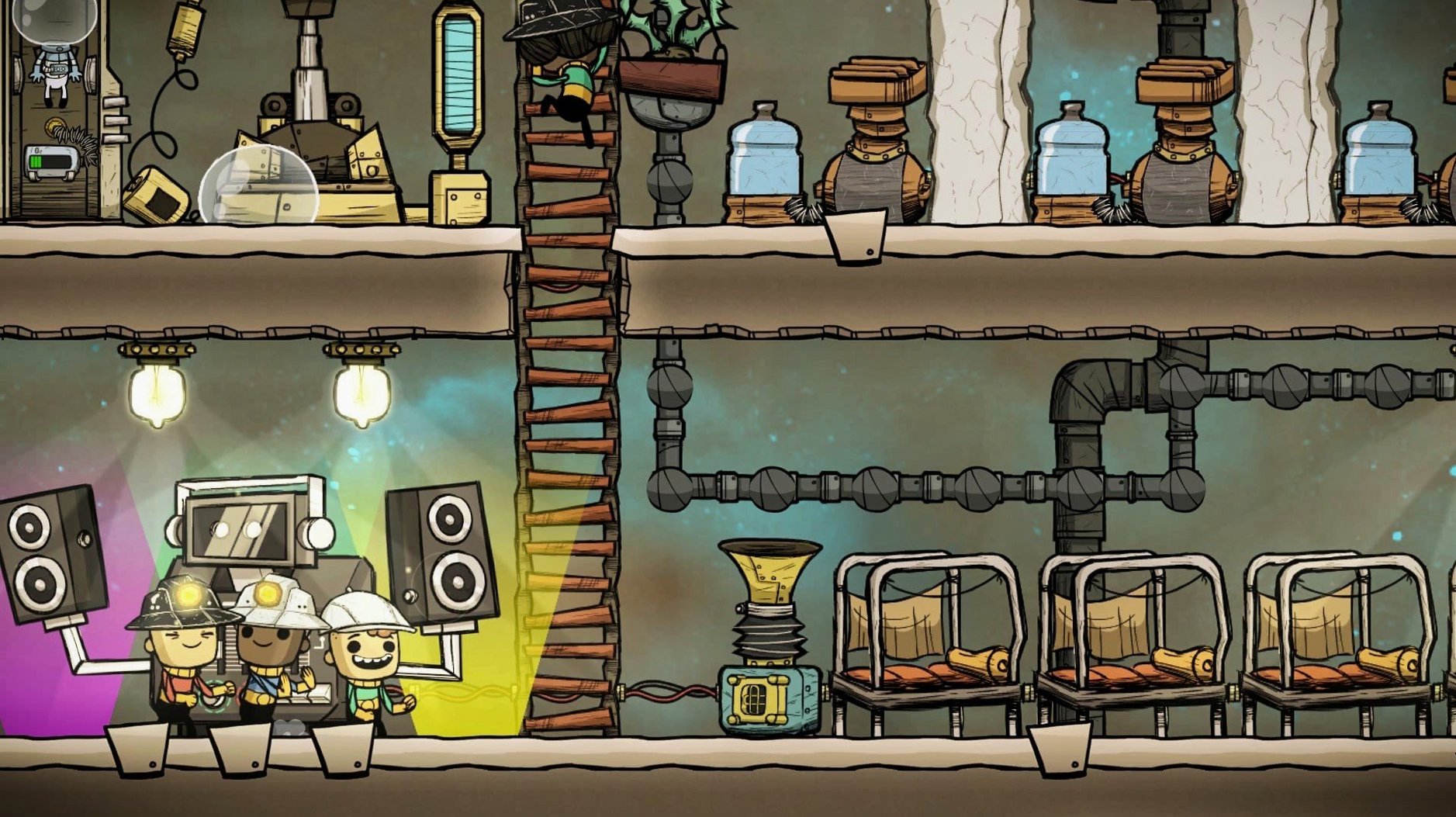
Like a Rube Goldberg machine built from desperation, this is colony management where every solution creates tomorrow's problem.
1. Dig. You leave the starting biome to mine minerals in nearby ravines. The base needs raw materials before it can breathe.
2. Breathe. You gather oxygen, water, and food. The first loop is always the same: secure air, then calories.
3. Adapt. Most colonists carry individual character traits. Some solve problems creatively. Others protest when happiness drops, dragging down the whole operation.
4. Waste. Consuming everything creates waste. You deal with the byproducts or watch the base choke.
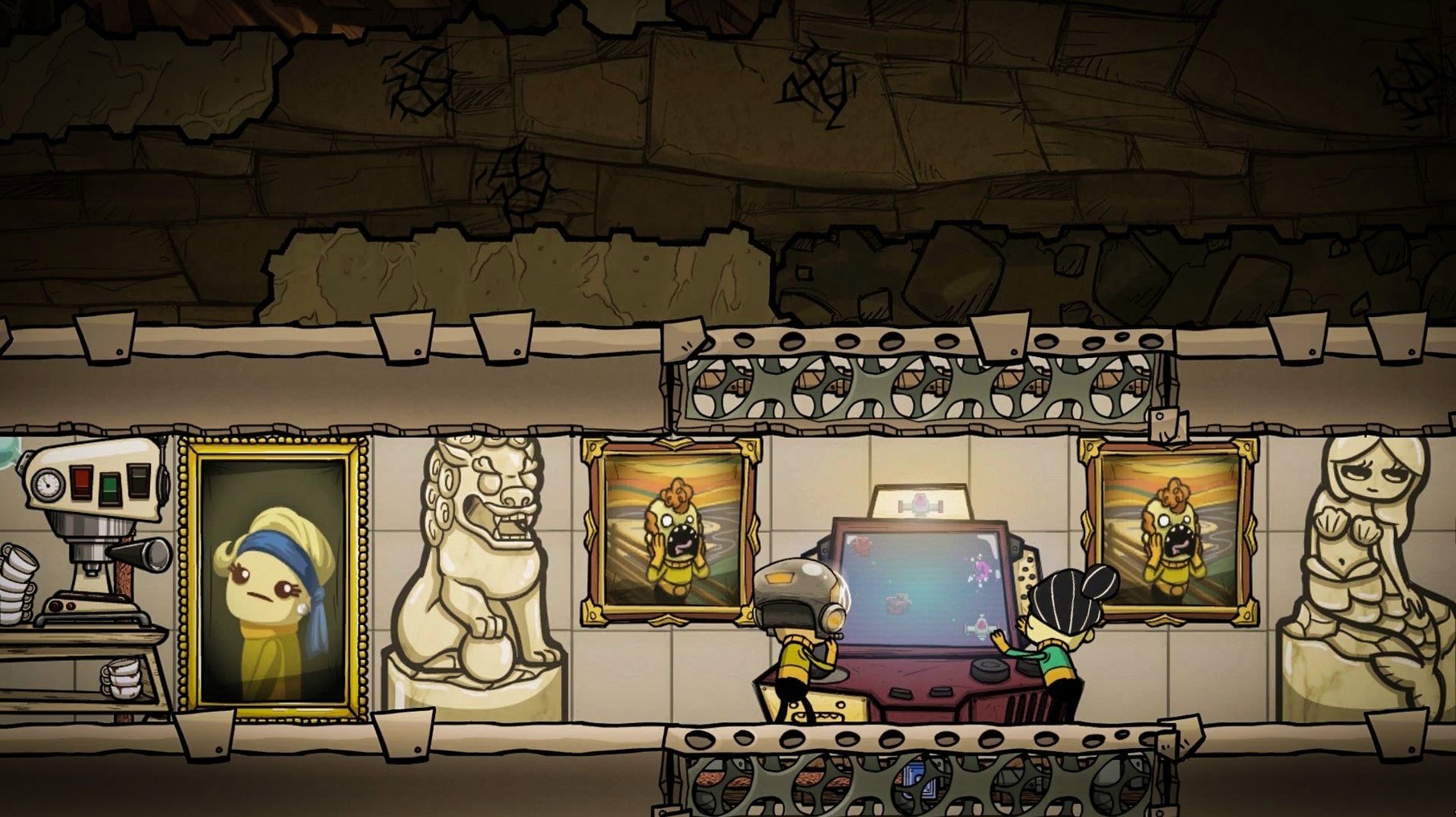
5. Relax. Eventually, a relaxation machine becomes necessary. Unhappy duplicants work poorly.
A single plain scene: gas pipes snake through a dug-out asteroid while a duplicant with a unique trait stares at a relaxation machine, ignoring the mounting garbage heap behind them.
Priority dragging
Priority overlays matter more than most new players expect. The game lets you cancel a dig order by right-clicking the tile, but the quieter trick is using the priority tool across an entire vertical shaft. One drag, not ten clicks.
The temperature overlay, often ignored for the first twenty cycles, is the real minimap. Hot biomes leak upward. Cold ones sink. You can plan your insulation before the first crop dies.
Duplicants will use ladders as transit, but assigning directional doors changes flow more than adding a third ladder ever will. One well-placed door beats three extra tiles of pathing.
Keyboard shortcuts stay minimal: space pauses, numbers jump to overlays. Learn three. The simulation keeps running while you hunt through menus.
Some players miss that storage bins accept filters by element. Without them, you haul hot regolith into the living quarters and wonder why the air cooks.
The schedule tab deserves a look before cycle ten. Staggering sleep shifts means somebody is always awake to rescue a trapped duplicant.
Small, but concrete: a compact base with one airlock direction fixed beats a sprawling one with open paths. The colony runs on these tiny, invisible decisions.
Searching for an oxygen not included mac download often leads players past the game's quieter systems. The conveniences above do more for survival than any single tech unlock.
Liquid stutter
Version 744825 runs steady on both Apple Silicon and Intel machines. Frame pacing stays calm until a large liquid flow begins, then it dips briefly and settles again. Not a problem in normal play.
Memory use hums along without climbing across long sessions. The navgrid leak fix in this release shows: pathing stays responsive even with twenty duplicants and a half-dug map.
Texture memory sits lower after the optimizations. Older graphics cards benefit most, especially around large bodies of liquid.
Autosaves still take a breath, but the game recovers quickly. Nothing interrupts the loop for long.
Stability has been quiet. Crashes are rare, and the hotfix addressed one of the stranger bugs: duplicants teleporting to the bottom left after a rescue. Gone now.
Daily use feels like a settled build. You stop noticing the engine and start noticing the mess your colony made overnight.
Chlorine pocket
The first mistake is digging too fast. Opening a chlorine pocket early poisons the lower base. Slow down. Seal first.
The second is ignoring bladder fullness. Accidents contaminate water. You drink the water. Then the disease chain starts. Watch the needs panel like a fuel gauge.
Third: too many duplicants too soon. Every extra mouth doubles oxygen demand before you feel it. Four is enough for the first thirty cycles.
Fourth: overbuilding mealwood. It rots. Rot becomes polluted dirt. Polluted dirt off-gasses. You solve calories and create an air problem.
Fifth: no surplus food buffer. A single bad harvest without backup means stress spikes, then protests, then a cascade. Keep two days of calories stored.
Some new arrivals search for an oxygen not included torrent and get a working copy, but the game itself shows no mercy. The asteroid does not care how you installed it.
The skill system punishes impatient planning. Some duplicants learn digging fast, others flounder. Assign jobs by trait, not by who is standing nearest.
Workload balance is another early killer. One duplicant doing all the cooking while also hauling collapses from stress. Split tasks deliberately.
Waste handling is the quiet lesson. You can ignore garbage for a while. Then the base smells, morale drops, and a disease sweeps the barracks.
The game is a hardcore survival simulator wearing strategy clothes. It will not tell you that a small plumbing mistake flooded the sleeping area. The duplicants just sleep in the water and get sick.