Runs on Intel Macs. It is an x86 64-bit build.
Civilization in cards
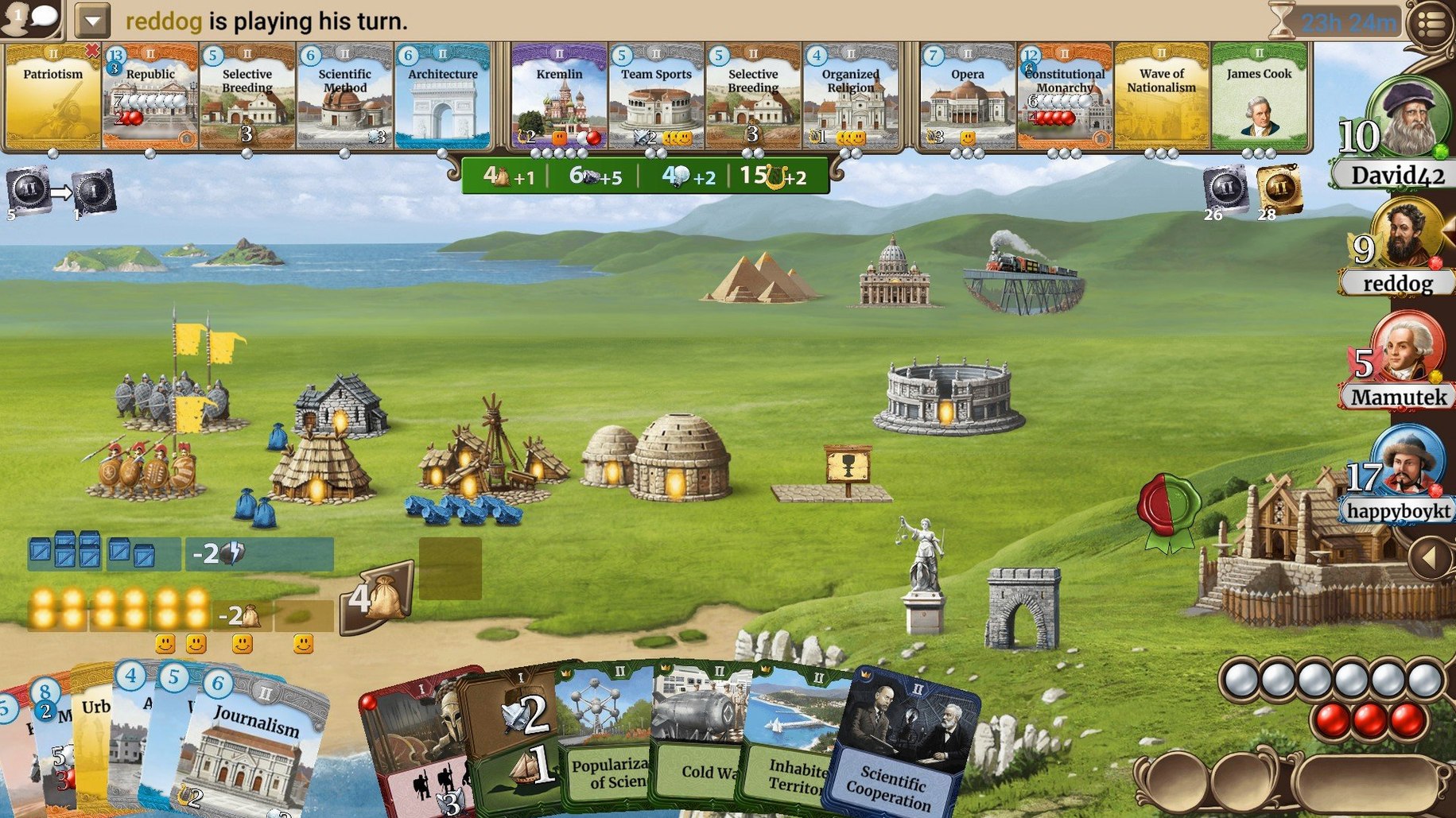
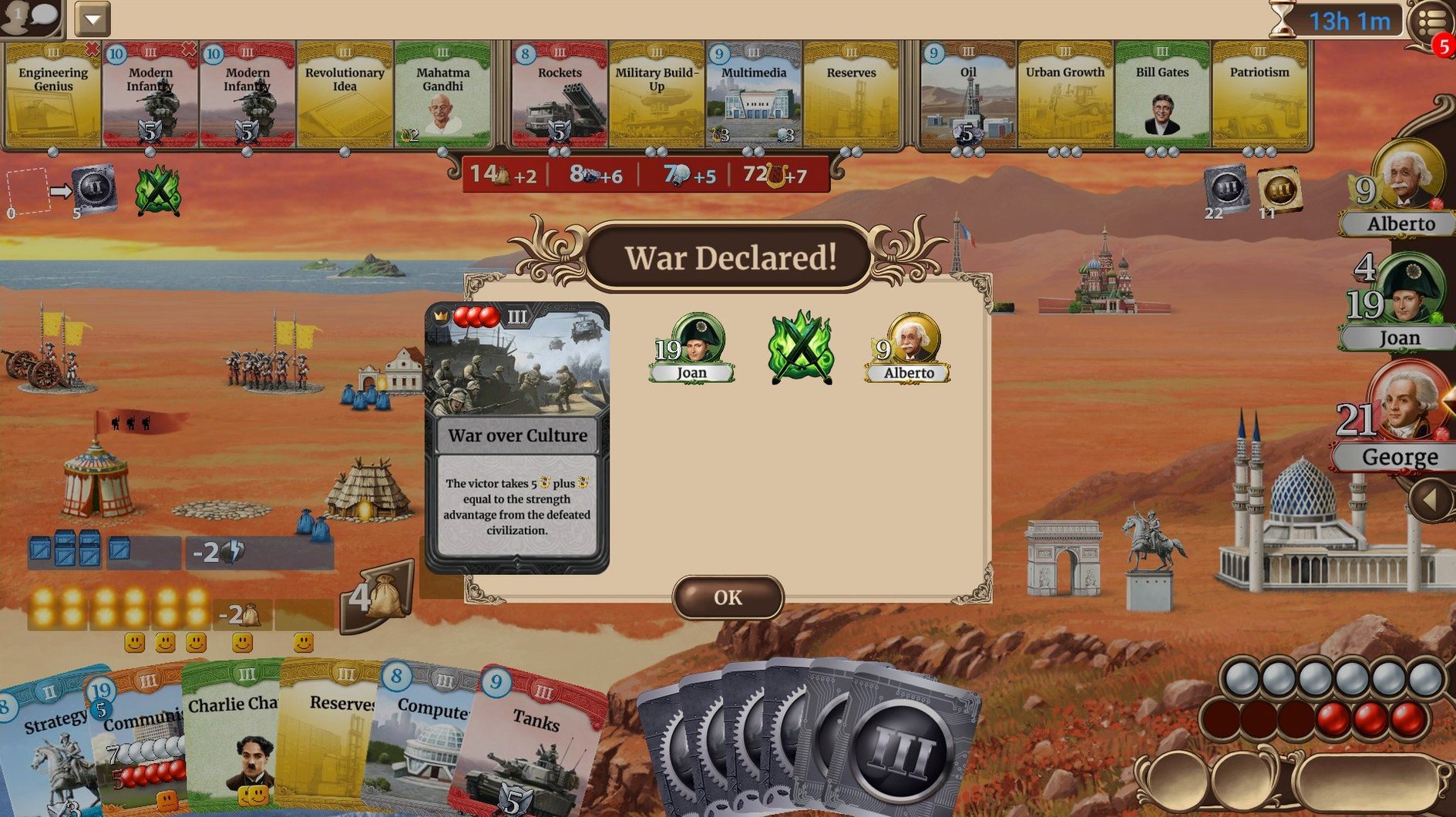
A full civilization-building game by Vlaada Chvatil. You develop farms, mines, technology, governments, and wonders. Diplomacy cards and military conflicts shape your borders. Culture points determine the winner.
Paths
A full round
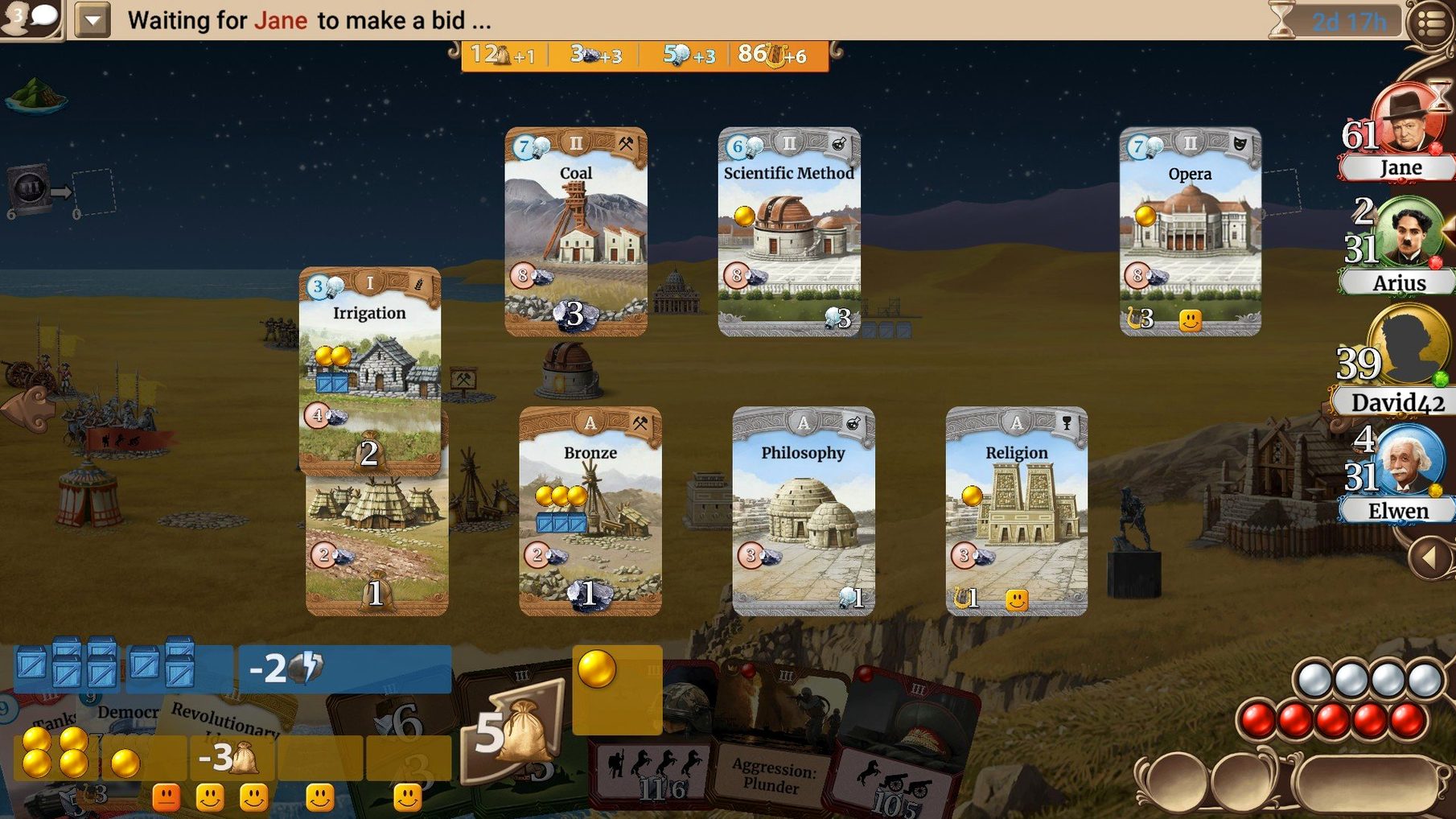
You start with a single farm and a bronze mine.
Early turns go to science. You grab Philosophy and Code of Laws. Mid-game, you switch to military. A well-timed aggression card strips your opponent of a key urban building. They lose a turn rebuilding. You build the Great Wall. Their retaliation fails.
Late age, you pivot to culture. Opera and Journalism. You end with 168 culture points. The board quiet. The ledger shows your margin.
For a board game night moved online
A small group who used to meet in a kitchen now plays remote. One person hosts. The turn timer keeps things moving. The interface shows every card and token clearly.
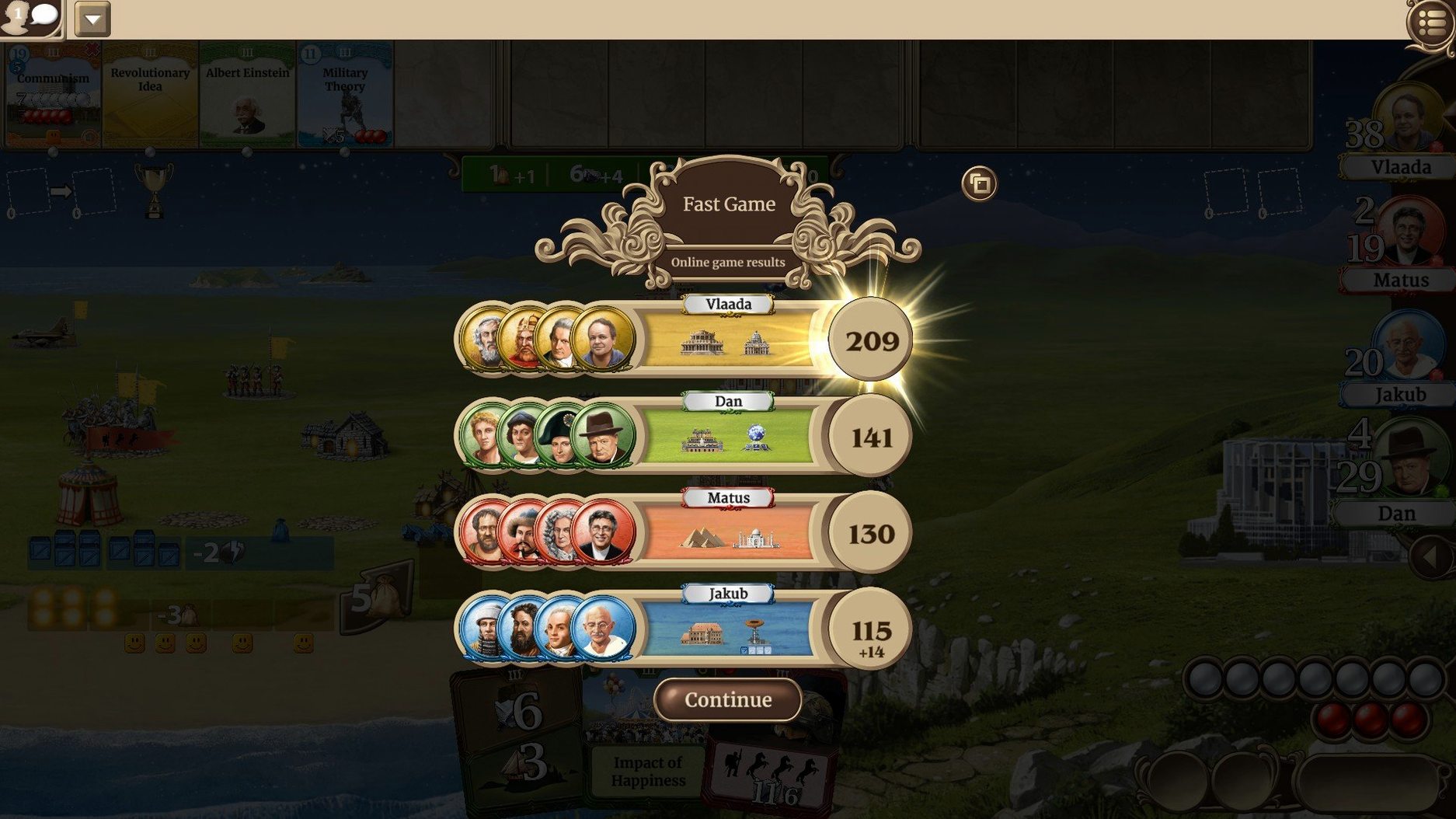
Chat stays in a separate app. The game itself stays clean. Someone pursues a science engine. Someone else hoards military cards. A third quietly builds the Pyramids. The endgame screen sparks the same arguments the kitchen table did.
Against similar games
Next to Sid Meier’s Civilization VI, this is tighter. No map exploration. No sprawling tech tree with hundreds of nodes. Every card you pick matters immediately. A game finishes in under an hour.
Beside Age of Rivals, it carries more weight. Age of Rivals is a drafting sprint. Through the Ages asks you to manage production pipelines across eras. The tension is slower, deeper.
Compared with Freeciv, it strips away the map entirely. No tiles. No fog of war. Just the choices. It is a civilization game reduced to its economic and military skeleton.
You pursue science, culture, industry, military power, or agriculture. The game uses music for its audio. It responds to the strategy you choose.