M1 Native
macOS 11 or later, Apple silicon. 64-bit VST 2.4, VST 3, Audio Unit and AAX Native. No standalone app.
Shape
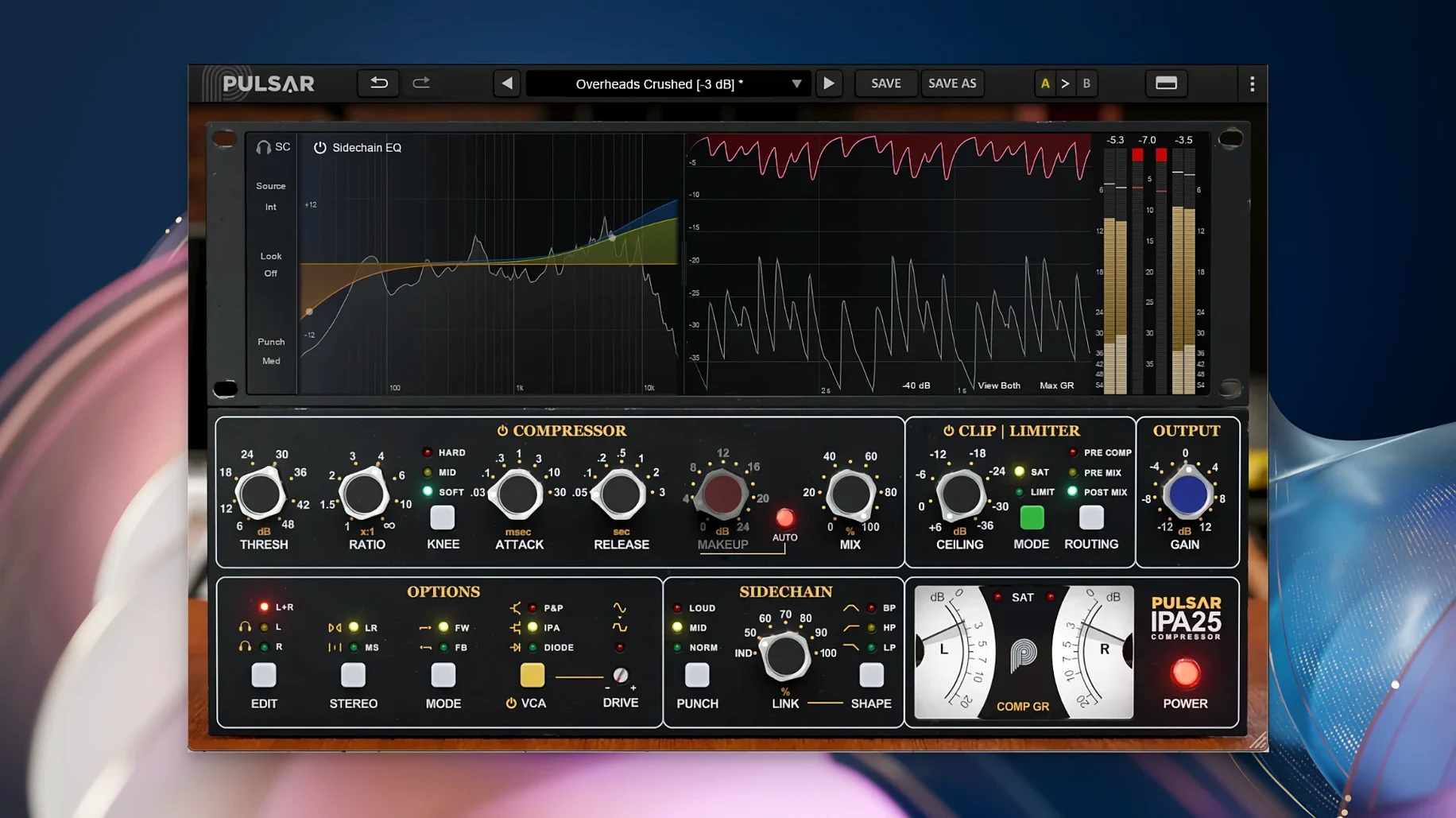
A multi-VCA design modeled on the API 2500: the grab of a classic bus compressor with modern control. A visual sidechain EQ, a clipper and a limiter keep gain staging tidy.
Place
Studio use
A mix engineer preparing a rock track for release reaches for IPA when the drum bus feels scattered. The low end pushes too hard, the cymbals smear, and the whole kit sits behind the vocal.
Switching the VCA mode to Diode tightens the transients. A small sidechain cut around 300 Hz keeps the snare body from pumping the compressor. Then Mid/Side lets the overheads widen while the kick and snare stay locked in the center. The clipper catches the last few peaks before the limiter.
Three moves. The drums stop fighting the mix.
Who benefits
Mix engineers working on dense rock, pop and electronic material get the most from IPA. The three VCA modes give one plugin enough range to move from glue to aggression without changing tools.
Producers who build mixes as they go also respond well to it. The sidechain EQ is visual, so you adjust what you hear and see the curve at the same time. No second guessing.
Less useful for anyone who wants a single fixed compressor sound. IPA rewards small adjustments and a little patience with each mode.
Predictable VCA
Version 1.0.9 kept the plugin focused. The update refined the way the three VCA modes respond at extreme settings, so switching between IPA, P&P/Mu and Diode feels more predictable in everyday use.
Apple silicon performance also settled. On an ARM Mac running macOS 11 or later, the plugin sits more quietly in a session with other heavy processors. No new features to learn, just fewer interruptions while working.
Mid/Side opens the stereo field without breaking the center. At home on drum buses in rock, pop and electronic mixes.