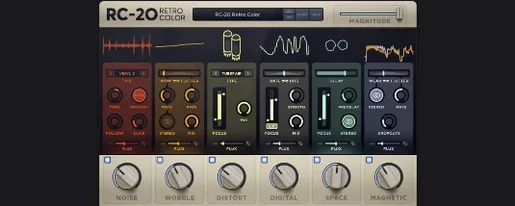
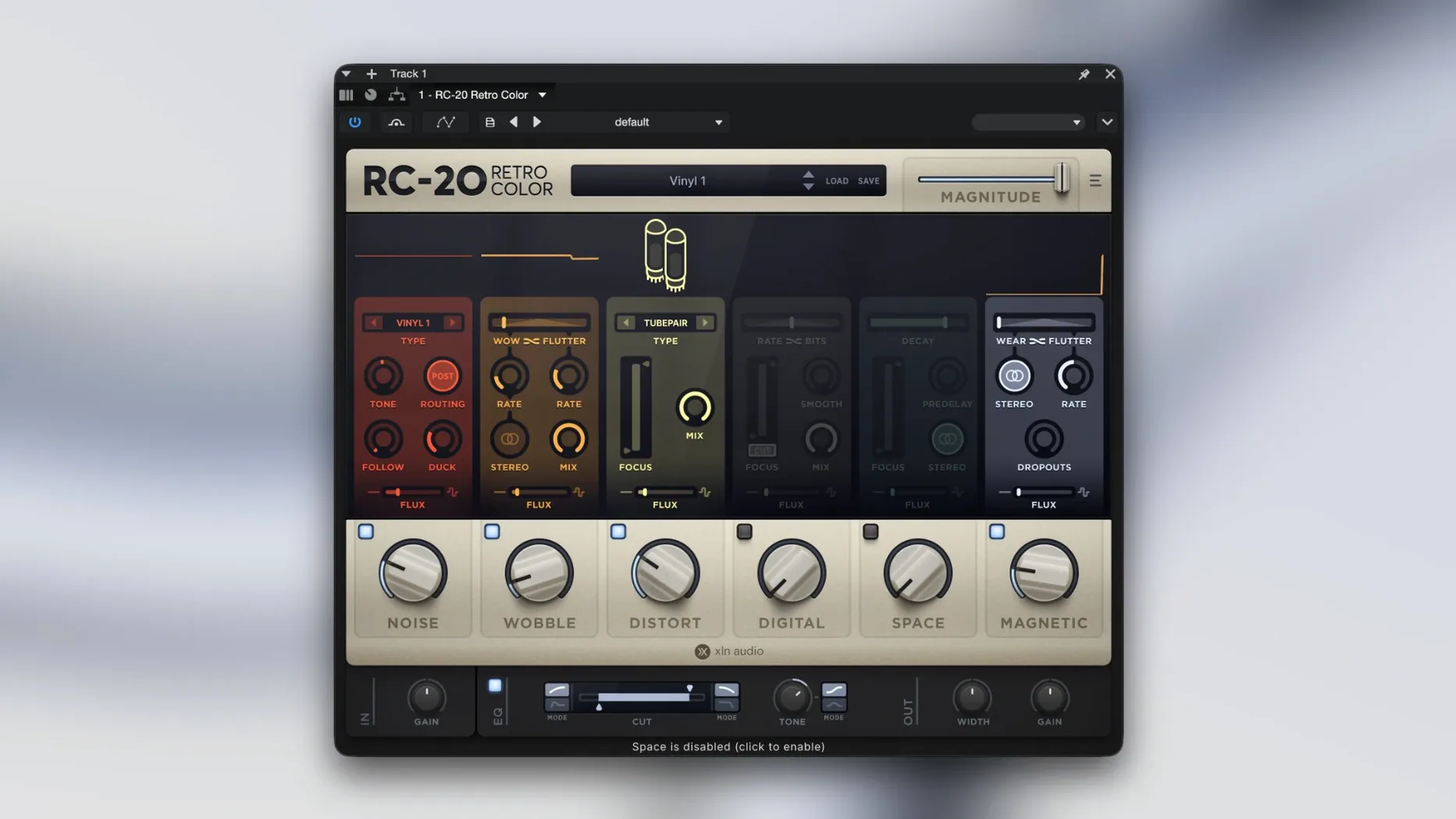
Six modules. One window.
Add dirt
Noise introduces hiss, crackle, and hum from old circuits. Distort pushes gain into soft clipping, like tape pushed too hard.
Add drift
Wobble layers slow pitch instability. The Flux engine makes the randomness feel organic over time, not looped.
Add space
First snags
New users often expect instant lo-fi magic from a preset, then hear something thin. The wet/dry mix on each module defaults to subtle. Crank it.
Another common trip: loading RC-20 on a bus and wondering why the wobble sounds static. The Flux engine needs time. Give it eight bars, not eight seconds.
Some hosts lose the plugin window behind others after opening. A quick Cmd+Tab cycle brings it back. If the UI feels sluggish on an Intel Mac, close unused modules; each active module pulls a little extra from the graphics thread.
A few people hunt for an RC-20 Retro Color crack and want to ensure it runs smoothly on Apple Silicon. The native build here runs clean on ARM. No translation layer, no random dropouts mid-session.
Noise Weight
You drag RC-20 onto a clean digital piano track. It sounds sterile. You open the Noise module first, bring the hiss up to about 30%, and immediately the silence between notes has weight.
Next you add Wobble. Depth at 15%, speed slow. Now the sustained chords breathe. You switch the Flux engine on and let the track loop while you make coffee. When you return, the instability has shifted; one phrase wavered differently from the last.
Distort comes last. Gain up until the attack of each note crunches, then backed off just a hair. The Magnetic module adds a faint drop-out character, like a cassette played too many times. You save the preset, name it after the track, and move on. Three minutes total.
Return Signal
Place RC-20 on a return track before your reverb. The noise and wobble will color the tail without muddying the dry signal. This trick alone can make a clean mix sound like it came from a 1970s console.
Try the Digital module at 8 bits on percussion. Not on the whole kit—just on a parallel channel. Blend it underneath for grit that doesn't swallow the transients.
The factory presets are starting points, not destinations. Pick one close to what you want, then zero out two modules and push the remaining four harder. You'll learn what each section actually does faster than reading the manual.
If you got the plugin through an rc 20 torrent, skip the cracked preset packs floating around. The included library is tighter and better organized. Most third-party packs just rename the factory sounds.
Digital crushes the bit depth. Magnetic mimics tape head wear. Space places the sound in a dusty room.