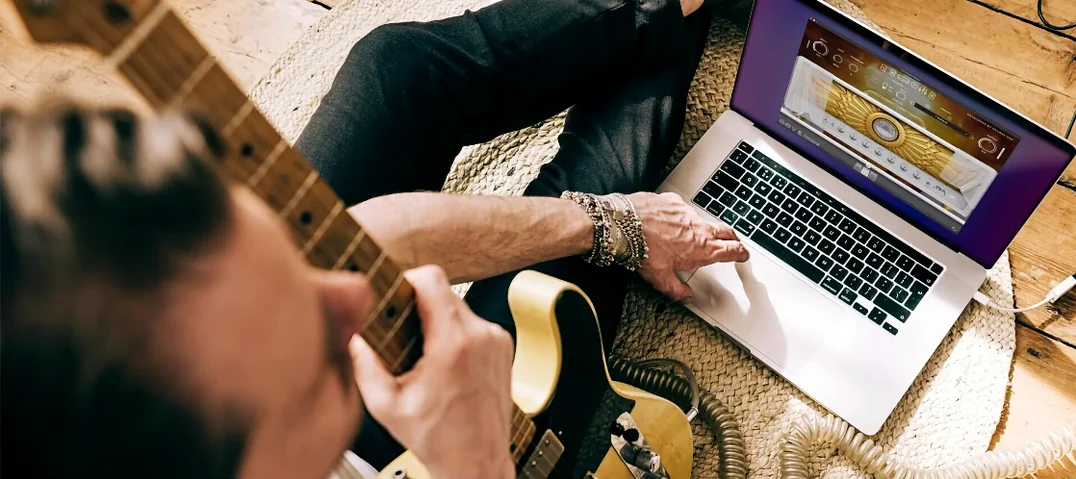
It runs on any Mac with macOS 12 or later, Apple Silicon or Intel. No compatibility guesswork.
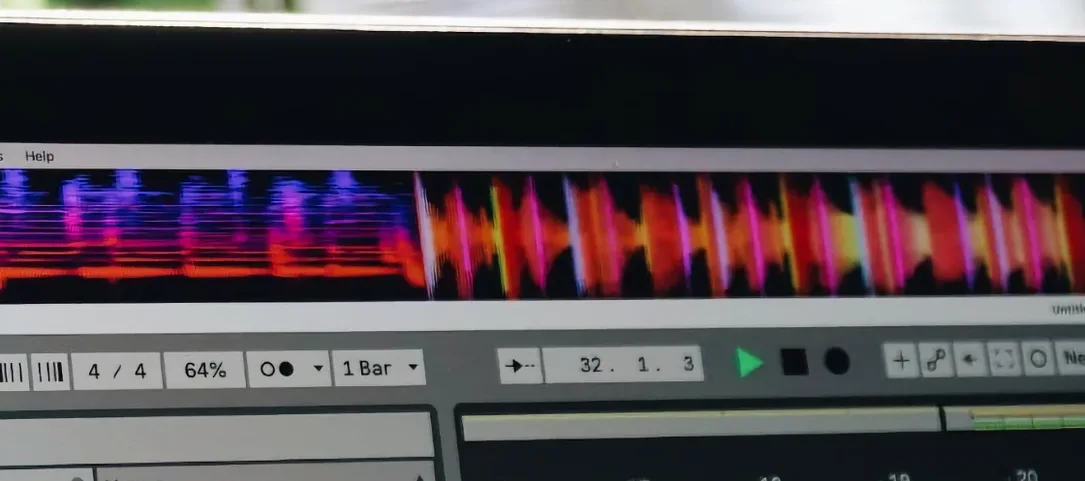
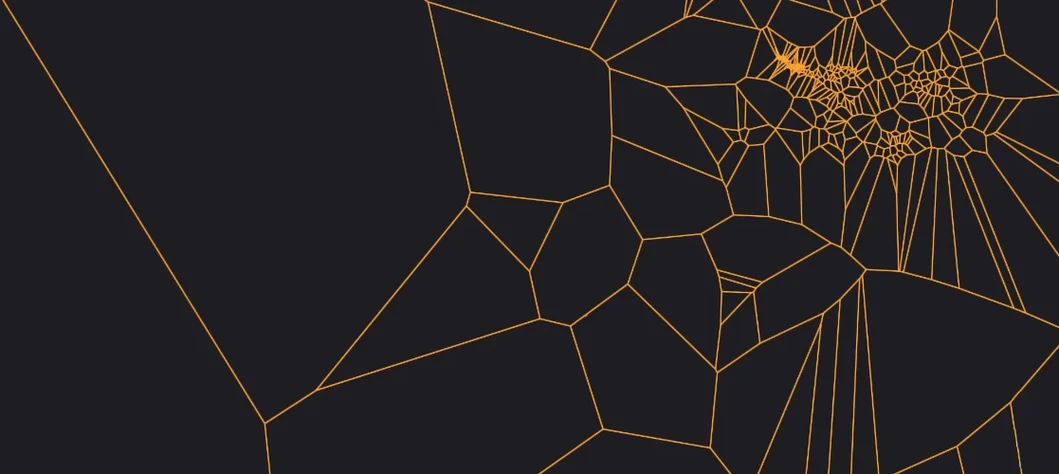
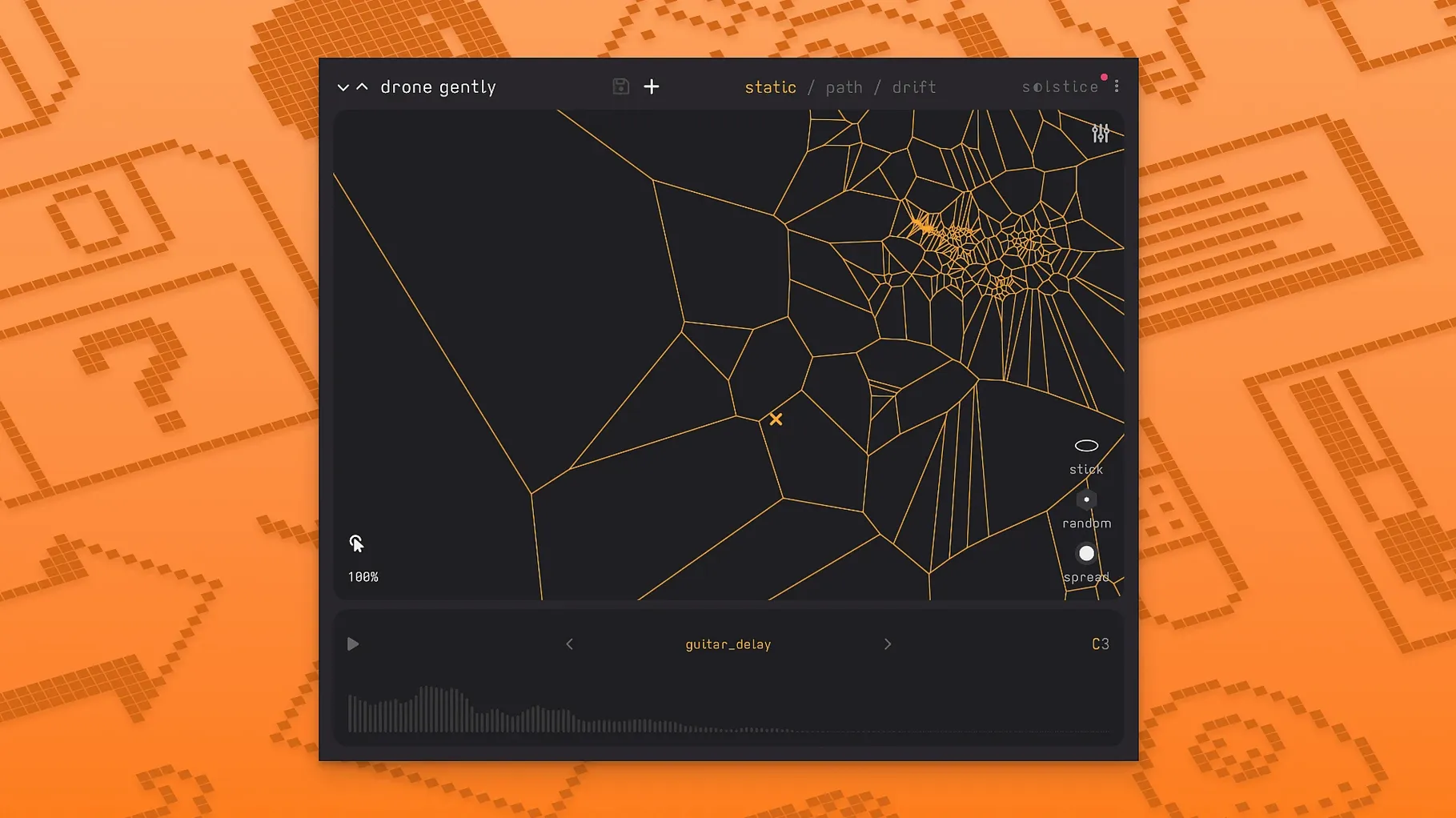
Solstice reads a sample and projects it into a flat spectral map. You move a cursor across it. Where you stop defines the sound. Timbre, grain, and pitch shift under one drag.
Five spectral effects sit at the edges: texture, tilt, flutter, stretch, and bloom. Saturation and glue hold the signal together when the map gets wild. Crisp pitch shifting keeps transients in place.
shift‑drag axis
Hold Shift while dragging to lock to one axis. Horizontal keeps the timbre but shifts the grain. Vertical morphs the spectral character without moving the grain position.
Double-click any spot to jump instead of slide. The transition is instant — no portamento, no crossfade. Useful for percussive hits from a long ambient sample.
The drift speed knob is not linear. The first third gives you slow, tidal movement. Past noon it gets restless. Map the drift amount to a MIDI controller early. You will reach for it often.
start short
Start with a sample you know well. A single piano note, a field recording, a short vocal phrase. Nothing longer than ten seconds. Long samples produce maps that are hard to navigate until you develop a feel for the clustering.
Disable all five spectral effects on day one. Leave saturation and glue at their defaults. Learn the raw map first. Add tilt on day two, then bloom. Introduce texture last — it reshapes the transient response and can confuse your ear if applied too early.
Assign the cursor X/Y to two faders or an MPE controller. A touchpad works too. Anything that frees you from the mouse turns Solstice from a preview tool into an instrument.
Save a preset the moment you find a map region you like. The auto root note detection is good but not psychic. Check it against your track's key before building a part around it.
rain into drone
You load a four-second recording of rain on a metal roof. Solstice draws the map: bright transients clustered top-left, darker rumbles bottom-right. You drag the cursor slowly across the dense middle region.
A metallic drone emerges. You tilt it darker with the tilt effect, then open bloom just a touch — the tail extends without blurring the attack. You lock drift to a narrow oval. The cursor wanders on its own, landing on a different grain of roof noise each pass.
You record eight bars. No two repeats are the same. You bounce the take, reverse it, and feed it back into Solstice as a new sample. The second-generation map is softer, stranger. The original rain is gone. Something else is there now.
You can let the cursor drift on its own. Patterns emerge that you would not program. The map becomes an instrument, not a preset.