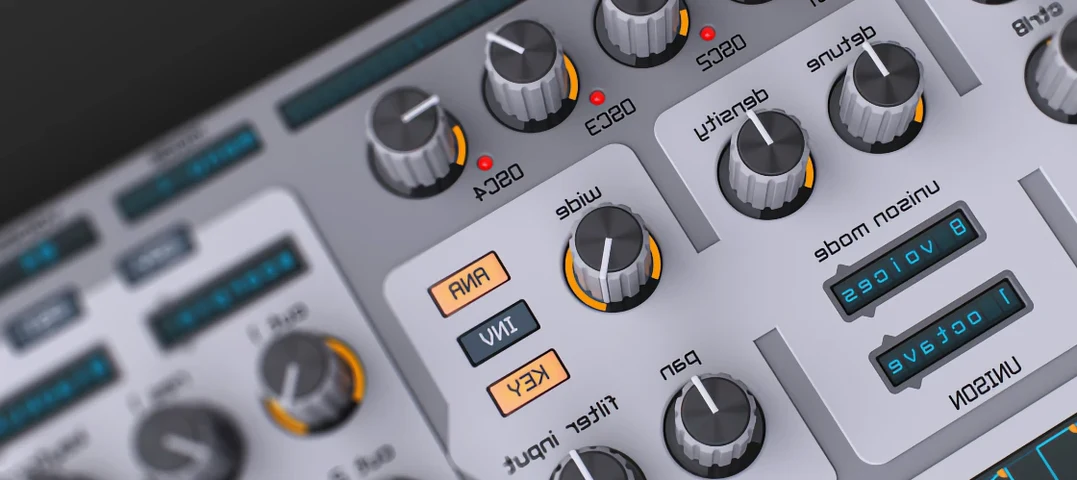
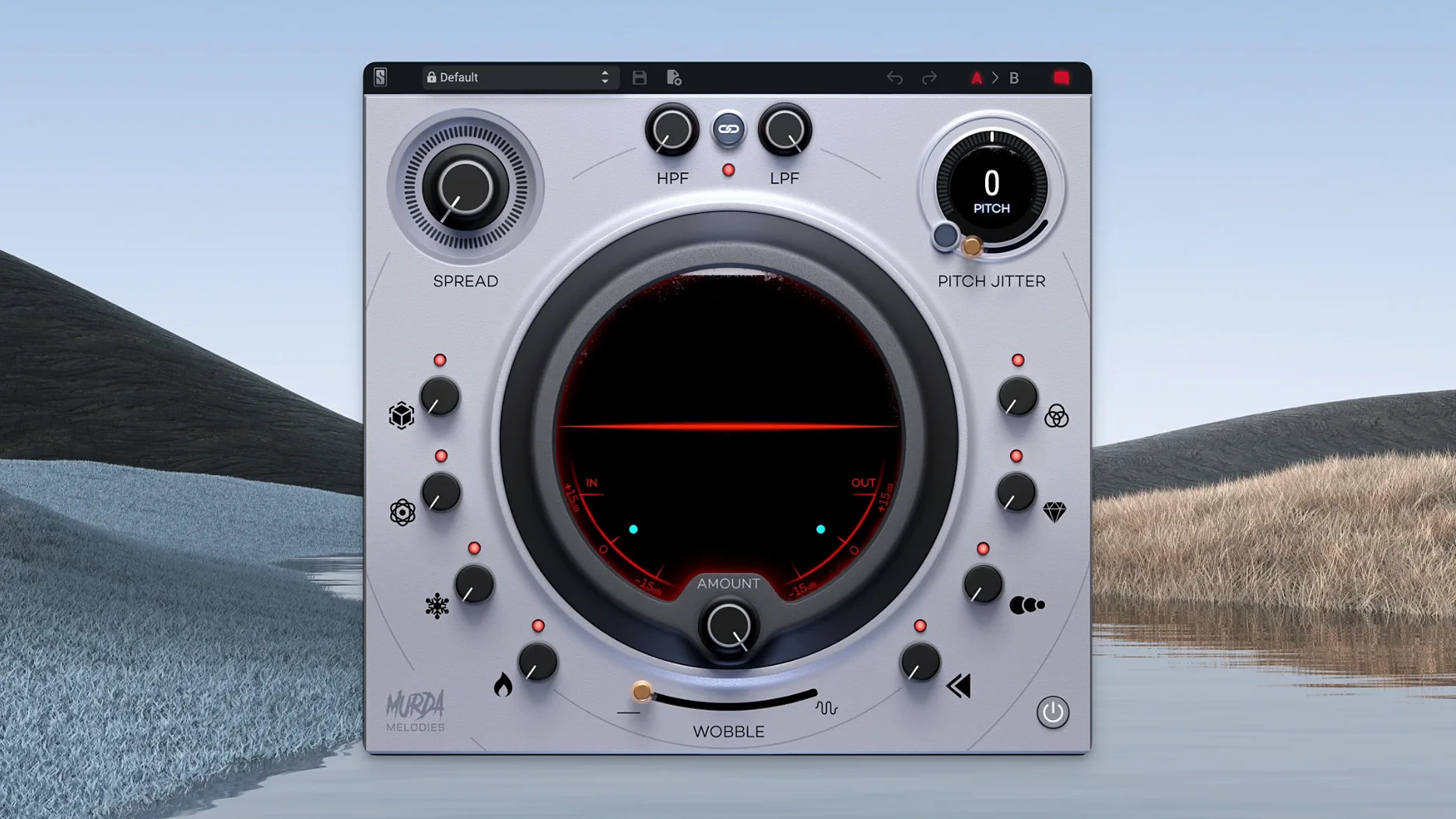
Eight knobs. Each one a distinct effect. No menus.
Widen
The stereo widener spreads a mono line across the field without losing its center. Modulation adds slow pitch drift or fast warble.
Space
Two reverb characters and a synced delay. Short reflections push a melody forward; long tails sink it into the back of the mix.
Break
Analog-modeled low-pass and high-pass filters shave off edges. Reverse processing flips a phrase mid-bar. It stops a loop from sounding like a loop.
Two knobs
Treating it as one effect. Murda Melodies is eight effects in a row, and beginners often push every knob at once. The result is mud.
Start with two controls. Pitch and reverb. Or filter and delay. Hear what each one does before adding a third.
Another mistake: ignoring the output level. Reverse processing and the pitch shifter can spike the signal. Keep an eye on the meter after the plugin.
Mono collapse
A common one is a preset sounding different in mono. Check the stereo widener first. Some widening disappears when the mix collapses to mono, so audition in both.
The pitch shifter can feel laggy on older sessions. That is usually the buffer, not the plugin. Raise it slightly or bounce the track.
If the plugin does not appear in your DAW after installing, rescan plugins. The default install path was fixed in an earlier version, but an old custom path can still confuse a host.
Users searching for murda melodies mac often expect a standalone app. It is not. It loads inside AU, VST, VST3, or AAX hosts only.
Flute resample
A beatmaker opens a two-bar flute loop. It is clean, maybe too clean.
First, the pitch shifter goes down a fifth. The melody drops into a darker register. Pitch Jitter nudges it slightly, so the loop sounds resampled rather than tuned.
Then the low-pass filter rolls off the top. The vinyl wobble adds a slow, uneven sway. The flute now feels borrowed from a dusty record.
Next, a short reverb pushes it back. A dotted eighth delay catches the last note of the phrase and repeats it across the bar. The loop no longer repeats itself exactly.
Finally, the stereo widener spreads the whole thing left and right. The center stays open for the vocal.
Two bars became a texture. Four knobs did the work.
A single row of controls for trap and R&B. Nothing extra.