
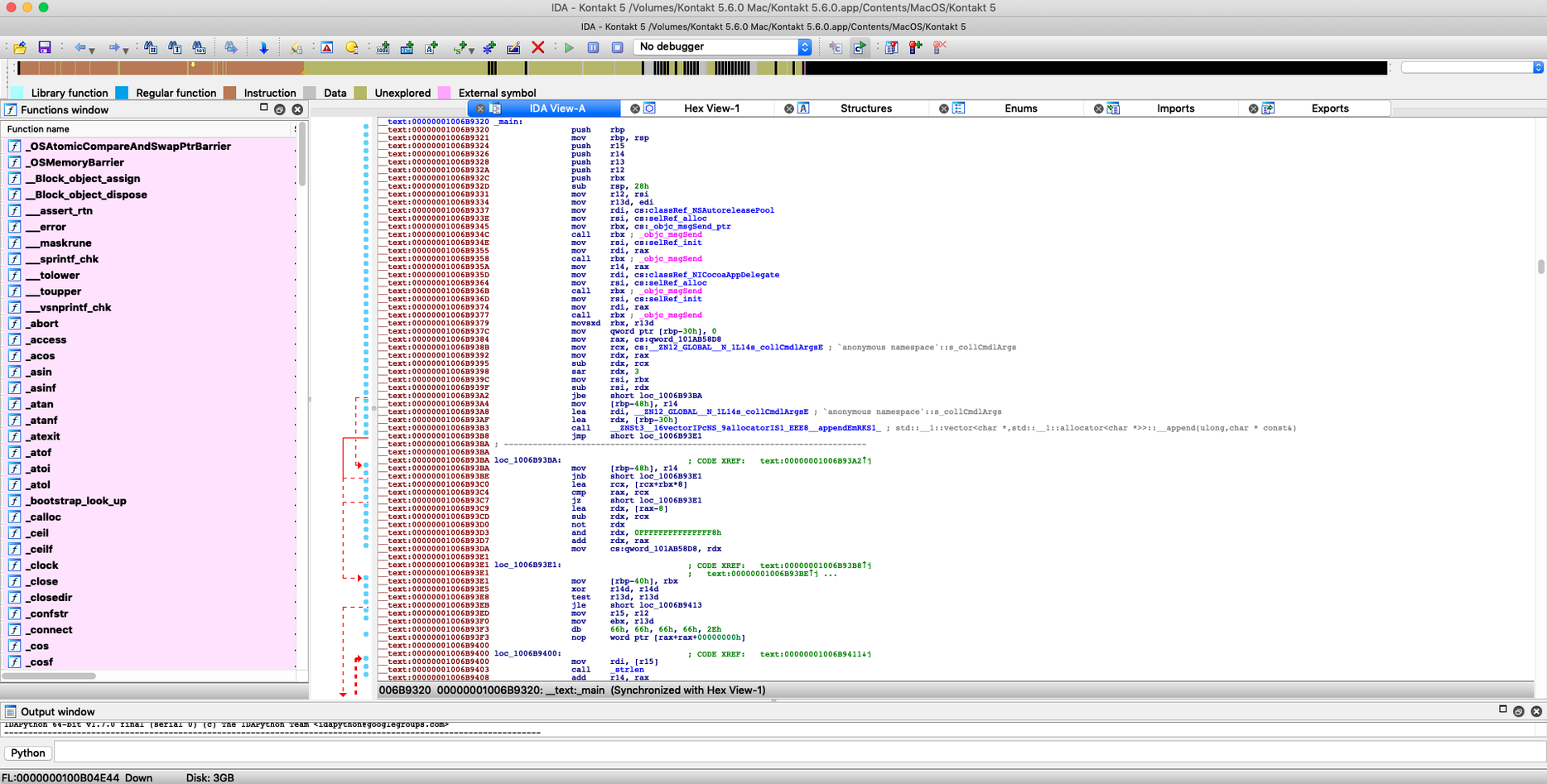
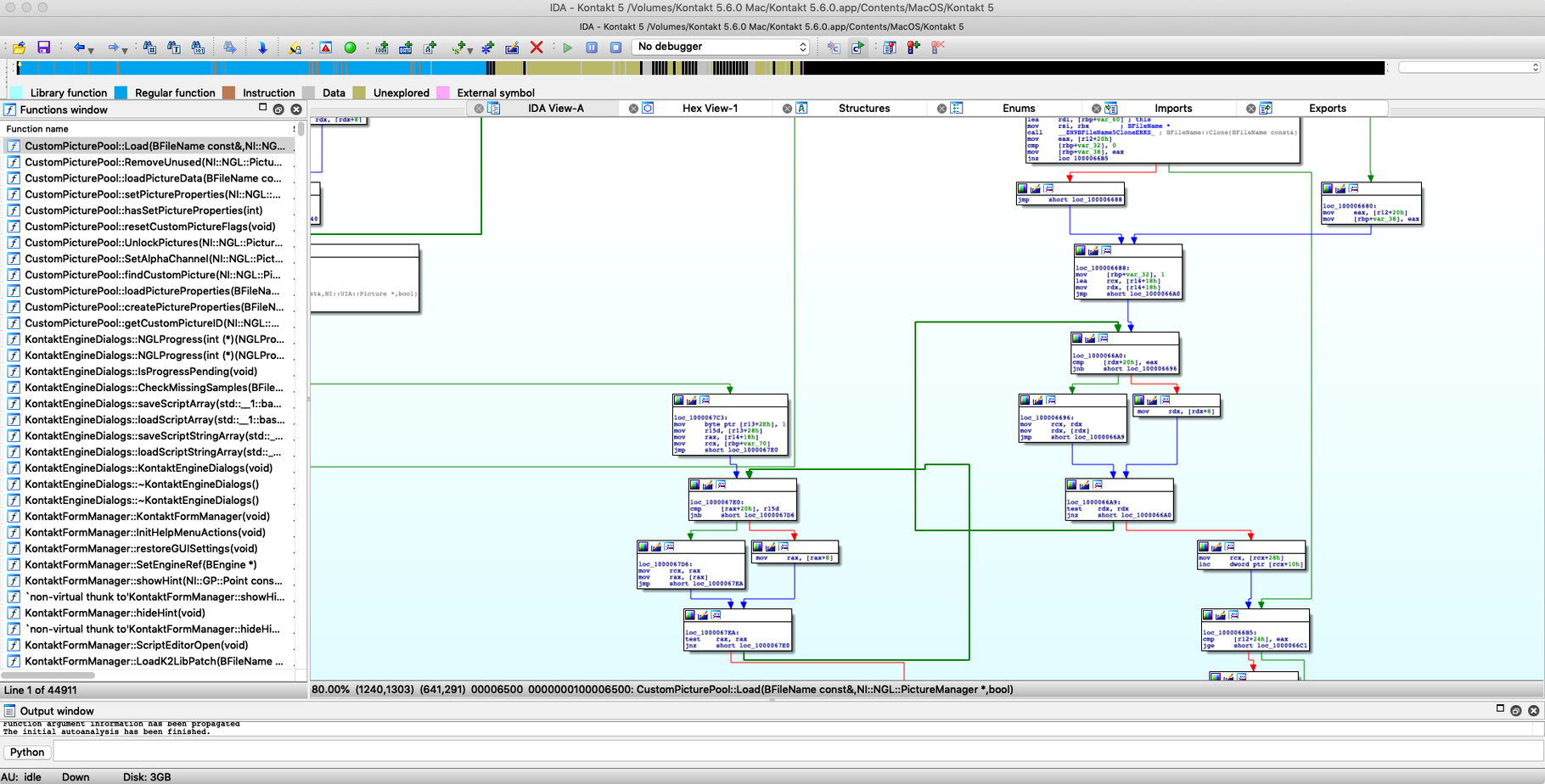
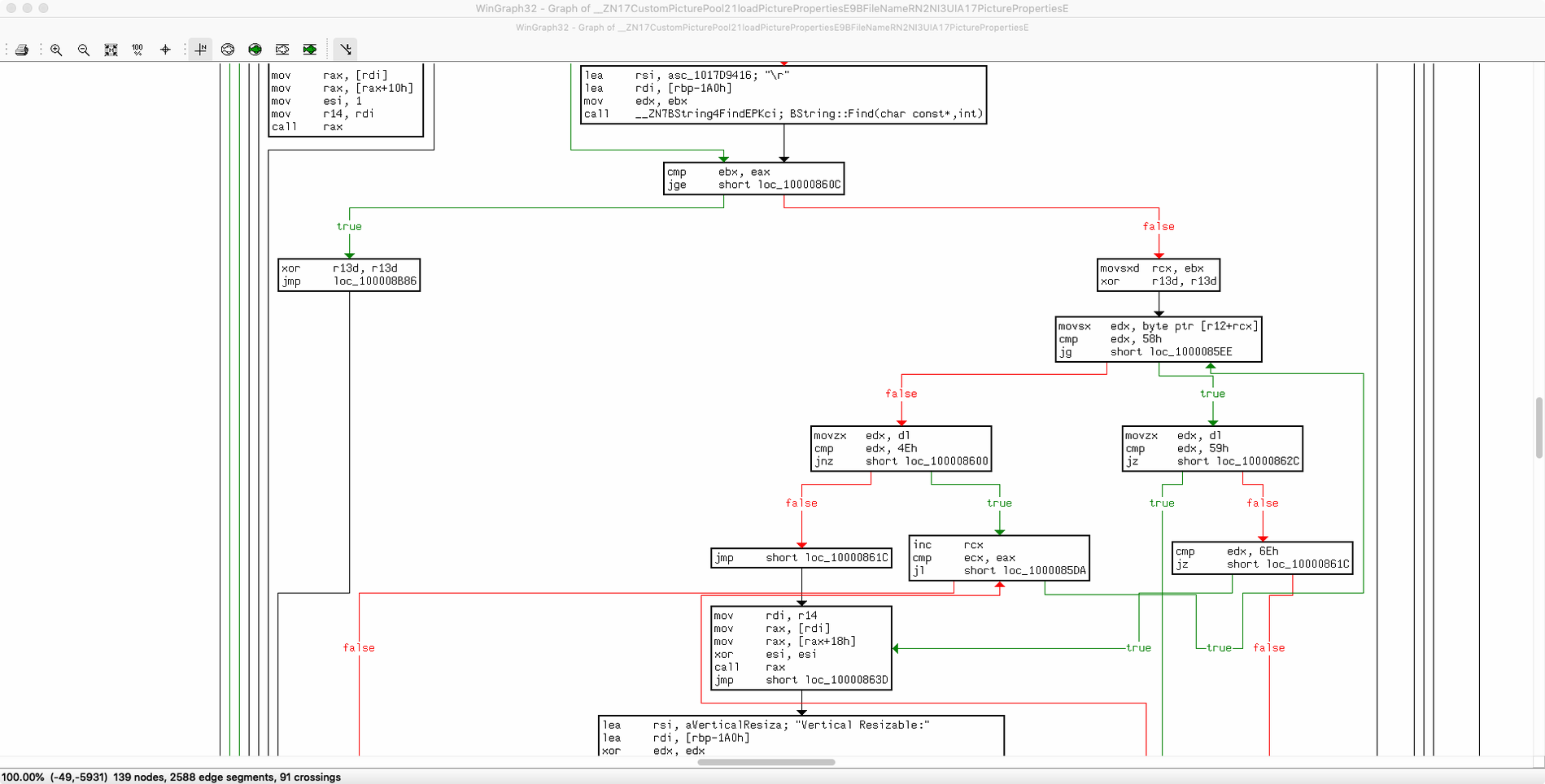
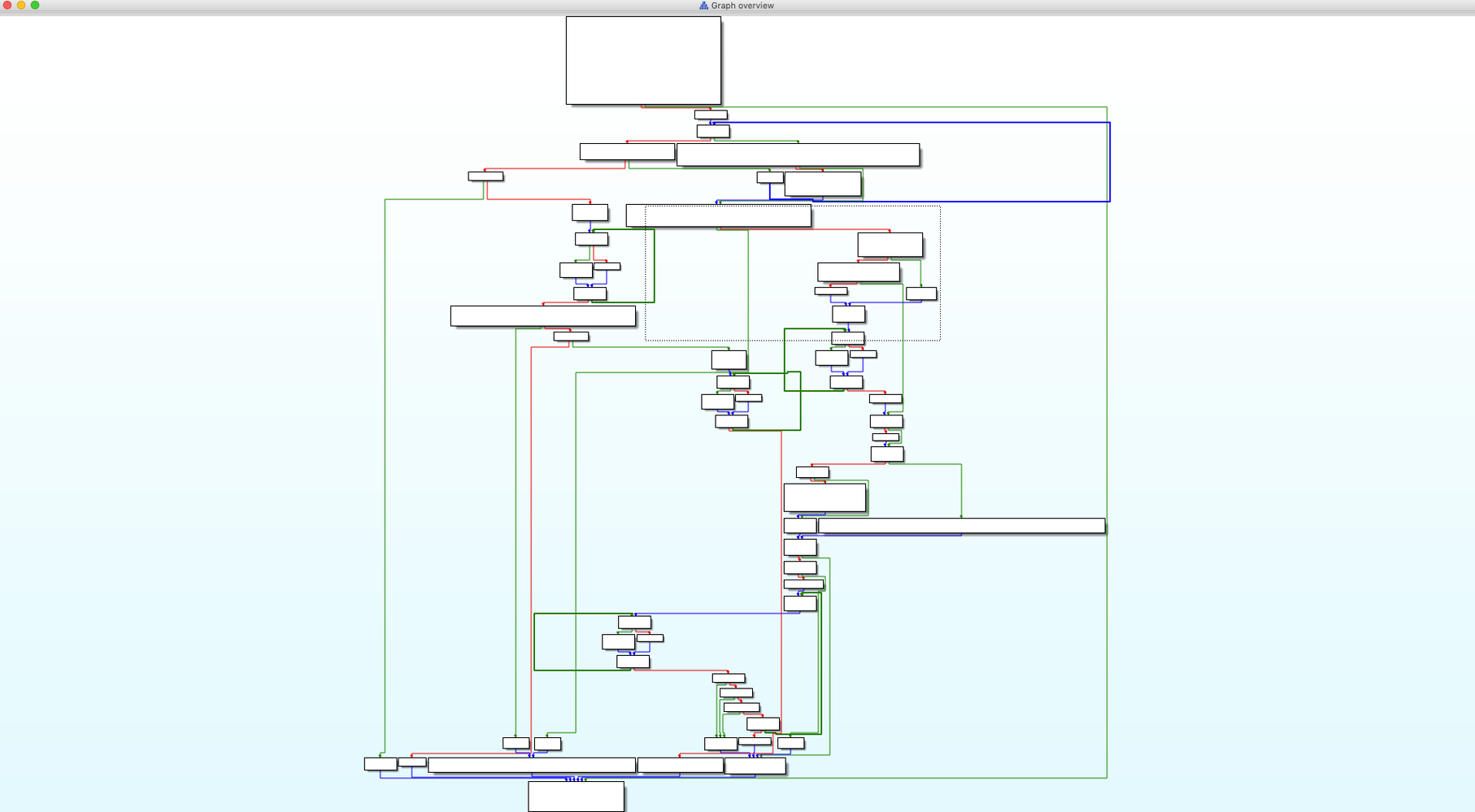
IDA Pro is an interactive disassembler—a tool that turns machine code into assembly-language source code for analysis.
Type tracking
It works natively with arrays, structures, and enumerated types. Function types and parameters are tracked throughout, making the disassembly far more readable.
What makes the analysis interactive?
You are not looking at a static dump. Rename variables, annotate functions, and restructure code as you go, while the tool propagates those changes across the entire binary.
How does it recognize known code?
Most people checking the system specs wonder about Apple Silicon. IDA runs natively. No Rosetta translation layer. The binary is universal, so it loads as a first-class citizen on M-series chips and older Intel machines alike. Daily use confirms it: window resizing stays fluid, the disassembly view repaints without stutter, and the decompiler does not beachball during re-analysis of mid-sized binaries.
Memory use tracks with project size. A bare firmware image sits comfortably under a gigabyte. Load a kernelcache with full debug symbols and you will see several. The footprint is honest — it grows when you ask it to do more, then shrinks back after you close the database. I have left a session open across three days of intermittent work with no leaks creeping in.
The question that surfaces most often is about learning curve. The answer is not simple. Someone who reads x86-64 or ARM64 assembly can produce useful annotations within an hour. Someone new to disassembly will need months. The interface does not pretend otherwise. There is no wizard, no guided tour that hides the complexity. What it offers instead is consistency: the same structural metaphors work across every processor module, so once you learn switch-branch detection in one architecture, the others follow the same logic.
Stability under odd inputs matters. Feed it a deliberately malformed Mach-O or a packed ELF from an old malware sample and it handles the edge cases with composure. No crashes in a week of deliberate abuse. The new Dyld Shared Cache infrastructure loads cleanly, and Pathfinder helps navigate large linked images without the view collapsing into spaghetti. For anyone searching an IDA Pro Mac torrent, the real discovery is that the application itself stays out of your way once installed.
FLIRT technology identifies standard library functions automatically. This strips away boilerplate so you can focus on the custom logic that matters.