You tap the volume key and the screen clears—no oversized bezel blocking your work. MediaMate reduces that interruption to a slim indicator.
Volume
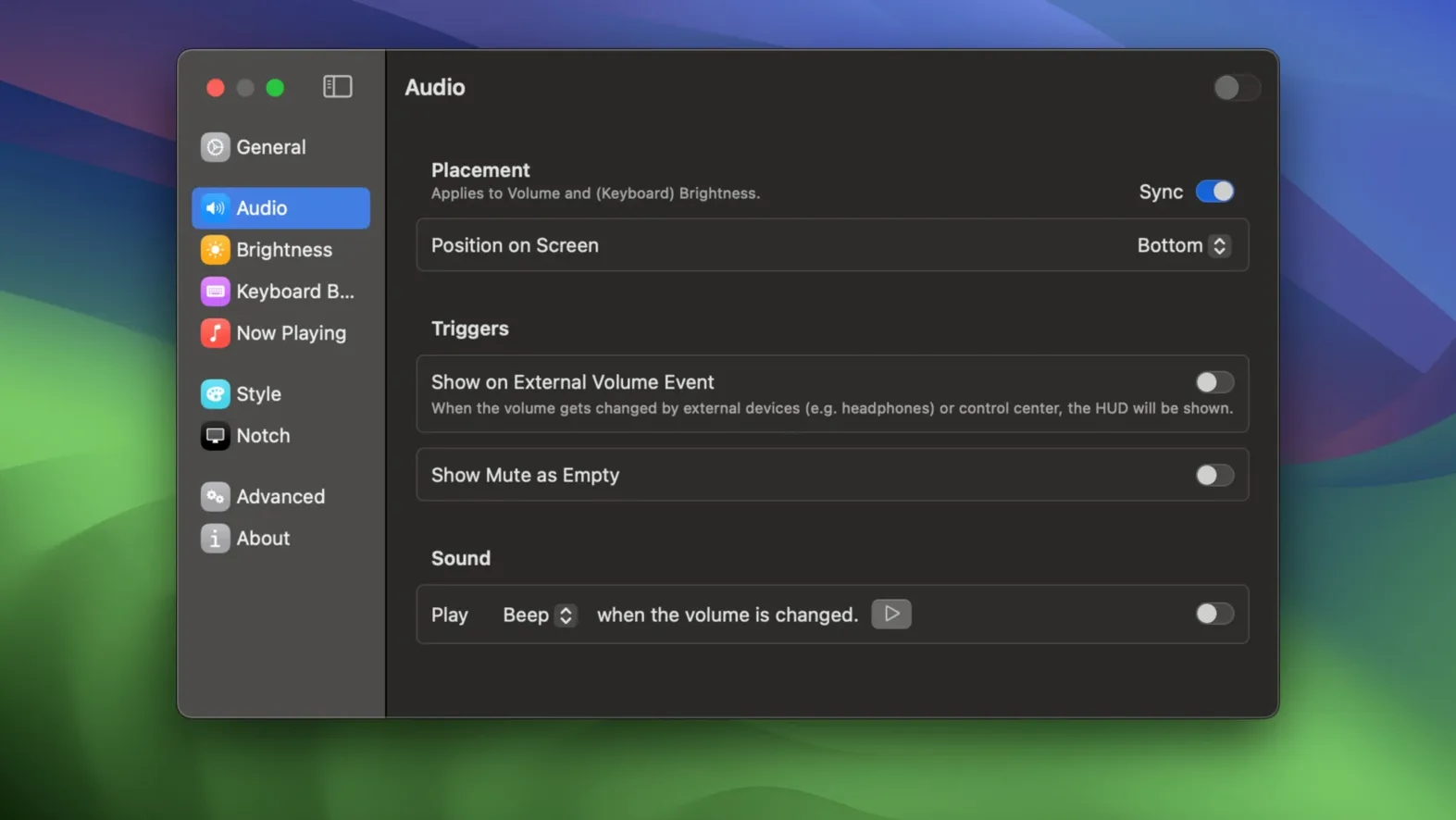
The standard HUD vanishes. What remains is a thin bar near the edge of the display.
Brightness
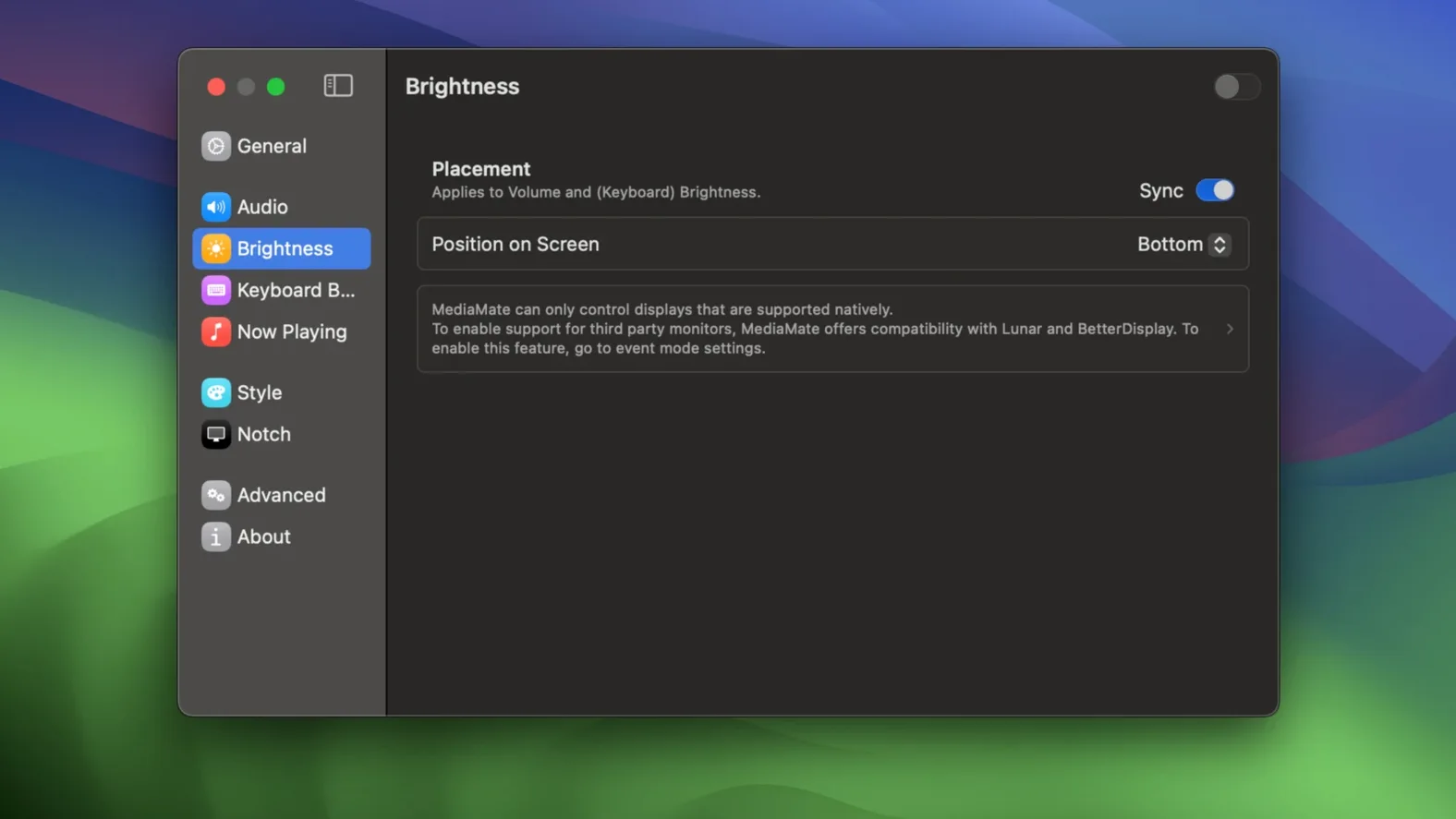
Same treatment. A minimal strip adjusts with the function keys. Touch Bar Macs need a quick setting toggle.
Now playing
A typical session starts with music. You open a project, hit play, and the first track change triggers a quiet overlay near the bottom edge—artist and title, then gone. No click, no window to dismiss. You keep typing.
Mid-morning, the sun shifts. You tap the brightness key. A thin bar appears, slides a few notches brighter, and fades. The document behind it never lost focus. Later, a call comes in and you need the volume down fast. The slim HUD responds immediately, no animation lag, no lingering.
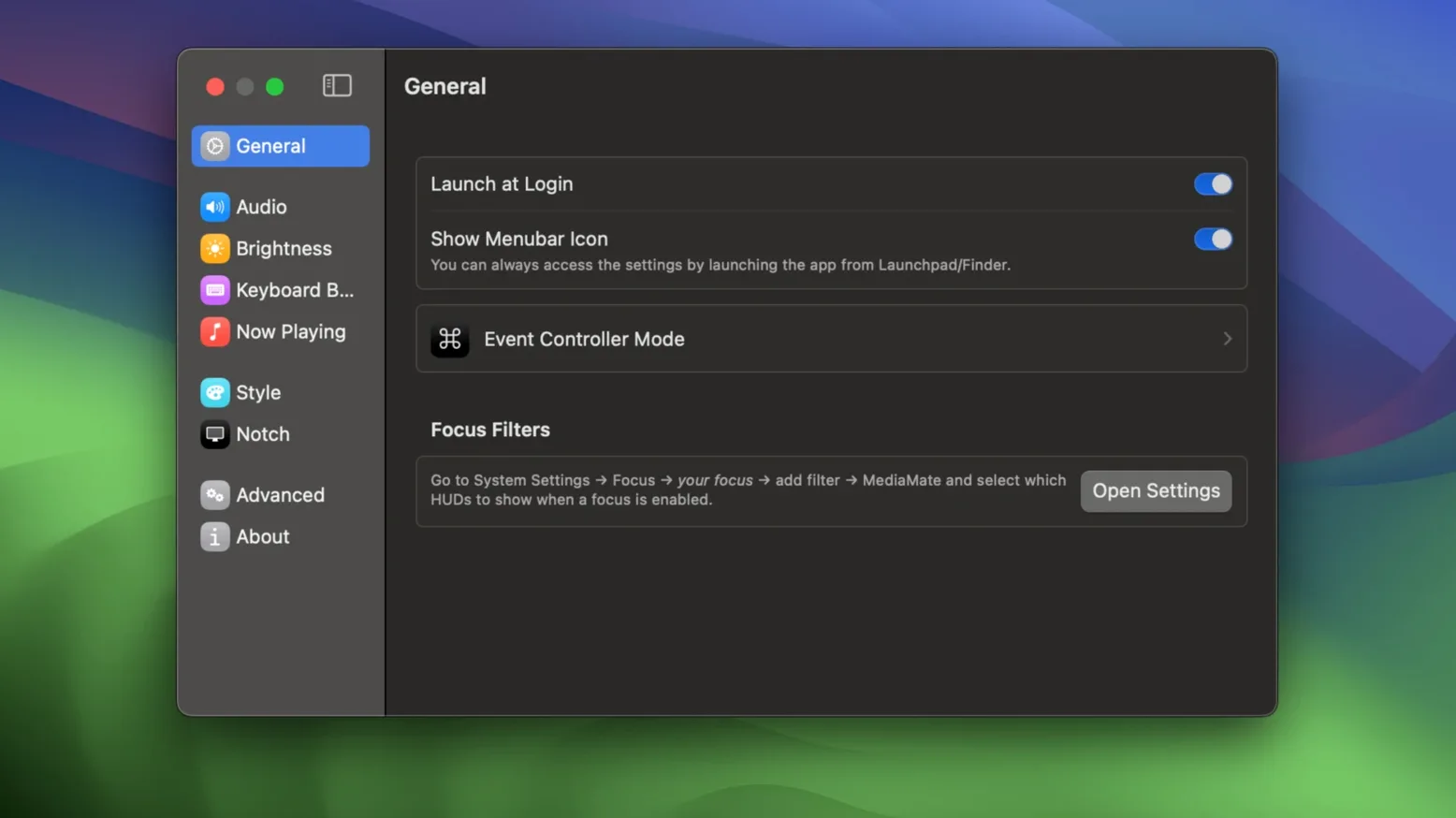
If you have a Touch Bar Mac, the session begins with one extra step: toggle the dedicated mode in MediaMate's settings. After that, the Touch Bar stays dark—no glowing strips fighting for attention while the compact on-screen indicators take over.
Eyes adjust
Open the app and leave the default position alone for a day. Let your eyes adjust to the new indicator location before moving it.
Check the now-playing settings. By default, the overlay shows on song change. If you prefer to see it only when you press a media key, flip that option early—it saves a moment of surprise during a focused session.
Keyboard backlight controls sit in the same panel. Bind a shortcut on day one. You will use it more than you expect, especially in the evening.
If you keep a Touch Bar Mac, disable the physical Touch Bar HUDs inside MediaMate's preferences. Skipping this leaves you with double indicators, which defeats the purpose.
People searching for mediamate mac app often land here after trying to fix the oversized default HUDs. Once installed, the difference is immediate—the screen feels less cluttered within the first hour.
Zero CPU
The app runs lean. On an Apple Silicon Mac, it idles near zero CPU. Even during rapid volume or brightness adjustments, the HUD draws without stutter. No beachballs, no resprings. It feels like a native piece of the system, not a layer on top.
Memory use stays flat after days of uptime. I have seen it hold under 30 MB even with the now-playing overlay active across multiple restarts of Music and Spotify. No slow creep, no need to quit and relaunch.
Some users who once looked for a mediamate crack to test before committing often find the official build stable enough to settle in. Version 3.8.4 fixed a rare flicker on external displays—if you tested an older mediamate 3.8.3, the update is worth it for multi-monitor setups alone.
There is no background daemon to worry about. The app sits quietly in the menu bar, and when macOS updates roll through, MediaMate has kept working without a permissions reset. That alone makes the mediamate free approach—just install and forget—feel natural.
A small overlay shows the artist and track when the song changes.