Version 2026.3.2 is a quiet one — no new features, just the kind of small fixes that keep the app running smoothly while you focus on the music.
Transpose
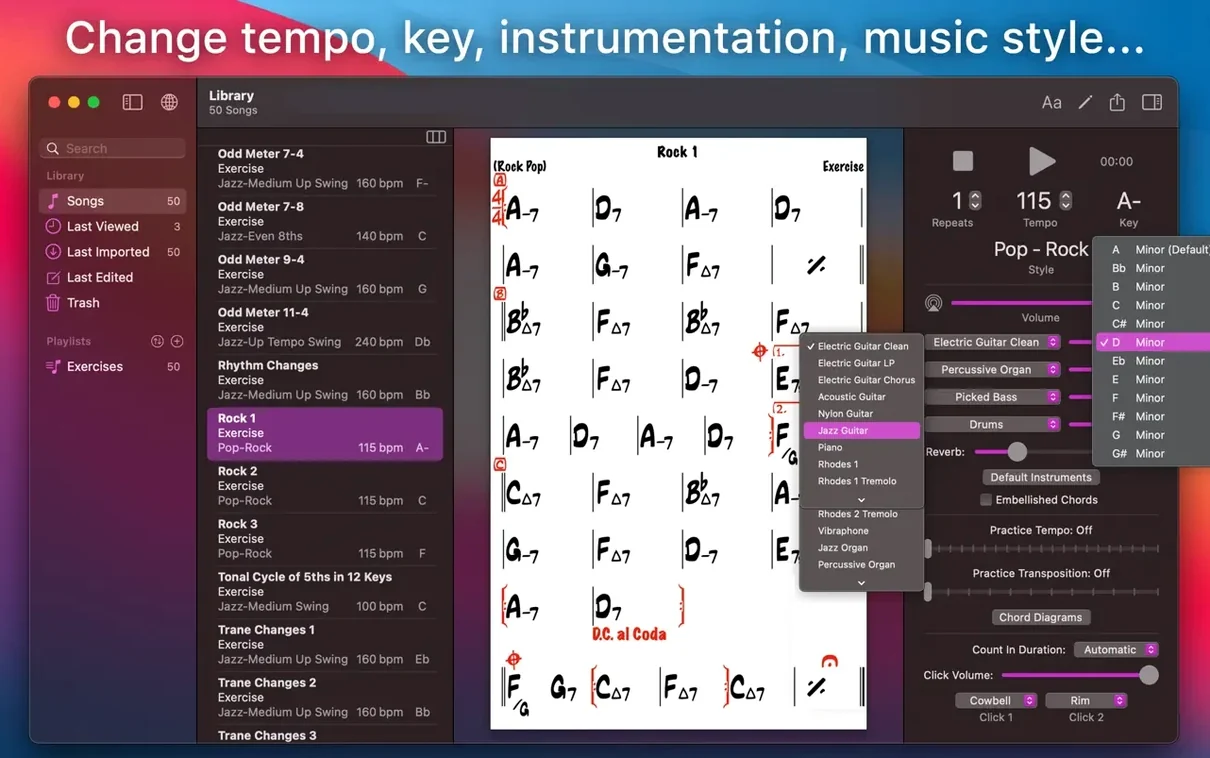
Pick any chart and shift it to a new key instantly. Number notation makes it easy to spot the relationships between chords.
Play
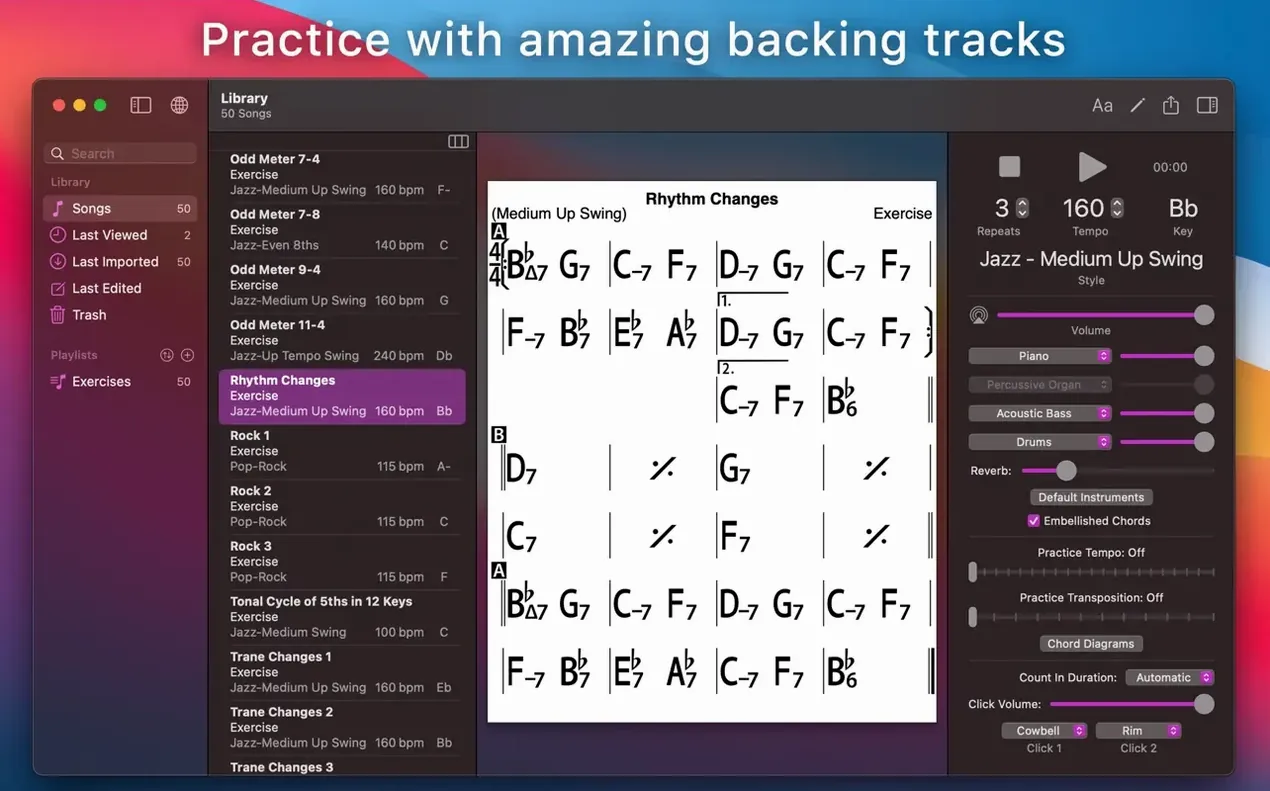
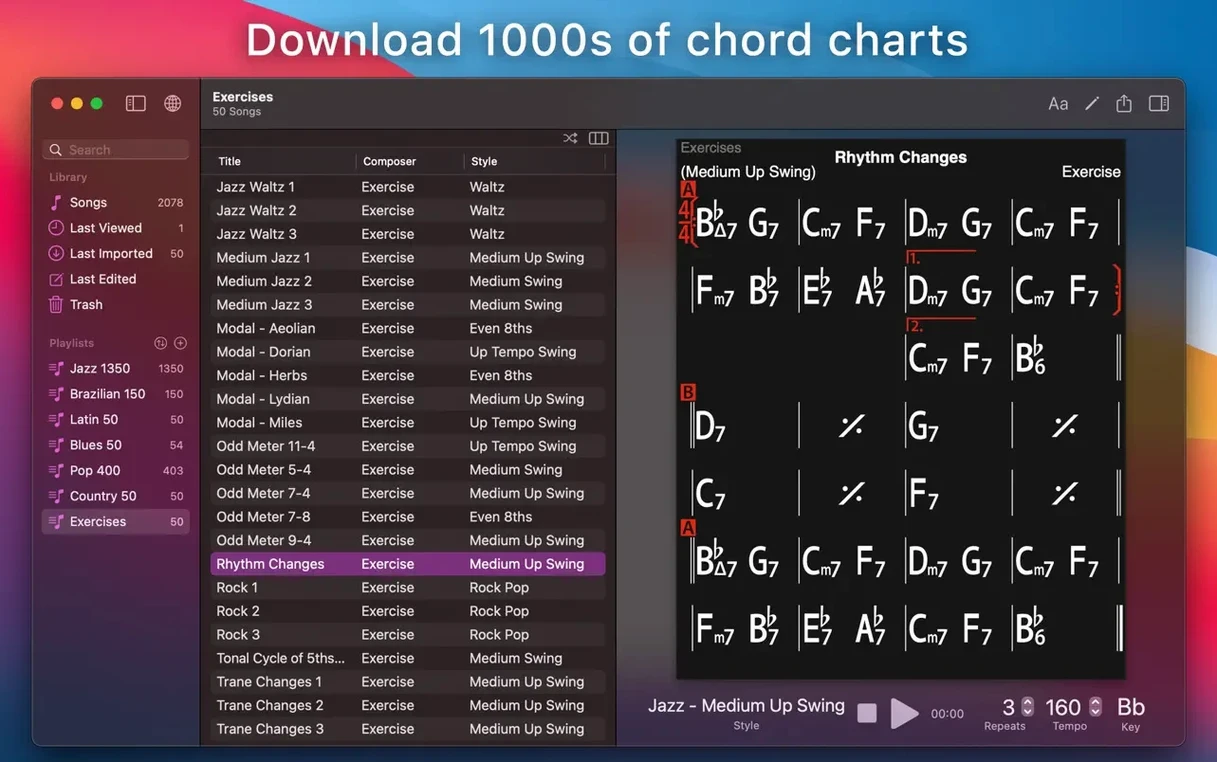
Tap a chart and the band kicks in: piano, bass, and drums that follow your changes. Start with the 50 built-in exercises to hear common progressions.
Export
Send a mixdown as WAV or AAC when you need to listen away from the screen. MIDI export lets you shape the sound in your own software later.
Stability fix
2026.3.2 arrived without ceremony. The release notes mention only stability fixes — no redesign, no added instruments, no workflow shifts.
For daily use, that means one thing: the chart view and mixer panel behave the same way they did last month. If you rely on muscle memory during a session, the update won't trip you.
Earlier 2026 releases tightened the audio engine. Clicks between loop repeats are gone now. The metronome count-in lands more predictably when you jump between sections of a long chart. Small things. But when you're running through a setlist with students, they matter.
Instant lock
The band responds immediately. Press play and the rhythm section locks in before you finish the first beat. On an M1 MacBook Air, the mixer sits around 2% CPU with a full trio running. On older Intel machines, the fan rarely spins above idle.
Memory use is modest — typically under 200 MB even with a playlist of forty charts loaded. Scrolling through the song list stays smooth. The app rarely beachballs.
Stability holds up. Crashes are uncommon. The one weak point: importing a badly formatted MusicXML file can stall the parser for a few seconds. Stick to the built-in editor or well-formed files from the forum and you won't see it.
Last-minute jam
She opens iReal Pro fifteen minutes before a jam session. No charts prepared. She pulls a blues from the forum, transposes it to E♭, and switches the style to a slow swing. The upright bass sound is warm enough to fill a practice room.
She plugs a cheap interface into her Mac and hits record. Three choruses of walking bass over the band's changes. Exports the WAV, drops it into Voice Memos, listens on the drive home.
Later that week, she shares the chart with the guitarist via iCloud. He opens it on his own machine and the rhythm section is already there. Same tempo, same feel. No audio files to send. No tempo map to rebuild.