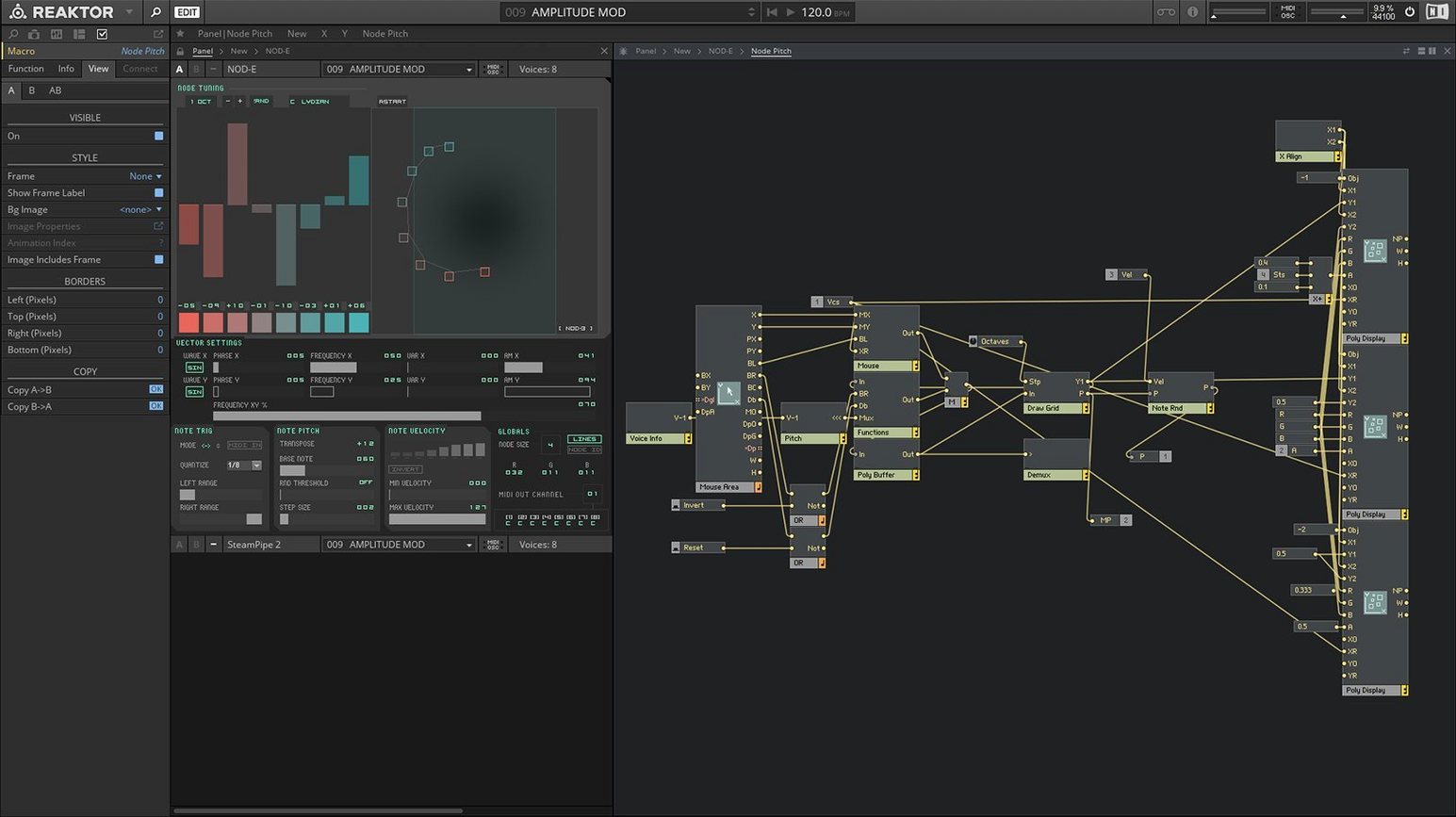
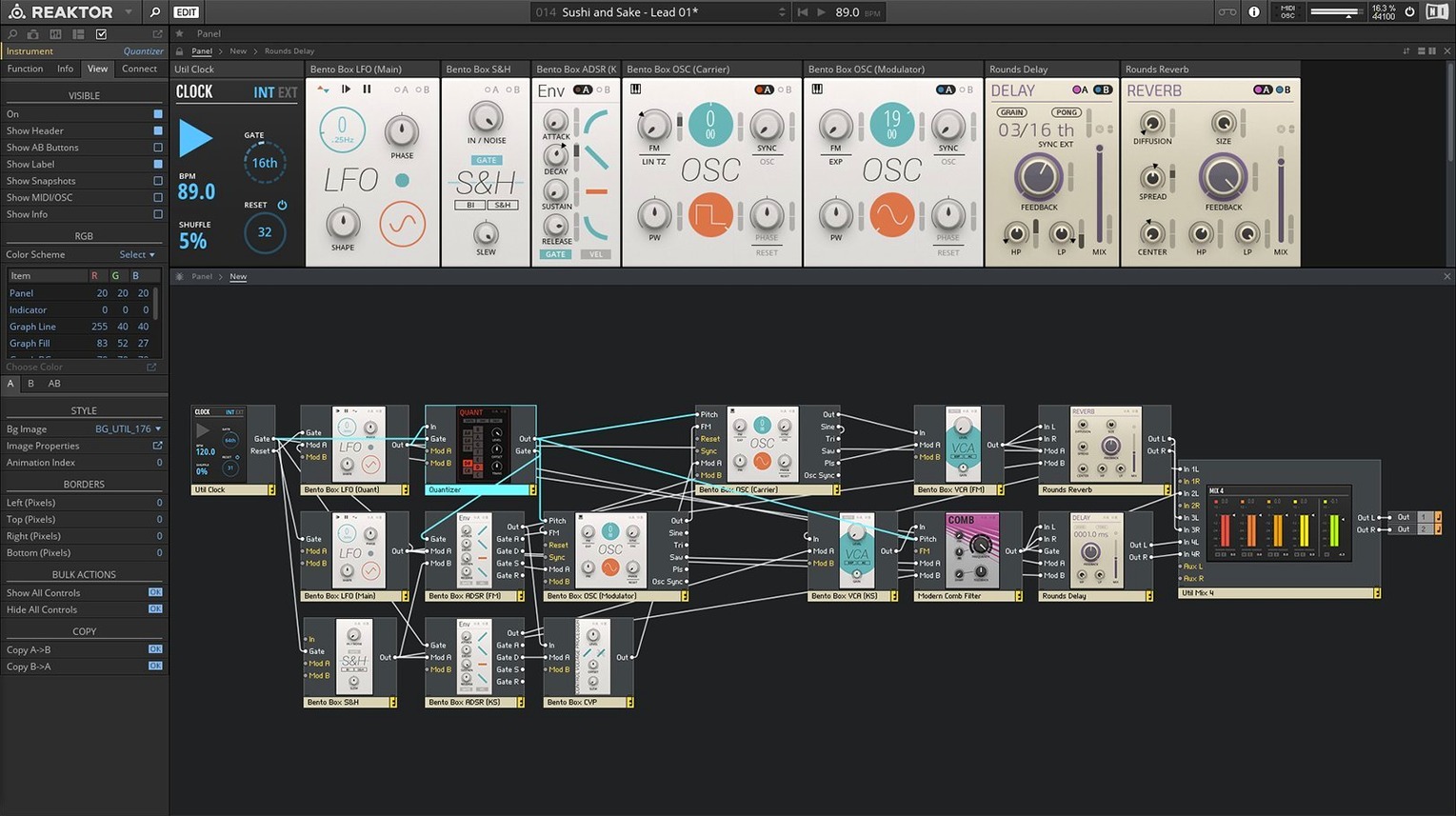
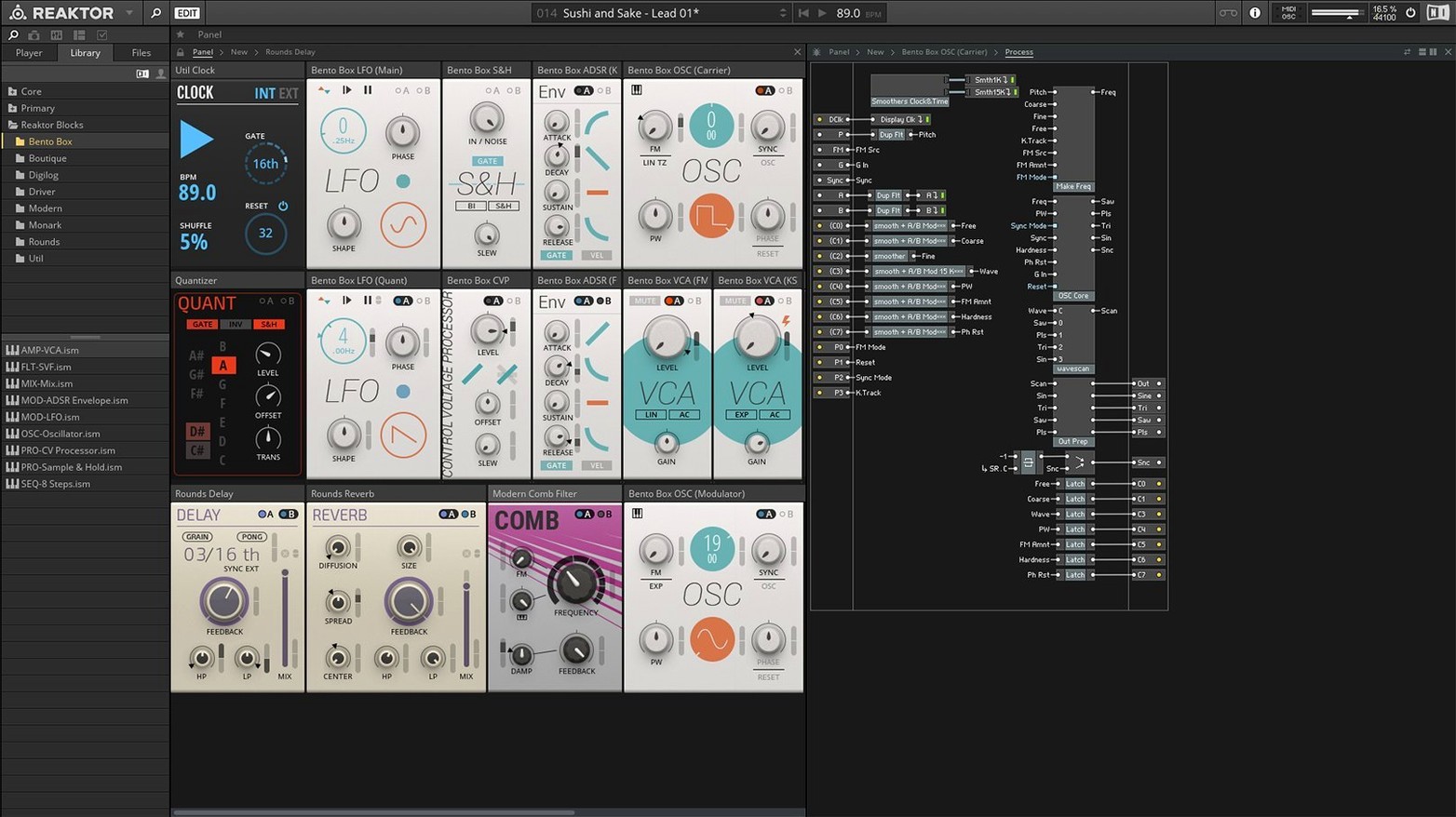
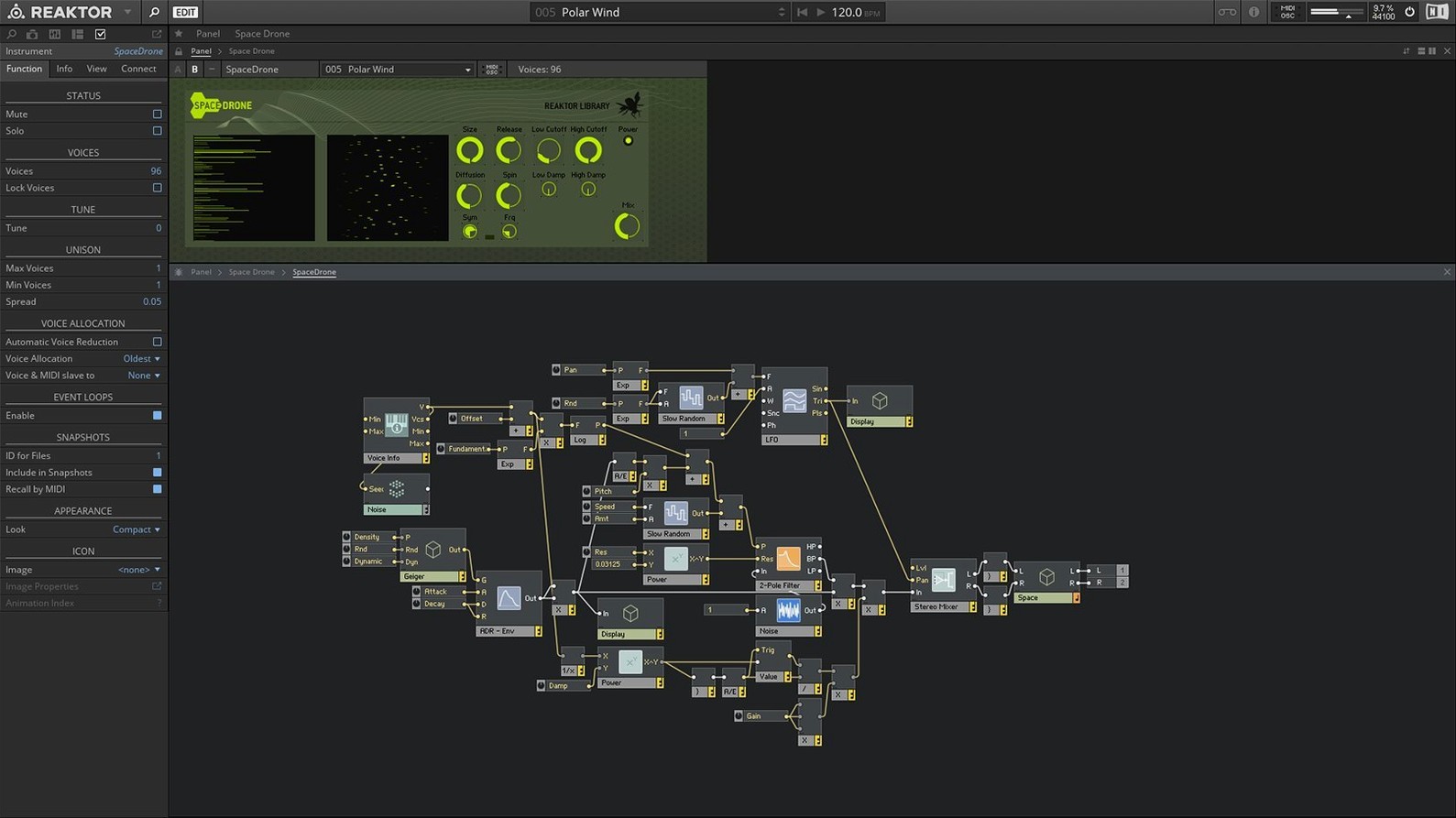
Blocks are the surface. Underneath, Reaktor 6 is a construction site where synths, effects and samplers are raw material.
- Reaktor Core. Build modules from scratch in a visual DSP editor that compiles to native code. No text programming.
- 23 new instruments. Ensembles that double as study material. Open every macro, follow the signal.
- Primary and Core levels. Connect finished blocks, or go down to a single filter pole.
Before installing, most people ask the same two things. Can it run on an older Mac, and will it work without internet after setup. The answer to both is yes: Intel and Apple Silicon are supported, and once activation is done, the whole library works offline.
Another common question is whether you need to know math or programming. You don't. Reaktor Core is visual. You place modules, connect cables, listen. What you learn along the way is signal flow, not syntax.
People also ask if the included content is enough. Twenty-three instruments is a lot, but the user library quietly changes the scale. Thousands of community devices, from odd sequencers to full instruments, all load the same way as the factory content. The free Reaktor Player opens most of them too.
Trace the wires
Don't build anything on day one. Open the factory ensembles and follow a few cables. Find one sound you like and trace it backward to its source.
Set the sample rate before you start a session. Reaktor respects the host or the standalone audio settings, but some older ensembles were designed at 44.1 kHz and behave strangely at 96.
Save early versions of your work. Reaktor's undo is not deep, and a snapped cable can be hard to retrace. A saved snapshot takes a second and saves an afternoon.
Keep the browser panel narrow at first. The hierarchy makes more sense once you've seen where things live.
After dinner
You open Reaktor standalone after dinner. Not to compose, just to hear something new. You load a granular ensemble from the user library, something built for Reaktor 6.
A field recording goes into the first input. You lower the grain size until voices separate, then bring it back until they blur. The freeze button holds a moment too long; you turn it off and leave the room for tea.
Back at the desk, you duplicate the ensemble. On the second instance you drag a reverb from the Blocks section onto the output. Two cables, a little damping. The room changes.
You record eight minutes without stopping. One take. Later you'll cut the best four bars, but not tonight. The project is saved with a date and a question mark.
The session ends where it started: a sound you didn't plan, now a starting point for the next one. That is what Reaktor removes from the day — the blank patch, the empty project, the quiet room before the first idea.
Less a plug-in than a workbench. Something to return to when a preset won't do.