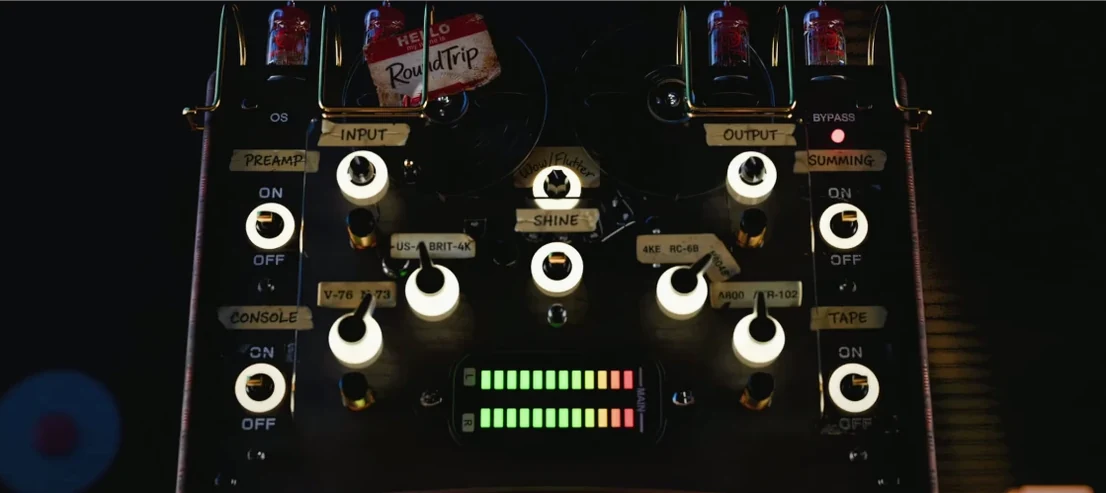
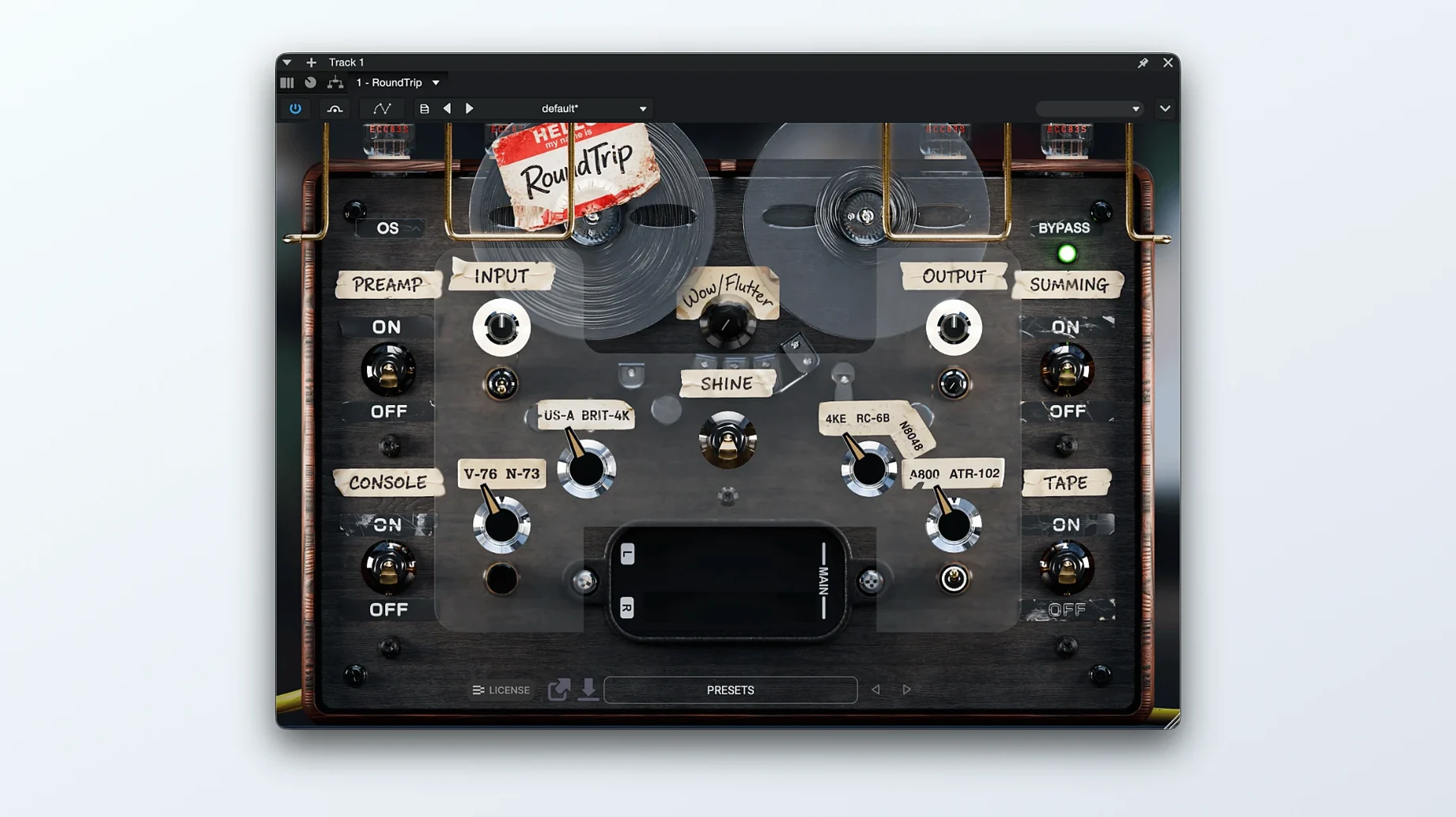
RoundTrip gives a track its analog weight before you reach for a fader.
- On tracks, buses or the master, wherever the front end feels too digital.
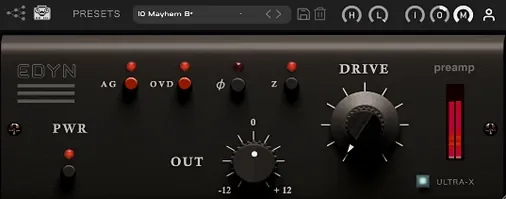
- Preamp, tape and summing in one short signal path.
- Gear Swap gives each instance its own component values, so two kicks don't sound cloned.
- Drift adds slow, bounded variation that keeps static parts moving.
First-day mistakes
Loading RoundTrip on every channel before you hear the blank mix.
That impulse is common. The preamp stage adds density even at low drive settings. Fourteen tracks of that density turn into a wall you did not mean to build. Start with three or four elements. Kick, bass, one melodic bus. Live with that for an hour.
Another slip: treating Gear Swap as a randomizer to click through quickly. Each swap changes the component spread across the full circuit — preamp, tone section, tape path. Switching while a part plays can mislead you into keeping a setting that only works for two bars. Pause. Swap. Listen again from silence.
Beginners often leave Drift active during editing, then wonder why a punch-in sits differently than the take before it. Disable Drift while comping. Save the slow movement for mixing.
Monitor bus imprint
Use a single instance on your monitor bus for the first few sessions. Set the preamp at 10 o'clock, tape at 7.5 ips, summing engaged. Work beneath it all day. You will start to recognize the imprint. Only then move an instance onto individual tracks.
Save a default preset with Gear Swap active and Drift at minimum. That gives each new instance a distinct starting point without audible wandering. Name it Blank RoundTrip. Load it by habit.
Test the summing stage alone. Bypass the preamp and tape sections on a drum bus, engage summing, and toggle it against the untreated group. The glue is subtle. You want to know what you are hearing before you lean on it in a dense project.
Fewer moves later. A bass line that already feels placed.