A producer opens a Logic session, sets the tempo to 110, and reaches for a kick that cuts through a wash of chorus-drenched synths. No browsing samples. No layering. Just a pattern loaded and a kick that lands right where the Linn should.
VICE runs in any serious host. AU 2, VST 2, VST 3, AAX — it shows up in Ableton Live, Cubase, Pro Tools, FL Studio, Studio One, Bitwig, Reaper, and Reason. First install drops in the shared Beatmaker shell; after that, adding titles is quick.
Inside: 20 styles, 460 patterns. The sound pulls from the machines that built early hip-hop, electro, and pop — Linn, Roland, Simmons, Korg — shaped for synthwave and authentic 80s tracks. 8 GB of RAM keeps it steady.
Time Machine Nudge
Dragging a pattern into the DAW and stopping there.
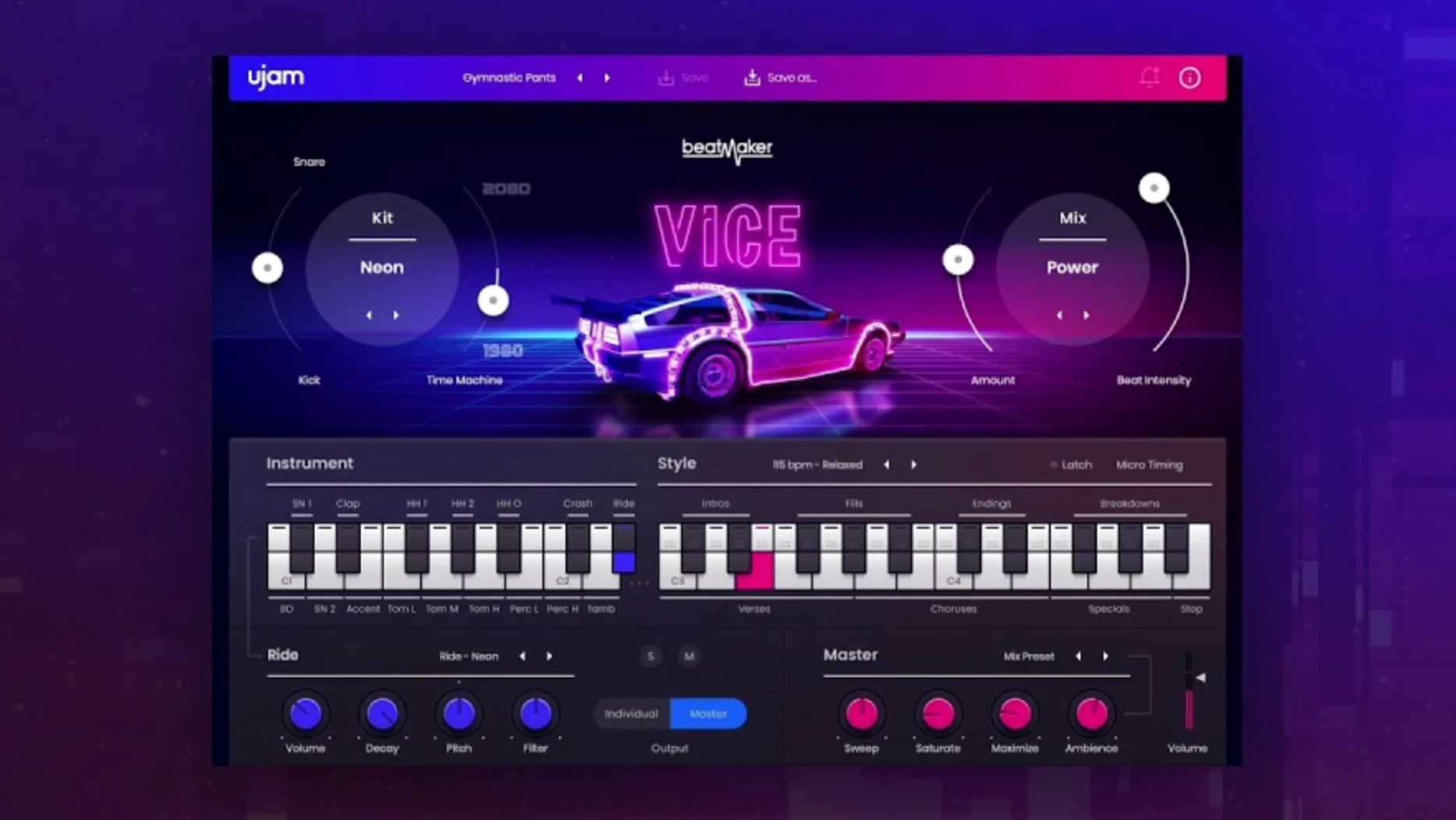
The sequencer is only half the picture. Each kit piece responds to the Time Machine slider, and new users leave it at noon. A slight nudge toward past warms the snare into Simmons territory; a push forward makes a hi-hat brittle and urgent. The difference is not subtle.
Another common slip: treating the 10 kits like static presets. They are starting points. Swapping a snare from one kit into another takes two clicks, yet many producers audition kits whole and move on.
MIDI drag and drop is there for a reason. Playing patterns live from the plug-in window locks you into its timing. Dragging the MIDI into your arrangement lets you nudge hits, drop a kick on the one, or thin out a busy fill. Beginners who skip this end up fighting the groove instead of shaping it.
Some reach for a ujam torrent expecting a loose collection of one-shots. VICE arrives as a proper plug-in, not a sample pack. The installer places the shared Beatmaker shell first. Skipping the UJAM App update afterward causes the plug-in scan to fail in Logic and Ableton — a silent, frustrating miss that has nothing to do with the instrument itself. A ujam mac torrent runs smoothly when you make sure the latest UJAM App is installed alongside it.
Shift-Snap Tempo
Resize the interface once and the tight pixel grid relaxes. On a 14-inch screen, the default size feels cramped; one step larger and the pattern browser becomes skimmable.
Hold Shift while adjusting the Time Machine control. It snaps to whole-number values, useful when you want identical treatment across a session.
The pattern browser filters by style, not just by kit. Typing “half-time” or “fill” narrows 460 patterns faster than scrolling. Few users discover this because the search field sits quiet and unlabeled.
Kit piece level and pan are per-slot, not global. Pulling the clap down 3 dB and pushing it slightly left clears the center for the kick and snare without touching the master fader. The moves are small, but an 80s mix lives or dies in the midrange separation.
Apple Silicon Idle
On an Apple Silicon machine, VICE loads in under a second. A session with four instances, each running a different kit, barely registers in Activity Monitor. CPU sits low; memory stays within a few hundred megabytes above the shared Beatmaker shell.
No dropouts at 128 samples. Logic’s transport loops cleanly, even when toggling patterns mid-playback. Plug-ins that choke on buffer changes reveal themselves quickly; VICE does not.
Stability is uneventful. Across Ableton Live and Logic Pro, no crashes traced back to the plug-in itself. A ujam kaya torrent user once mentioned a validation hiccup, which traced back to an outdated App version — the plug-in itself held steady once the shell was current. The instrument does its job quietly, a piece of software that stays out of the way between idea and print.
A small toolbox for a specific decade.